
4 min read


Last year, I was obsessed (or at least very interested) in Philip K. Dick and his view of the material world and archaeology. In Do Androids Dream of Electric Sheep, he introduces the word “kipple” to describe the proliferation of useless objects that reproduce in the absence of human presence. For Dick, kipple was the side-effect of useful… Read More →
However liberal academics tend to be in their politics and intellectual life, we tend to be conservative about our views of our institutions. In fact, our view of university life is more then just conservative; it’s down right nostalgic. Our image of the American university tends to celebrate a fair narrow period in its history… Read More →
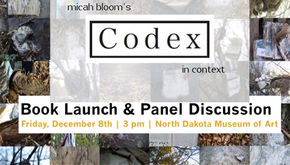
I was initially drawn to Micah Bloom’s Codex project because it combined two elements that have become more or less central to my life: books and archaeology. At our book launch event last Friday, I realized that Bloom’s project had even more in common with my interests than I had initially recognized. In a short presentation Bloom… Read More →


I used to do this more often (and I probably should do it more), but today, I’m going to send you over to the North Dakota Quarterly page where I have a long interview with Brian James Schill about his recently published book This Year’s Work in the Punk Bookshelf, Or, Lusty Scripts (2017). It’s a… Read More →

I finally got a chance to finish reading Brian James Schill’s This Years Work in the Punk Bookshelf, or, Lusty Scripts (2017). It is a vital component to any collection of recent punk rock literature and holds its own next to Zach Furness’s Punkademics, Beer’s Punk Sociology, and, even (modestly of course), Punk Archaeology. Unlike those books… Read More →
This is probably too grandiose a title for this blog post, but after my post last week, I realized that I had some odds and ends that I meant to include, but for various reasons did not. Most of these focus on the idea that the potential of digital media and digital books has tended… Read More →
A few weeks ago, Sebastian Heath, one of the more thoughtful and long-standing participants in my corner of digital archaeology, and I got into a bit of a disagreement about the continued utility of the .pdf file type in digital publishing. Heath argued, to put words in his mouth, that other superior formats exist that… Read More →
Like 98% of the Classicists (or at least Hellenists) in the world right now, I’ve just finished reading Johana Hanink’s The Classical Debt: Greek Antiquity in an Age of Austerity (2017). It’s a remarkable book that traces the history of the concept of “Greek debt” from conversations about the West’s historical debt to Greek democracy,… Read More →
For this week’s reading in my graduate seminar on the history of higher education, I asked the students to read Gary Hall’s new book, The Uberfication of the University (2016). It’s sort and it’s thought provoking especially if read alongside work’s like Louis Menand’s The Marketplace of Ideas (2010) or Christopher Newfield’s The Great Mistake:… Read More →
I’m totally enamored with J. Borgerson’s and J. Schroeder’s Designed for Hi-Fi Living: The Vinyl LP in Midcentury America (2017) published by MIT Press. The book explores the remarkable world of album covers from the 1950s and 1960s not from the heights of pop music (which was still dominated by 45 rpm singles), but from more… Read More →

