


Anubis, Ancient Egyptian God of Funerary Practices and the Dead
Have you ever wondered about the origins of Anubis, the mysterious jackal-headed god of ancient Egypt? With a history dating back thousands of years, this fascinating figure has captured the imagination of people worldwide. In this article, we’ll explore Anubis’ history, attributes, roles in funerary practices, relationships with other gods, and the lasting impact of his worship. So, let’s dive into the world of Anubis, the protector of the dead and the guide to the afterlife.
Origins and History: From Anpu to Anubis
Also known as Anpu or Inpw, Anubis is one of the oldest gods of Egypt. He developed from the earlier jackal god Wepwawet, who was associated with war and funerary practices. Anubis’ origin story can be traced back to the Predynastic Period (c. 6000-3150 BCE), when wild dogs and jackals would dig up corpses, prompting the Egyptians to view the jackal as a sacred animal connected to the dead and the afterlife.
In the Early Dynastic Period and Old Kingdom, Anubis held the preeminent position as lord of the dead. However, he was later overshadowed by Osiris, another god of the afterlife. Despite this, Anubis continued to play a vital role as a guardian and guide.
Attributes and Depictions: The Jackal God
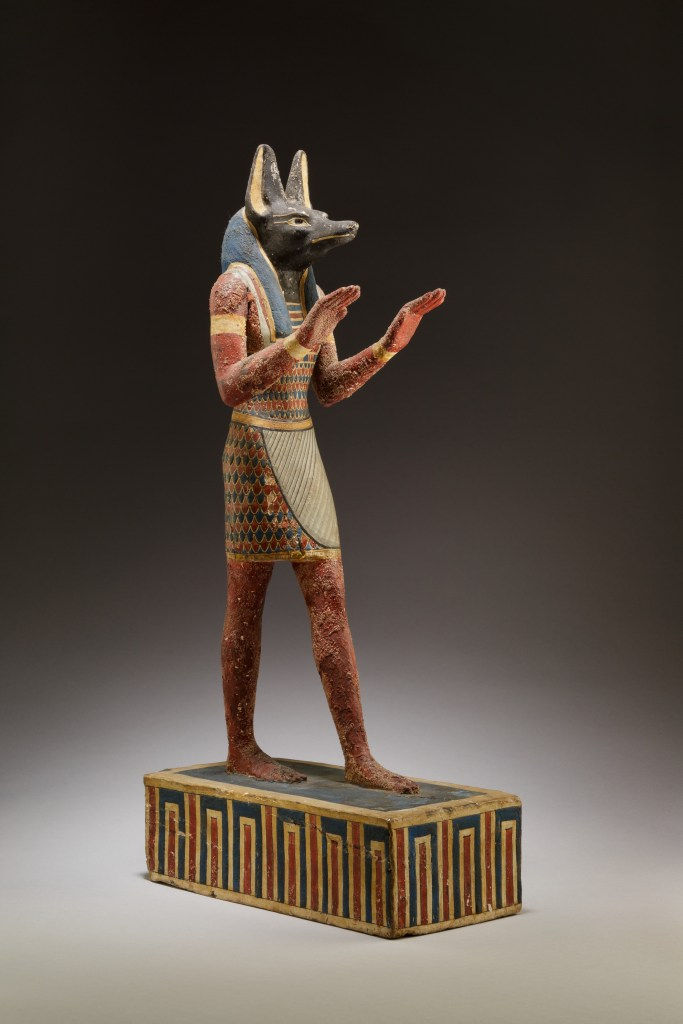
Anubis is often depicted as a jackal or a man with the head of a jackal. The jackal was chosen as his sacred animal due to its scavenging nature. Anubis’ black color symbolizes the decay of the body and the fertile soil of the Nile River Valley, signifying rebirth and regeneration.
Associated with eternal justice, Anubis holds various titles, such as “First of the Westerners” (king of the dead), “Lord of the Sacred Land,” “He Who Is upon His Mountain,” and “He Who Is in the Place of Embalming.” These titles reflect his diverse roles and functions in the afterlife.
Role in Funerary Practices and the Afterlife: Guardian and Guide
Anubis is said to have invented embalming, a process first used on Osiris’ corpse to preserve it for the afterlife. As the guardian of tombs and guide to the afterlife, Anubis ensured a safe passage for the deceased, protecting the dead and the helpless.
In the Hall of Truth, Anubis assisted souls during the Weighing of the Heart ceremony, determining if they were worthy of eternal life. His daughter Qebhet (Kabechet) brought cool water to the souls of the dead and comforted the newly deceased, further emphasizing Anubis’ role in care and protection.

Relationships with Other Gods: From Ra to Osiris
Originally, Anubis was considered the son of Ra and Hesat, connecting him to solar and funerary deities. Later, he was assimilated into the Osiris myth as the son of Osiris and Nephthys, enhancing his role in funerary practices. Associated with Nephthys (“Friend to the Dead”) and Qebhet, Anubis was sometimes identified with the Greek Hermes as Hermanubis, sharing roles as guides to the afterlife and protectors of the dead.
Worship and Cult Centers: From Cynopolis to Beyond
Anubis’ priests were male and often wore Anubis masks during rituals, representing the god’s presence during ceremonies. His cult center was in Upper Egypt at Cynopolis (“the city of the dog”), which was a major site of worship for Anubis. Shrines dedicated to Anubis could be found throughout Egypt, demonstrating widespread devotion to the god. In funerary contexts, prayers and spells often invoked Anubis for protection and vengeance.
Assimilation and Later Associations: Anubis’ Enduring Legacy
Despite the rise of Osiris, Anubis continued to be important in the Osiris myth as Osiris’ protector and assistant. The Greeks associated Anubis with their god Hermes and later with Charon and St. Christopher, showcasing cultural exchange and syncretism between the two civilizations.
Even today, depictions and statuary of Anubis remain popular, particularly among dog owners. Anubis is revered as a symbol of protection and loyalty, celebrated for his connection to dogs and their guardian nature. His appeal extends beyond ancient Egyptian beliefs and into modern spirituality and popular culture.
What can we learn about the psychology of the Ancient Egyptians from the enigmatic god Anubis?

What can we learn about the psychology of the Ancient Egyptians from the enigmatic god Anubis? It’s quite fascinating how much insight we can glean into their minds from this jackal-headed deity. So let’s take a moment to dig deep into their beliefs and try to understand the world from their perspective.
Understanding Mortality and the Afterlife
Anubis’ primary association with funerary practices and the afterlife reveals that the Ancient Egyptians were deeply concerned with the concepts of life, death, and what comes after. By venerating a deity who guided souls through the afterlife, they demonstrated a belief in the existence of an eternal soul and the importance of ensuring its safe passage. This focus on the afterlife suggests that they valued not only their earthly lives but also their existence beyond death.
Respect for Nature and Symbolism
The choice of the jackal as Anubis’ sacred animal highlights the Ancient Egyptians’ profound connection to and respect for nature. They observed the behavior of wild dogs and jackals around burial sites and incorporated their observations into their religious beliefs. By doing so, they attributed sacredness to animals that would otherwise be seen as scavengers, showcasing their ability to find deeper meaning and symbolism in the natural world.
The Quest for Order and Justice
Anubis’ role in the Weighing of the Heart ceremony reflects the Ancient Egyptians’ preoccupation with order and justice. The ceremony, in which a person’s heart was weighed against the feather of Ma’at (the goddess of truth, justice, and harmony), determined the worthiness of the deceased’s soul for eternal life. This suggests that they believed in a cosmic order that needed to be maintained and that ethical behavior was crucial both in life and the afterlife. Anubis, as the overseer of this process, represented the impartial judge and enforcer of these divine principles.
The Power of Transformation and Renewal
Anubis’ black color, symbolizing the decay of the body and the fertile soil of the Nile River Valley, signifies rebirth and regeneration. This connection to the process of decay and renewal indicates that the Ancient Egyptians recognized the cyclical nature of life and the transformative power of death. By associating Anubis with both decay and renewal, they acknowledged the dual nature of existence and the possibility of transcending mortality.
Embracing Change and Adaptability
The evolution of Anubis’ role over time, from the preeminent lord of the dead to Osiris’ protector and assistant, illustrates the Ancient Egyptians’ adaptability and openness to change. Their willingness to incorporate new deities and myths, such as the Osiris myth, into their existing belief systems speaks to their flexibility and ability to accommodate shifts in their cultural and religious landscape.
In conclusion, the figure of Anubis offers us a unique window into the minds of the Ancient Egyptians. From their views on life and death to their understanding of nature, justice, and transformation, Anubis serves as a compelling symbol of their beliefs and values. By examining the many facets of this intriguing deity, we can better appreciate the complexity and depth of the Ancient Egyptian psyche.

Some further thoughts
Isn’t it intriguing to explore the connection between Ancient Egyptian beliefs about the origins of life and the significance of Anubis, a male god of the dead and embalming? Let’s take a moment to ponder this connection and see how it fits into the broader context of their worldview.
The Male as a Giver of Life
The Ancient Egyptians believed that life came from men, as they produced semen, making them the producers of life. This perspective placed a great emphasis on the importance of men in the creation and continuation of life. Given this belief, it’s fascinating to consider the implications of having a male god like Anubis responsible for the dead and embalming.
Anubis: A Symbol of Balance
The fact that Anubis is a male deity, along with the male priests who served him, could be seen as a reflection of the Ancient Egyptians’ understanding of balance and duality. Just as men were considered the givers of life, it would make sense for them to have a male god preside over the other side of the spectrum, dealing with death and the afterlife. This would create a sense of equilibrium, ensuring that both life and death were governed by male figures, maintaining harmony within their belief system.
The Role of Priests in the Embalming Process
The male priests who conducted the embalming process and served Anubis played a crucial role in preparing the deceased for their journey to the afterlife. Given the significance of the male in the creation of life, it seems fitting that they would also be responsible for the preservation and care of the dead. By acting as intermediaries between the living and the dead, these priests embodied the same duality present in Anubis himself.
Continuity and Connection
Having Anubis as a male god of the dead and embalming, along with male priests, may also serve as a symbolic link between the living and the afterlife. In a way, these men who were responsible for creating life in the living world also played a role in ensuring the continuation of life in the afterlife. This connection highlights the cyclical nature of existence that the Ancient Egyptians held dear and further reinforces the importance of balance and harmony in their beliefs.
The association between the Ancient Egyptian beliefs about men as the givers of life and the male figure of Anubis, along with his male priests, suggests a deep connection to the principles of balance, duality, and continuity. By assigning a male deity to preside over the realms of death and the afterlife, the Ancient Egyptians created a symbolic link between the living and the dead, reinforcing the harmony and equilibrium that they so highly valued.
In conclusion, Anubis, the ancient Egyptian god of funerary practices and the dead, has a rich and complex history. Despite being overshadowed by Osiris, Anubis retained his importance as a guardian, guide, and protector. His lasting impact on culture and spirituality serves as a testament to his enduring legacy, a legacy that continues to captivate and inspire people worldwide.


Comments