


Archaeologists peer inside Silbury Hill

The shafts in Silbury Hill are to be re-opened and archaeologists are going to enter the engimatic monument for the first time in around forty years. One of the reasons why Silbury Hill is so enigmatic is that it wasn’t built with any shafts – which is the big problem on the site.
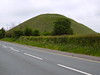
In fact there’s precious little known about Silbury Hill. It’s the biggest prehistoric monument in Europe, being about 30 metres high and 160 metres across. It’s more or less conical, so it looks the same shape from any direction and built from earth.


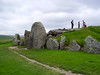
It’s dated to around 2 200 BC, which makes it contemporary with a lot of the rebuilding work at Stonehenge that created the trilithon structure. The sites are fairly close, Stonehenge lies about 30 kilometres to the southeast, so it’s possible that one could have been a reaction to the other. The regardless of any Stonehenge connection, the hill wasn’t built in a pristine landscape. It lies approximately between the supermassive circle-henge at Avebury and the long barrow


Zoom in on map for much better view.

The placing of the hill was probably deliberate, but it’s not entirely clear why it was placed where it was. Some people have argued that it was an astronomical observatory, but if this was the case then why build it at the bottom of a valley? Any of the peaks of the surrounding hills would offer better viewing. The placement of the hill in a valley makes it quite odd to view.
From some distant places it’s strikingly visible, but the folds of the landscape mean that as you approach it, it gets hidden from view. You then can’t see it till you’re quite close and it’s suddenly revealed before you. The building of avenues in the landscape emphasises the importance of the journey of moving from place to place, but what did people go to Silbury Hill for?
Another common suggestion is that it was a burial mound. This explains the shafts. There have been a few attempts to find what has been buried in the hill, most recently in 1969. Unfortunately the backfilling was inadequate and the shafts dug into the hill are collapsing and the threatening the structure. Now English Heritage is spending half a million pounds ($1million) to empty the shafts and refill them with compacted chalk. This should stabilise the monument.
While the shafts are empty the archaeologists are going to have another look, but without further excavation they’re unlikely to find any burial remains. What they may well do is be able to get dating material for the phases of the monument and analyse the strata, so that a better model of how the hill was built can be made. You can keep an eye on the work as English Heritage are promising weekly updates.
I would say that it’s ironic that the hill should survive millennia of neglect, but suffer so much during a short time of interest, but this isn’t the case. A survey using magnetometry has analysed the changes in the magnetic field due to disturbed soil in the fields around Silbury Hill. They’ve been able to mapped traces of a large settlement around the site. Pottery finds from the area indicate that it was occupied in the Roman period. It strongly suggests that the hill had a special meaning for anyone living in the area.
I’ll see if I can get down to photograph some of the work as they’re promising to build a monorail for the refill, and I’m a big fan of monorails.
Other links:
Eternal Idol comments on the dire publication record of Professor Atkinson regarding Silbury Hill and Stonehenge. The BBC has a video of a reporter at the site. GNN has the official press release.


Comments