


Battle of Britain Themed Experiences at the Kent Battle of Britain Museum and RAF Museum at Cosford
We all have periods of history that we prefer over others. Until this year, I would have said my cut off point for my historical interests would have been World War One. To me, most things after that are too modern. However, that has changed thanks to a holiday earlier in the year to Kent. Me and my parents have wanted to go back to Kent for a long time. The last time we visited, it was around about 15 years ago. It stuck in my mind as I was studying Great Expectations for my GCSE English Literature and we visited the grave Dickens used as Pip’s family grave in the opening of the novel. The Rochester are is surrounded by Dickens, so it was mostly for that reason we visited. Since then, Great Expectations has been my favourite of all of Dickens novels.
Despite the warm weather we’ve been mostly having this year so far, we managed to time it when the weather was a bit colder. For that reason, the one day it was really terrible weather, we decided to visit Kent’s Battle of Britain Museum, which is at the former RAF base at Hawkinge. My mum and myself were sceptical as to whether we’d like it there as she has very similar history interests to myself. I think we went, thinking it would pacify my dad, who is in to all sorts of things military related.
How very wrong both of us were. This is not a museum about planes, although there are bits of around 700 planes, both Allied and German. Instead, it is a story of the people connected to them. The personal stories is exactly what grabbed me. Thanks to our visit to Hawkinge, me and mum are both into stories of the pilots who fought in the Battle of Britain, known as the ‘Few’. In this post, which is sort of a review of our experience, I will share why it’s a very special museum and exactly how we’ve been following up our newfound love of the Battle of Britain as a family. The timing is also great as 2025 is the 85th Anniversary of the Battle too.
The first thing to note about the Kent Battle of Britain Museum is that no photographs are allowed. This is understandable as most of the planes in the museum (who also helped recover them), were found, very sadly, with the pilots still with them. As family members are still around, this is to ensure no photos that may upset them are found on the internet. This is even more understandable when the vast majority of the pilots involved were very young men, in their late teens and early twenties. It may take a bit of getting used to, but the fact that all the information you need about the plane and the relevant pilots is in front of you anyway, allows visitors to absorb the deeply personal information much better.

For me, there were many moving stories to find at the museum. In fact, please bring tissues, you will need them! I have never had a more emotional experience at a museum before, but it’s certainly one that will stick with me forever. We spent the whole day at the museum and needed a break in the lovely café to give our emotions a bit of a rest. Would definitely recommend the café as well.
I also found it very profound that the museum chose to tell the stories of both the Allied and German pilots. Despite this being a war situation, they were all someone’s loved one, no matter what side they fought. This certainly reflects, very well indeed actually, the human aspect that the museum does so brilliantly.
There were four stories in particular that struck me and I will share their names, but not necessarily their stories or photographs as I’m not sure how much I’m allowed to share myself, without museum of family consent. If you would like to know more about them, they are readily available on RAF and/or Battle of Britain websites. Instead, I will share their names that I photographed on the Battle of Britain Memorial near Folkeston. The one that captured me the most was Sergeant Anthony (Tony) Durrant Page, died aged 21 in November 1940. I definitely cried a lot whilst reading it and we also visited his grave at Hawkinge Cemetery a minute away as well. I wanted to pay my respects and let him know that I won’t forget him.
The others were: Pilot Officer Peter Chesters, died aged 21 in April 1941; Pilot Officer George Drake, a South African, died aged 20 in September 1940; and finally Edward (Eddy) James Egan, died aged 19 in September 1940. Eddy was the other one I cried a lot over as well.

The Battle of Britain Memorial site has done well to commemorate those who fought and died in the Battle. Their names are on the memorial and what struck me, and was grateful that both here and Hawkinge made clear, was just how many Polish and Czech pilots also were part of our Air Force during this time, trying their hardest to save loved ones back home from the Luftwaffe.
All four boys I mention flew Hurricanes, which were actually the plane of the Battle of Britain, not the Spitfire as we all seem to think. So here is a brilliant photograph of a Hurricane squadron at flight in honour of those brave lads.

The main statue of the Battle of Britain Memorial is of a pilot looking out across the English Channel as if distantly remembering the conflict and his lost friends. I found it also quite poignant that the many Polish and Czech pilots were also not forgotten, with their names on the memorial and wreaths left on their behalf too. A reminder that they fought just as hard to liberate their countries alongside the British pilots.

A book I purchased at Kent Battle of Britain Museum was about Derbyshire Ace Fighter Pilots. Of course, being a Derbyshire lass, I had to buy it and read a bit more about those from my own county who were involved in the Battle of Britain and the rest of World War Two as well. It was great to learn about their stories, although with some of the technical language, I guess a relative newcomer and amateur in this area wasn’t the intended audience for this book. I have since ordered the updated version of this with more pilots, so look forward to reading that at some point in the future.

I want to mention that because of this visit to Kent, whilst visiting the Shropshire area in early July, we decided to join the Battle of Britain tour at the RAF Museum in Cosford. I wouldn’t have thought about this before myself, but wanted to learn a bit more about the Battle of Britain. I would thoroughly recommend this too. Our tour was a small group of 5 or 6, with 4 of us making up our family. This was more about the planes used in the Battle as that was on display, but with the odd mention of people connected and involved, which created good context as well. A big thank you to our volunteer, Peter, who gave a wonderful tour for us.
Whilst I have had a bit of a chance to learn a little more since the Kent visit, it was nice to see some of the planes, both British and German, that I have been reading about. I would like to show photos of them now and would recommend you visiting RAF Museum Cosford if you get the chance.

It was very special to see all of these planes and to hear some of their stories. For example the Spitfire you see the photograph of is the oldest one that has survived. We were all very please to be allowed to touch it. That’s something!
Nearer the end of the tour, was the amazing wreckage of a Dornier 17 wing section that has been raised from the seabed at Goodwin Sands, just off the coast of Kent. This is one of the other images above. The wreckage was recovered in 2013 and has since been in conservation to see if it could ever be placed on display. At the time of our visit, it has only recently been placed on display, so this was a massive achievement for the whole team involved in a over ten year project. It is these Dornier 17 bombers that were bombing England, especially London, and were being escorted by planes such as the ME109s. Of course, the Allied pilots were trying to target both to stop such destruction. Once again, I feel it was appropriate to have planes from both the Allies and Germans to give a full picture of the Battle of Britain itself.
Whilst not all of the displays at RAF Cosford were strictly Battle of Britain, I found the Second World War hangers the most interesting. The stories of individuals were told in an engaging and emotive way, very similar to what was shown at the Kent Battle of Britain Museum. Understandably though, RAF Cosford did have a much different range of items on display to tell this fuller story of the Second World War, as told through the RAF. My favourite item on display, probably because it again told a human story, was a toy penguin.
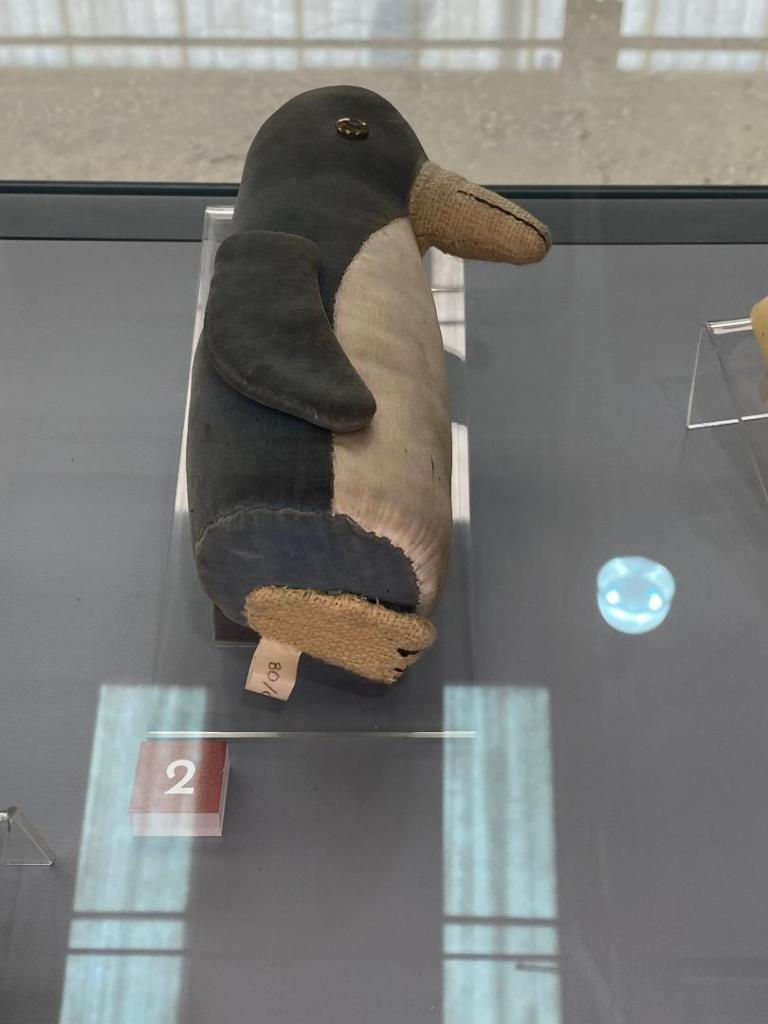
RAF pilots and planes in the war often had their own lucky mascot. There was also a toy cat on display too, which had also been a mascot. However, the story of this penguin caught me the most. His name is Percy for a start and he flew in bombers with his crew members. One night, the bomber was hit and the crew parachuted out. The Flight Lieutenant safely tucked Percy into his jacket before parachuting out of the plane. Sadly, he was then captured by the Germans and became a prisoner of war. Percy was also made a prisoner of war with him too.
It seemed very fitting then that by the time we got to the gift shop, that there were special Battle of Britain 85th Anniversary teddy bears available to buy. Of course I purchased one and I have named him Tony Bear after Tony Page who caught me all those months ago. He will forever be much treasured by me.

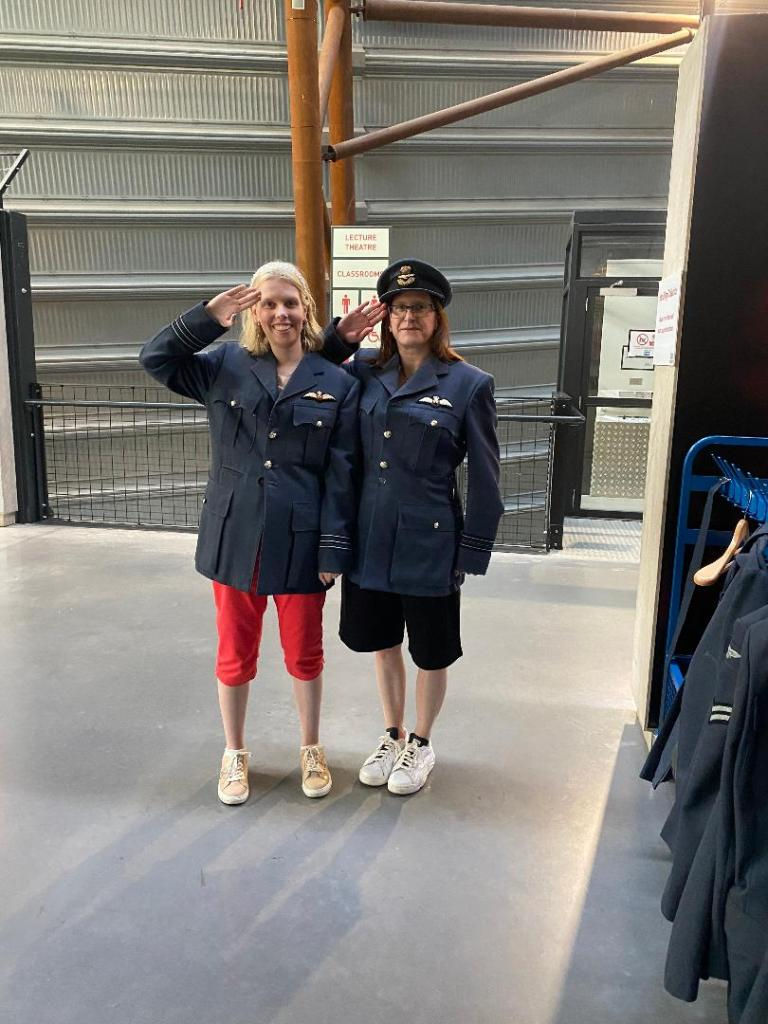
At the last part of the day, and just for a bit of fun, we decided to wear some of the RAF uniforms on offer for visitors to try on themselves. They were heavy wool and definitely too big for me, but a fun bit of immersion to end our visit with! Must admit the uniforms look smart though.
All in all, these experiences were emotional but definitely worth it for igniting a new interest in a period of history I haven’t really been bothered about before. In fact, I have since been reading, or purchased, a few novels related to it too. At the moment, I’m only half way through The Little Penguin Bookshop. I won’t go into too much detail as I think I might be doing reviews of these books in the future, but in the meantime, if you like the look of them, please buy them yourself.


Anyway, I know this has been a very different post than I normally would do, so I hope you have enjoyed it anyway. Perhaps you have some interesting stories yourself, or have taken a bit of inspiration, it would be great to know.
For more information please see:
Kent Battle of Britain- open April to November and are closed on Mondays, except Bank Holidays.
Admission is £12 for adults, £11 for seniors and £5 for children aged 5-15.
Their website for more information is https://www.kbobm.org/index.html
RAF Museum Cosford- open all year round, with Summer and Winter opening hours differing.
Admission is free, but booking in advance is recommended. There is a charge for the car park to be aware of and tours do cost £10 per person, other than the family tours which differ for child and adult tickets.
Their website for more information is https://www.rafmuseum.org.uk/midlands/


Comments