


Captain Bartholomew Roberts: The Tea Drinking Pirate
As someone who loves pirates but doesn’t drink rum (unless it’s Malibu) and instead drinks a lot of tea, I feel I’d have got on well with Captain Bartholomew Roberts. Despite his rather strict rules on gambling, fornication and drinking, his crew were staunchly loyal to him until the bitter end. These rules certainly didn’t live up to the general image we have of drunken pirates whoring and gambling. Yet, there was something in this system designed by Roberts that must have worked, for he was the most successful pirate in terms of ships captured. During his short reign on the seas of the Atlantic, between the Americas and West Africa, he captured around 400 ships. In terms of ships captured, this made him the most successful pirate of the Golden Age of Piracy. He was also known for having a mini fleet of three ships: his flagship, Royal Fortune and two others named Ranger and Little Ranger.
During the time Roberts spent pillaging the coast of West Africa in the few years leading up to 1722, the area was seeing increased activity in slavery, as this was when many of the slavery posts were being established. The link to slavery was a constant in Roberts’ career upon the sea. He reluctantly turned pirate after the slave ship he had previously been on, had been captured by the crew of Howell Davis. In this situation it would have been turn pirate or die. No doubt he would have learnt how t o be a true pirate during those early days on board, especially as the Davis was a fellow Welshman. Roberts was born around 1682 as John Roberts but changed his name to Bartholomew at the time he became pirate. John was obviously not a good enough pirate name.

He was a quick learner and within weeks of his capture, Davis was ambushed on the Portuguese island of Principe after a trap set up to lure him to the governor. Roberts was voted in by the crew who must have seen potential in this newbie of a pirate. It was this basic form of democracy that drew sailors to the pirate flag around this time, as they would be allowed to vote in their captains and on major decisions on board. This was certainly something they were not entitled to on Royal Navy ships or back home on land. The decision-making process was also helped by the fact pirates were viewed as men who “could do anything as long as he remained at liberty”. It is claimed that when Roberts accepted his role as captain, he said “since he dipped his hands in the muddy water, and must be a pirate, it was better being a commander than a common man”.
As a captain, Bartholomew was mostly known for the way he dressed on board. His usual outfit consisted of a damask waistcoat, red feather in his hat and a gold chain with diamond crucifix around his neck. He was also known for not drinking rum. Instead his tipple of choice was tea. It would have been easy to get hold of as many of the merchant ships at that time would have carried it. Unusually the crew often would “vote him small parcels of plate and china” if any were found on board captured ships. The somewhat sophisticated notion of drinking tea from china cups was certainly not replicated on many, if any, other pirate ships.
The main legacy he left was his own version of the pirate code, which he created in 1720. His version was one of many such lists of rules that pirates had to abide by. However, each one followed roughly the same guidelines of including voting on board, equal share of booty and compensation for injuries. Robert’s version of the pirate code was certainly quite different in places.
Every man has a vote in affairs of moment; has equal title to the fresh provisions, or strong liquors, at any time seized, and may use them at pleasure, unless a scarcity makes it necessary, for the good of all, to vote a retrenchment.
Every man to be called fairly in turn, by list, on board of prizes because they were on these occasions allowed a shift of clothes: but if they defrauded the company to the value of a dollar in plate, jewels or money, marooning was their punishment. If the robbery was only betwixt one another, they contented themselves with slitting the ears and nose of him that was guilty, and set him ashore, not in an uninhabited place, but somewhere, where he was sure to encounter hardships.
No person to game at cards or dice for money.
The lights and candles to be put out at eight o’clock at night: if any of the crew, after that hour still remained inclined to drinking, they were to do it on the open deck.
To keep their piece, pistols, and cutlasses clean and fit for service.
No boy or woman to be allowed amongst them. If any man were to be found seducing any of the latter sex, and carried her to sea, disguised, he was to suffer death.
To desert the ship or their quarters in battle, was punished with death or marooning.
No striking one another on board, but every man’s quarrels to be ended on shore, at sword or pistol.
No man to talk of breaking up their way of living, till each had shared one thousand pounds. If in order to this, any man should lose a limb, or become a cripple in their service, he was to have eight hundred dollars, out of the public stock, and for lesser hurts, proportionally.
The captain and quartermaster to receive two shares of a prize: the master, boatswain, and gunner, one share and a half and other officers one and a quarter.
The musicians to have rest on the Sabbath Day, but the other six days and nights, none without special favour.
The most unique is the ban of gambling on board, most other pirates wished to limit it but not ban it altogether. As pirates were mainly known for their lack of religious practice, it is also a rare example of the observance of the Sabbath. It’s claimed that Roberts even read the bible out to the crew on Sundays. What is known of this version of the pirate code is taken from later hearsay as it is believed the crew threw it overboard when they were captured. Despite some of these rules sounding harsh, it was clear discipline on board was a priority to Roberts, and is probably the reason why he was known for being a good leader of his men. However, he was known to only use harsh punishments as a last resort, even when it came to the treatment of prisoners.
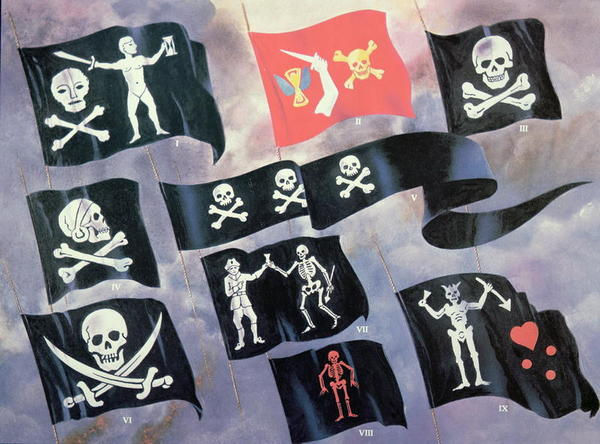
As with most pirates, the days were numbered for Captain Bartholomew Roberts and his crew. In 1722 Captain Ogle of the Swallow was out searching Captain Roberts in the Cape Lopez along the coast of Gabon. Ogle’s first tentative steps towards this was to lure out the Ranger from its hiding place before focusing on the Royal Fortune. Despite the imminent threat of danger, Roberts refused to fight until he had finished his breakfast, especially as most of his crew had spent the previous night drinking in celebration of capturing a ship. This lack of action would seal the fate of Roberts and his crew. No shot was fired in enough time at the Swallow, giving Ogle’s crew the opportunity to fire with all their might at Roberts. It worked and killed Roberts, making his men surrender instantly out of a mixture of loyalty and fear. They still somehow managed to find time to wrap their dead captain up in a sail and throw his body overboard. As Peter Earle indicates, this final battle was a bit of a humiliation to the memory of the most successful pirate, as it happened “without a single royal sailor being killed”. The majority of men in Roberts’ crew captured that day were in their 20s, with the oldest being 45.
Following the passing of the Act for the More Effectual Suppression of Piracy in 1700, Admiralty courts could be held abroad, rather than sending pirates to London for trial. This meant that the hundreds of Roberts men captured were imprisoned at Cape Coast Castle, now in modern day Ghana. 52 of them were found guilty and were hung outside the castle gates along the waterside to prove as a warning to other sailors. 74 more were acquitted, 2 sentences were respited, 20 sentenced to hard labour in mines owned by the Royal Africa Company, 17 sent back to London for another trial and 32 died before the original trial. This number doesn’t include the 77 slaves found on board who were sent back into slavery. Captain Ogle himself hugely benefitted from his booty of pirates. He was the only person to be knighted specifically for fighting pirates.

The trial was one of the largest ever pirates trials and marked the end of the Golden Age of Piracy in the Atlantic. As Roberts’ crew had successfully “nearly brought Antillean commerce to a standstill” by focusing on these newly established slavery ports, an example had to be made. It certainly made a big enough one to end, or at least mark the beginning of the end, of what we see as the Pirates of the Caribbean. It was a “devastating blow to the pirate community as a whole” and showed how willing the authorities were to hand humiliate and punish those caught for piracy. The last words on the crew’s loyalty to Roberts and sense of adventure attributed to the life of a pirate is probably best summed up in the final words of Thomas Sutton, one of the crew members, when discussing heaven with a follow prisoner: “Give me hell, it’s a merrier place: I’ll give Roberts a salute of 13 guns at entrance”.
Kuhn, G., Life Under the Jolly Roger: Reflections on Golden Age of Piracy (Oakland, California: PM Press, 2010), p. 21
Rendell, M., Pirates and Privateers in the 18th Century (Barnsley: Pen and Sword, 2018), p. 127.
Kuhn, G., Life Under the Jolly Roger, p. 16.
Rendell, M., Pirates and Privateers in the 18th Century, p. 126.
Rendell, M., Pirates and Privateers in the 18th Century, p. 125.
Kuhn, G., Life Under the Jolly Roger, p. 21.
Bowling, T., A Brief History of Pirates and Buccaneers (London: Robinson, 2010), p. 79; D. Cordingly, intro to A. Konstam, The History of Pirates (1999) cited in Kuhn, G., Life Under the Jolly Roger, p. 30.
Bowling, T., Pirates and Privateers (Harpenden: Pocket Essentials, 2008), p. 108.
Captain Johnson, General History of the Robberies and Murders of the Most Notorious Pirates cited in Kuhn, G., Life Under the Jolly Roger, p. 34.
Rendell, M., Pirates and Privateers in the 18th Century, p. 125.
Captain Johnson, General History of the Robberies and Murders of the Most Notorious Pirates cited in Kuhn, G., Life Under the Jolly Roger, p. 32.
Bowling, T., Pirates and Privateers, p. 148.
Sanders, R., If A Pirate I Must Be: The True Story of Bartholomew Roberts, King of the Caribbean (London: Aurum Press Limited, 2007), p. 61.
Sanders, R., If A Pirate I Must Be, p. 61.
P. Gosse, The Pirates’ Who’s Who (1924) cited in Kuhn, G., Life Under the Jolly Roger, p. 64.
Captain Johnson, General History of the Robberies and Murders of the Most Notorious Pirates cited in Kuhn, G., Life Under the Jolly Roger, p. 85.
D. Cordingly, Life Among the Pirates: The Romance and the Reality (1995) cited in Kuhn, G., Life Under the Jolly Roger, p. 34.
Captain Johnson, General History of the Robberies and Murders of the Most Notorious Pirates
Rendell, M., Pirates and Privateers in the 18th Century, p. 127.
Rendell, M., Pirates and Privateers in the 18th Century, p. 127.
Rendell, M., Pirates and Privateers in the 18th Century, p. 127.
P. Earle, The Pirate Wars (2003) cited in Kuhn, G., Life Under the Jolly Roger, pp. 16-17.
Rendell, M., Pirates and Privateers in the 18th Century, p. 49.
Cordingly, D., Spanish Gold: Captain Woodes Rogers & the True Story of the Pirates of the Caribbean (London: Bloomsbury, 2011), p. 161.
Rendell, M., Pirates and Privateers in the 18th Century, p. 49; Cordingly, D., Spanish Gold, pp. 161-162.
Rendell, M., Pirates and Privateers in the 18th Century, pp. 49-50.
P. Earle, The Pirate Wars (2003) cited in Kuhn, G., Life Under the Jolly Roger, p. 69.
Rendell, M., Pirates and Privateers in the 18th Century, p. 50.
D. F. Marley, Pirates: Adventurers of the High Seas (1997), cited in Kuhn, G., Life Under the Jolly Roger, p. 150.
P. Earle, The Pirate Wars (2003) cited in Kuhn, G., Life Under the Jolly Roger, pp.16-17.
Captain Johnson, General History of the Robberies and Murders of the Most Notorious Pirates cited in Kuhn, G., Life Under the Jolly Roger, p. 170.


Comments