


Music Monday: Sun Ra Arkestra, William Parker, and Clifford Jordan
Friday saw the release of Living Sky, the latest album from the Sun Ra Arkestra featuring (and directed by) Marshall Allen. As readers of this blog know, I’ve certainly enjoyed the resurgent interest in both Afrofuturism and the musical and literary legacy of Sun Ra.
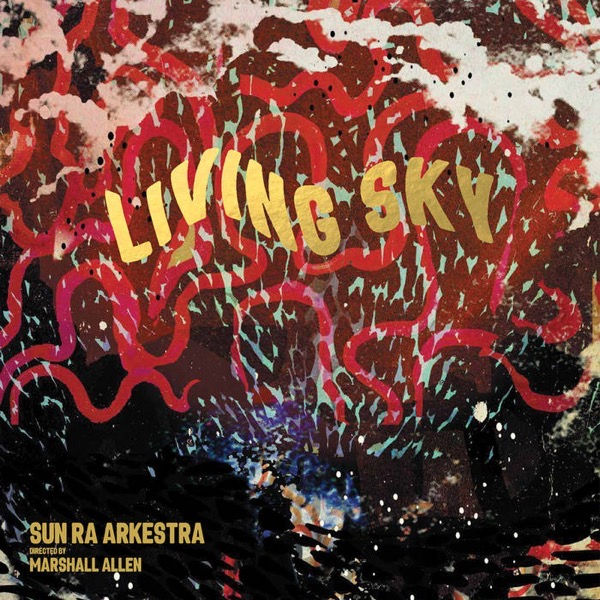
Living Sky continues this legacy while still charting its own path. In fact, I’d contend that the relatively tame composition (by Arkestra standards, at least) pick up where Sun Ra’s musical interests left off toward the end of his life where performed work more inspired by his mentors in the late 1940s and 1950s than the wildly improvised free jazz that typified by his 1960s and 1970s output. In other words, Living Sky is not the raucous affair typical of the Arkestra time in New York at the Choreographer’s Workshop or even his early years in Philadelphia. Maybe Living Sky channels a bit of Languidity as the lower brass set down a solid and sometimes droning foundation for bursts and blasts of Marshall Allens’s distinctive saxophone. Check it out here.
I’ve also enjoyed a recent release by William Parker, Universal Tonality (not to be confused with the book on Parker’s life and work of the same name released last year). The album is a live performance from 2002 which features an all star cast of musicians from Billy Bang to Grachan Moncur and Daniel Carter who connect the loft jazz scene of the 1970s to the music of the contemporary avant-garde today.
I was particularly intrigued by the track “Cloud Texture (death has died today)” which you can check out here. The song opens with a bass line, simple piano, and Leena Conquest’s narration of a journey along a road before it is disrupted by William Parker’s well-known declaration that “death has died today.” It’s gorgeous and embodies the scale of Parker’s work and its capacity to build a world that is both familiar and historical and also strange and magical. The track continues to open up over 30 minutes punctuated by narrations, many biographical, set against exploration of tonality and passages that both illustrate and complicate the lyrics. Like so much of Parker’s output, this album is the kind of recording that I’ll return to again and again and continue to hear and feel new things.

Finally, last night while we were making dinner, I started put on some late 1950s hard bop and was enjoying Horace Silver’s Further Explorations and noticed that Clifford Jordan played on some of the tracks. Jordan, of course, has connections with the Sun Ra Arkestra through John Gilmore with whom he attended DuSable High School in Chicago and recorded their first albums together on Blue Note. While Gilmore goes on to play for most of his career with the Arkestra, Jordan follows a different path and records on any number of label over the 1950s and 1960s. In the early 1970s, however, he recorded a pair of albums for Strata-East including Glass Bead Games in 1973.
I hadn’t listened to this album until last night and its clear that I need to go back to it!


Comments