


Nine Stones Close
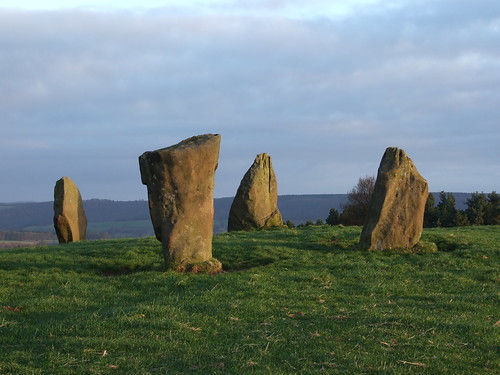
I visited Nine Stones Close on Harthill Moor this past weekend to experiment with my camera. I was surprised how successful some of the photos were. Initially I used the Aperture Priority setting on the camera, because I wanted plenty of depth of field. The camera was designed by many clever boffins, so I assumed it could do a better job with the shutter speed and exposure than I could. I know Aydin had said to use the Manual setting, but balancing aperture and shutter speed is a complete mystery to me.
I obviously haven’t grasped the basics of the digital revolution. I switched to Manual later on to give it a go and took some awful over and under exposed photos.


What I hadn’t really grasped is that if you set the aperture for the depth of field you want then, with a digital camera, you can home in on the right exposure by trial and error if you have to. Additionally I had the auto-bracket feature on. This was taking a photo slightly above and below the settings I was at, which increased my chances of getting a good photo. It’s also taking me time to get my head around a very different way of thinking about photography. When I try and take a photograph I try and take the best one I can. I suspect that experimenting more and resigning myself to the fact that one good photo will mean there’s ten bad ones will push up the total number of good photos that I take. The idea of a method that you know will produce quite a lot of rubbish is strange to me. I prefer to produce mountains of rubbish through natural incompetence.


I have a mixed view of HDR. I’m still not getting colour HDR how I want it. That’s a matter of practice, I think I’ve still got the colours over-saturated. I’m a lot happier with the photo on the right, because it appears to distort the colour less, but still makes the shadowed sides of the stones more visible than the original. It’s not a major issue. If I can take photos like the one at the top on a single exposure that’s not a problem. It also improves the look of the texture of the stones over the original. Still, at the moment wouldn’t be happy putting a colour HDR photo into a piece of work yet. On the other hand I have no qualms about black and white HDR.

I’d be quite happy using the photo above, despite putting more work into developing that than I am with colour HDR. I think it’s the fact it’s black and white that makes it clear that the image is not intended as a 100% accurate depiction of reality. If that’s the case though then I’m still falling into the subconscious trap that thinking colour photos are objective records. The photo above is still HDR, because I’ve overlaid three different exposures, and whacked up the micro-contrast to bring out detail in the photo. For comparison see the photo below which is simply a colour photo rendered into monochrome.

Used right I think that HDR could be a useful technique rather than a gimmick – especially if the photos are monochrome. Nonetheless it would probably be best to label these photos if I use them in a publication. Done properly, it’s not putting anything into the photo that a photographer couldn’t do with a decent lighting rig. On the other hand I don’t know many archaeologists who wander around with a massive number of lamps, so it could still be considered cheating.


Comments