


Origin of the Pashtuns
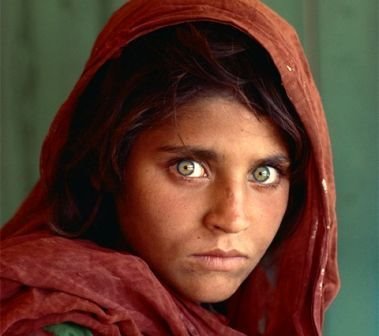
All current Afghans largely share a heritage derived from a common unstructured ancestral population that could have emerged during the Neolithic revolution and the formation of the first farming communities. Our results also indicate that inter-Afghan differentiation started during the Bronze Age, probably driven by the formation of the first civilizations in the region. Later migrations and invasions into the region have been assimilated differentially among the ethnic groups, increasing inter-population genetic differences, and giving the Afghans a unique genetic diversity in Central Asia.
Pashtuns are the largest ethnic group in Afghanistan, accounting for about 42 percent of the population, with Tajiks (27%), Hazaras (9%), Uzbeks (9%), Aimaqs (4%), Turkmen people (3%), Baluch (2%), and other groups (4%) making up the remainder.
Pashtun people (also spelled Pushtun, Pakhtun or Pukhtun), also known as ethnic Afghans or Pathans are an Iranic ethnic group belonging to Afghanistan and Pakistan. They are typically characterised by the usage of the Eastern Iranian Pashto language and practice of Pashtunwali, which is a traditional set of ethics guiding individual and communal conduct. Their origins are unclear but historians have come across references to various ancient peoples called Pakthas (Pactyans) between the 2nd and the 1st millennium BC, inhabiting the region between the Hindu Kush and Indus River, who may be the early ancestors of the Pashtun people. Since the 3rd century AD onward, they have been referred to by the ethnonym “Afghan”.
Early precursors to some of the Pashtuns may have been old Iranian tribes that spread throughout the eastern Iranian plateau. According to the Russian scholar Yu. V. Gankovsky, the Pashtuns probably began as a “union of largely East-Iranian tribes which became the initial ethnic stratum of the Pashtun ethnogenesis, dates from the middle of the first millennium CE and is connected with the dissolution of the Epthalites (White Huns) confederacy.” He proposes Kushan-o-Ephthalite origin for Pashtuns but others draw a different conclusion. According to Abdul Hai Habibi some oriental scholars hold that the second largest Pasthun tribe, the Ghilzais, are the descendants of a mixed race of Hephthalite and Pakhtas who have been living in Afghanistan since the Vedic Aryan period.
In human genetics, Haplogroup G2b-M377 is a Y-chromosome haplogroup and is defined by the presence of the M377 mutation. It is a branch of Haplogroup G, which in turn is defined by the presence of the M201 mutation. G2b is a major Y chromosome haplogroup, and yet unique.It was found among Pashtuns and on much lower scale among all major Jewish groups, Palestinians, Lebanese and Syrians. It appears as if there are a few individuals of Syrian descent that also share this haplogroup. However, their split from the rest of the group should be a minimum of 2,000 years with further testing. It appears as if this group will fall into the G2b2 group and not the G2b1 group with the Pashtuns. The highlands of the Syria could very well be the origin of haplogroup G as a whole due to the diverse G haplogroups seeming to originate there in ancient times.
Comments