


Quanah Parker and Teddy Roosevelt
- Nov 29, 2025
- 5 min read
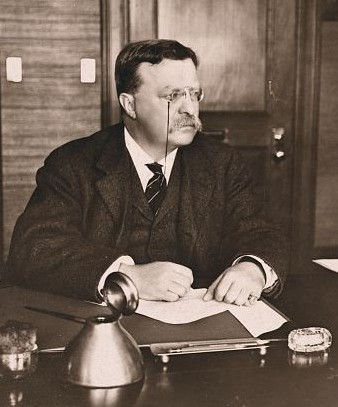
My favourite American president is Theodore ‘Teddy’ Roosevelt. Not only because as legend has it, he is the reason we have teddy bears, but because I feel he was a genuine man who wanted the best for his people but also was a man of action to get things done. Like most people my age, I also fell in love with Robin Williams portrayal of him in the Night at the Museum films. However, until recently reading up about Quanah Parker, the last chief of the Comanches, I didn’t realise that he had a connection with Teddy. As an admirer of Native Americans as well, I must admit I was quite thrilled to discover this connection and set out to write a post about it. That was back in the Summer and I knew that a great time to write the post would be in November, which is Native American Heritage Month.
Quanah Parker was the last, and only, chief of the Comanches. It was the U.S. Government that made him a chief, hoping that a figurehead for the Comanche nation would bring unity amongst them, as well as allow them to follow the ‘white road’ and turn from their Native way of life. Despite being a leader who was famous for fighting the U.S. army, Quanah was pragmatic and had realised after their defeat and forceable removal to reservations, that some form of following the white authorities was needed. It was for this reason he was chosen as ‘chief’. This still didn’t stop him regularly visiting Washington to speak on behalf of his people for better conditions.
At Roosevelt’s second inaugural parade in March 1905, there was a lot of pomp and military circumstance. In fact, around 35,000 people were said to have participated in this parade. Amongst those participating were six Native chiefs: Quanah Parker, Buckskin Charlie of the Ute, Hollow Horn Bear and American Horse of the Sioux, Little Plume of the Blackfeet and the famous Geronimo of the Apache. Each of the men had accepted the offer to be in the parade with the hopes of further advocating for their people’s welfare.

Their involvement certainly posed a lot of questions, including why on earth Teddy wanted to have the Native Americans represented. He supposedly replied it was to give a show, but I think it also had something to do with the fact he also had an appreciation of the outdoors, something that was integral to a lot of Native lifestyles and beliefs. It certainly allowed Roosevelt to establish the National Parks system. He also had some sympathy for the way these people had been treated, considering they had been fighting for what was rightfully theirs.
Geronimo himself did use the opportunity to ask for his people to return to their ancestral lands, rather than on a reservation. This was refused, especially by the Indian Affairs Bureau. However, in his 1906 autobiography, which he dedicated to Roosevelt, Geronimo explained his reasons for the dedication was because Teddy was interested in listening to the Natives’ perspective and that he was “fair-minded and will cause my people to receive justice in the future”.

Quanah Parker had a similar viewpoint and he thought of Roosevelt as a friend, which appears to have been mutual. Roosevelt admitted that despite being a ferocious fighter in the past, Quanah was “now painfully teaching his people to travel the white man’s stony road”.
Roosevelt was one of the great many notables at the time who visited Quanah’s home of Star House, built like a white man’s home and so called because of the stars on the roof. Quanah also had a picture of the President that hung on his dining room wall. Quanah Parker’s granddaughter, Anona Birdsong Dean, also remembered the hospitality that was put on for the President at Star House. She recalled that Quanah ensured that wine was poured into large glasses because “when he went to Washington, Roosevelt served wine in small glasses, and he wanted to be more generous than Roosevelt’.

During April 1905, just a month after the inaugural parade, Roosevelt spent time at Star House during a famous wolf hunt in what was known as Big Pasture in Oklahoma, the area that was the Comanches ancestral lands, but was continually being argued over, especially by cattle owners. This hunt was a big deal and it was hoped it would allow Roosevelt to see the tensions on the ground, but also hopefully to protect the land as it was in all its over 400,000.
Roosevelt arrived by train after just attending a Rough Riders reunion in Texas. The President gave a speech at Frederick, Oklahoma, to rousing applause. Quanah was next to give a speech, which Quanah later recalled got an even bigger cheer than the President. The men, along with a large group of others, went on a hunt for wolves for four days. The group killed 17 coyotes and wolves, with Teddy also killing a five foot rattlesnake. Roosevelt then moved on to a bear hunt in Colorado.
The visit was successful in terms of the hunting trip was concerned. It was also successful in terms of allowing the President to see and understand the conditions of the Comanche. In a letter he wrote to the Commissioners of Indian Affairs just days after his visit to Big Pasture, he wrote: “I am concerned at the condition of these Indians and seeming hopelessness of their future”. It did certainly affect Teddy for when the bill for opening up Big Pasture came to the U.S. Government, he vetoed it.

Sadly, there was little that Roosevelt could do to stop the opening up of Big Pasture, which eventually happened in 1907, when it was sold off. The caveat in the Comanche’s favour was that any Comanche children born after 1900 would be given 160 acres and that this pool of land would stay in Trust for future generations. This certainly helped, but it was still a massive blow to the Comanches nonetheless for it finally opened their land up to Western expansion.
Teddy’s conscience over this made him create the Wichita Mountains Wildlife Refuge, which was designated as a National Forest, an offshoot of the National Parks System that Roosevelt had implemented between 1901 and 1909, doubling the amount of National Parks in America. Whilst this was obviously a cause close to the President’s heart, I do wonder how much of this was influenced by what he knew and had experienced of the Native Americans, particularly Quanah Parker.
Leah Binkovitz, ‘Who Were the Six Native American Chiefs in Teddy Roosevelt’s Inaugural Parade?’, Smithsonian Magazine, 16 January 2013, https://www.smithsonianmag.com/smithsonian-institution/photos-who-were-the-six-indian-chiefs-in-teddy-roosevelts-inaugural-parade-1976255/
Ibid
Bill Neeley, The Last Comanche Chief: The Life and Times of Quanah Parker (New York: John Wiley & Sons, 1995), p. 218
Ibid
‘Who Were the Six Native American Chiefs in Teddy Roosevelt’s Inaugural Parade?’, Smithsonian Magazine
Bill Neeley, The Last Comanche Chief, p. 220
Ibid, p. 200
An interview with her from 1985 featured in Ibid, p. 220
Ibid, p219; S.C. Gwynne, Empire of the Summer Moon (New York: Constable & Robinson Ltd, 2011), p. 409
Bill Neeley, The Last Comanche Chief, p. 220
Letter written by Roosevelt on 14 April 1905, featured in S.C. Gwynne, Empire of the Summer Moon, p. 410
Ibid, p. 409
‘Theodore Roosevelt and the National Park System’, Theodore Roosevelt Birthplace, https://www.nps.gov/thrb/learn/historyculture/trandthenpsystem.htm


Comments