


Sobekneferu: The Crocodile Queen Who Dared to Rule

Sobekneferu (the beauty of Sobek, or Beautiful Sobek), was the last ruler of Egypt’s Twelfth Dynasty during the Middle Kingdom. She was known not only for her connection to the crocodile god Sobek but also for her strategic and bold efforts to establish her legitimacy as Pharaoh in a patriarchal society. Her reign, though brief, was marked by her determination to assert royal authority, continuing her father Amenemhat III’s legacy, and embracing her own divine association. The Twelfth Dynasty, which lasted from approximately 1991 BC to 1802 BC, was one of the most stable periods in ancient Egyptian history. It spanned about 190 years, beginning with the reign of Amenemhat I, who was not of royal background, and ending with Sobekneferu who embodied the meaning of royal power. The dynasty was known for its relative stability and development, with well-recorded history compared to earlier periods. The capital was initially in Thebes but was later moved to the newly founded city of Itjtawy by Amenemhat I. This relocation was significant, though the exact location of Itjtawy remains undiscovered, thought to be near the Fayyum region. This dynasty was marked by major achievements, including territorial expansion into Nubia and Canaan, agricultural improvements in the Fayyum, and notable military campaigns.
Picture Sobekneferu—a woman stepping into the ultimate position of power in a world dominated by men, ruling with a strength that echoed the very deity she was named after. Sobek, the crocodile god, symbolized power, protection, and ferocity, and Sobekneferu was the first to carry his name as part of her own. It was a bold choice, setting her apart from all who came before, and a model for other royal women to follow. She ruled for just under four years in the mid-18th century BC, following the death of Amenemhat IV, who may have been her brother, her husband, or perhaps both—it’s a detail lost to us today. But what we do know is that Sobekneferu was one of the few women to wear the double crown of Upper and Lower Egypt, and she wore it with distinction.

The story of how Sobekneferu came to power is a mystery, there are whispers of palace intrigue and unanswered questions. Some say she stepped up because Amenemhat IV had no male heir, while others believe she seized the throne herself, perhaps dismissing any rivals as illegitimate. Whatever the truth, it took immense courage and ambition for Sobekneferu to claim her place. She wasn’t just content to rule—she made sure the world knew her legitimacy by adopting the full royal titulary, a privilege that proclaimed her as equal to any male pharaoh before her. Despite the challenges she faced, Sobekneferu left her mark, even if much of her story now survives in fragments—graffiti scrawled in forgotten places, scarab seals buried with the dead, and statues that stand headless but enduring. Challenges Faced by Sobekneferu as a Female Pharaoh As a female ruler in a society that favored a male line of succession, Sobekneferu likely faced numerous challenges. Ancient Egyptian society was steeped in tradition, with deeply ingrained beliefs about gender roles. Pharaohs were seen as the earthly manifestation of Horus, the son of Isis and Osiris, and were expected to fulfill roles tied to strength and fertility. They were often referred to as the “strong bull” of their mother Hathor, embodying both leadership and reproductive power. These expectations made it inherently difficult for a woman to be fully accepted as the legitimate ruler of Egypt. Although there had been earlier female rulers—like Merneith in the First Dynasty and possibly Nitocris in the Old Kingdom—these examples were rare and possibly even contested. Sobekneferu’s claim to the throne was a bold departure from the norm, likely facing resistance from those who believed only a man could embody the divine authority of the pharaoh.
The challenges Sobekneferu faced went beyond societal expectations. Egypt during her reign was already in a state of decline. The economy was weakening, powerful regional governors known as nomarchs were rising, and the Hyksos were gaining influence in the Nile Delta. This was a time of increasing instability, and Sobekneferu’s authority may have been contested by those looking to exploit the uncertainties of the period—her gender adding yet another layer of vulnerability. Further complicating her legacy, Sobekneferu’s name was omitted from the Abydos King List, a record compiled during the reign of Seti I and Ramesses II. This omission suggests that later rulers might have attempted to downplay or erase her contribution to maintain the traditional view of the pharaoh as a male figure. Despite these obstacles, Sobekneferu’s adoption of the full royal titulary—the first female ruler to do so—demonstrates her determination to assert her right to lead and to be recognized as a true pharaoh.
The Mystery of the Northern Mazghuna Pyramid
Perhaps the most mysterious part of her legacy is the Northern Mazghuna pyramid, thought to be her final resting place. This ancient Egyptian royal tomb, located about 5 km south of Dahshur, was built during the 12th or 13th Dynasty in Mazghuna. It remained unfinished, and no inscriptions have been found to definitively identify which pharaoh was meant to be buried there. The pyramid was rediscovered in 1910 by Ernest Mackay and excavated in the following year by Flinders Petrie. Scholars noticed many structural similarities between the two Mazghuna pyramids and Amenemhat III’s pyramid at Hawara. This led to the attribution of the southern pyramid to Amenemhat IV, and the northern pyramid to Sobekneferu. Yet, like so much of her life, this part of her story is surrounded by uncertainty. The burial chamber lies empty—whether she was never laid to rest there or whether time simply erased her remains, we may never know. What we do know is that her death marked the end of the Twelfth Dynasty, plunging Egypt into the uncertainty of the Second Intermediate Period. The stability of her father’s and predecessor’s reigns gave way to political fragmentation and new rulers—Sobekhotep I or Wegaf—who began the Thirteenth Dynasty.
Evidence for a Temple Dedicated to Sobek
While there is no definitive proof that Sobekneferu had a temple built in her name dedicated to Sobek, there is some suggestive evidence. Sobekneferu’s name directly connects her with the crocodile god. This was a deliberate choice, as she was the first Egyptian ruler to incorporate the deity’s name into her own. This suggests a strong personal and religious connection to Sobek. Sobekneferu continued her father’s (Amenemhat III) building projects in the Faiyum Oasis, specifically to cultivate new farmlands. The Faiyum Oasis was a significant cult center for Sobek, and it is plausible that some of these building projects might have involved temples dedicated to him.
A key piece of evidence is the “Temple of Sobek at Medinet Maadi” where a “small and fragile remnant of the female pharaoh” was discovered. While this temple’s construction is attributed to Amenemhat III, Sobekneferu’s presence there, even if just in the form of a small remnant, implies a connection between her and the temple. It is conceivable that she may have commissioned additions or renovations to the temple during her reign. Additionally, further evidence highlight the discovery of a cylinder seal bearing Sobekneferu’s name and royal titulary, as well as the inscription on a column, both found at the Temple of Sobek at Medinet Maadi. These finds further solidify the link between Sobekneferu and a temple dedicated to Sobek, although they do not definitively prove she had it built.
Therefore, while the evidence is not conclusive, the close association of Sobekneferu with the crocodile god, combined with her building projects in the Faiyum Oasis and her presence at the Temple of Sobek at Medinet Maadi, suggests that she may have indeed commissioned a temple or at least parts of a temple dedicated to Sobek.
Sobekneferu’s Strategies for Asserting Legitimacy
One of her main strategies was to emphasize her lineage by aligning herself closely with her father, Amenemhat III, a respected and powerful Pharaoh. By associating her monumental works with Amenemhat III rather than Amenemhat IV, her predecessor and possible brother or husband, Sobekneferu bolstered her legitimacy by drawing on the authority of a successful male figure in her lineage. This emphasis on her connection to Amenemhat III was likely a deliberate choice aimed at strengthening her claim to the throne.
In addition, Sobekneferu took a significant step by adopting the full royal titulary traditionally used by male pharaohs. This unprecedented move demonstrated her claim to complete authority and challenged existing norms about female rulership. The presence of her royal titulary on artifacts, such as the cylinder seal bearing her name, serves as evidence of her determination to be viewed as equal to her male predecessors. By adopting the full titulary, Sobekneferu was effectively declaring that she was entitled to all the rights and privileges of kingship, just like any male ruler.
Another important element of her strategy was her choice to incorporate Sobek’s name into her own. By naming herself “Beauty of Sobek,” Sobekneferu created a direct link to the powerful crocodile god, who symbolized strength, protection, and authority. This deliberate choice marked her as the first Egyptian ruler to incorporate a deity’s name into her own, suggesting an attempt to gain religious authority and public support by aligning herself with a prominent deity. Her activities in the Faiyum Oasis, a major cult center for Sobek where she continued her father’s building projects, further underscore her connection to the god and her effort to reinforce her legitimacy through religious means.
Moreover, Sobekneferu continued many of the dynastic practices and building projects of her predecessors, which helped solidify her image as a legitimate Pharaoh. These efforts included agricultural projects in the Faiyum Oasis, additions to the Pyramid of Amenemhat III at Hawara, and inscriptions on columns at a temple in Kom el-Akârib. By continuing these traditional practices, Sobekneferu presented herself as a capable and stable ruler who was dedicated to the ongoing prosperity of Egypt and the legacy of her predecessors.
While these strategies did not guarantee that Sobekneferu completely overcame the challenges of being a female Pharaoh, they demonstrate her agency and determination to secure her position and rule effectively. Despite her short reign, Sobekneferu left a significant mark on Egyptian history as the first confirmed female pharaoh to fully embrace the mantle of kingship. Sobekneferu Compared to Other Female Pharaohs
Sobekneferu’s reign differed significantly from that of Hatshepsut (to whom she isoften compared to) and other female pharaohs. While Sobekneferu may have been the first confirmed female pharaoh, other female rulers existed before her, such as Merneith from the First Dynasty and Khentkaus I from the Fourth Dynasty. However, Sobekneferu was likely the first to definitively use the full title of pharaoh, emphasizing her determination to be recognized as a legitimate ruler.
One notable difference between Sobekneferu and Hatshepsut was how they portrayed their femininity. Sobekneferu retained and displayed her feminine identity, unlike Hatshepsut, who often adopted male attire and appeared in statues with a male body and false beard. This suggests that Sobekneferu may have felt more secure in her position as pharaoh, not needing to adopt masculine traits to assert her authority. Sobekneferu’s approach reflected her confidence in her legitimacy, whereas Hatshepsut, ruling during a different period, may have felt compelled to align her image with the male pharaohs to gain acceptance.
The length of their reigns also marked a difference between the two rulers. Sobekneferu ruled for only three years, ten months, and twenty-four days, while Hatshepsut reigned for over twenty years. This disparity in duration may reflect the different challenges they faced—Sobekneferu’s reign took place during a period of decline and instability, whereas Hatshepsut presided over a prosperous and peaceful Egypt. Sobekneferu’s priorities during her short reign were focused on completing her father’s building projects and maintaining stability in the face of economic decline and the rising power of nomarchs.
Additionally, the historical context of their reigns set Sobekneferu apart from Hatshepsut. Sobekneferu was the last pharaoh of the Middle Kingdom, a time of transition and upheaval. In contrast, Hatshepsut ruled during the height of the New Kingdom, a period of imperial expansion and artistic flourishing. This difference influenced their accomplishments as pharaohs, with Sobekneferu striving to sustain Egypt during challenging times, while Hatshepsut took advantage of a stable and flourishing society to embark on ambitious building projects and expeditions.
Sobekneferu faced a significant challenge in asserting her legitimacy as Pharaoh, given the Egyptian society’s strong preference for male rulers. To overcome this obstacle, she employed several strategic approaches that highlighted her royal authority and connection to powerful traditions. Attestations of Sobekneferu
Sobekneferu’s legacy is attested through various archaeological finds, including statuary, inscriptions, seals, and other evidence. These attestations reveal significant aspects of her reign, her connection to Egyptian tradition, and her role as a female ruler in a challenging historical context.
Statuary

Several headless statues of Sobekneferu have been discovered, depicting her in various poses, including seated, kneeling, and trampling the Nine Bows—a symbolic representation of Egypt’s enemies. Although these statues lack their heads, they provide valuable information about her royal iconography and how she chose to represent herself as pharaoh. One statue is described as blending feminine and masculine dress, with an inscription highlighting her lineage as the “daughter of Re” and her desire to “live like Re forever.” These statues illustrate her attempt to balance traditional pharaonic imagery with her unique position as a female ruler.
There is also a damaged statuette in the Metropolitan Museum of Art in New York that might represent Sobekneferu, although its identification is uncertain. This schist bust shows a woman wearing a unique crown featuring a uraeus cobra and two vultures with outstretched wings. If the statuette indeed represents Sobekneferu, it would provide further insight into her iconography and her potential associations with specific deities.
A quartzite bust of Sobekneferu once resided in the Egyptian Museum of Berlin but was lost during World War II. Fortunately, photographs and plaster casts preserve its appearance. This bust, which likely depicted her head and upper torso, would have been instrumental in understanding her facial features and royal headdress. The fact that it fitted on top of a lower statue portion found at Semna suggests it was once a complete statue.
Inscriptions
At the fortress of Kumma in Nubia, a graffito records the height of the Nile flood during Sobekneferu’s third year of rule. This inscription demonstrates her involvement in managing crucial aspects of Egyptian life, such as monitoring the Nile’s flood levels, which were essential for agriculture and the kingdom’s overall well-being.
Another inscription, found in the Eastern Desert, mentions “year 4, second month of the Season of the Emergence,” placing it within Sobekneferu’s reign. This inscription confirms her rule into at least her fourth year and provides evidence of activities—possibly expeditions or construction projects—taking place in this region during her time.
Sobekneferu’s name and titles appear on four granite papyriform columns and possibly ten granite beams found at a temple in Kom el-Akârib. These inscriptions suggest that she undertook building projects or renovations at this temple, further demonstrating her active role as pharaoh in maintaining religious sites.
A limestone block from the Labyrinth at Hawara bears an inscription mentioning Sobekneferu as the “Beloved of Dḥdḥt,” a previously unknown goddess. This inscription highlights her connection to her father, Amenemhat III, whose pyramid complex housed the Labyrinth, and introduces a new deity to the Egyptian pantheon. Notably, the inscription refers to Sobekneferu as the “King’s Daughter,” possibly supporting the theory that she was Amenemhat III’s daughter but not a full sibling to Amenemhat IV.
A statue base found in Gezer, Israel, may bear an inscription referencing Sobekneferu as a “king’s daughter” before she became pharaoh. However, this inscription could also refer to a different Sobekneferu or a daughter of another pharaoh, such as Senusret I. If the inscription does indeed refer to Sobekneferu before she became pharaoh, it would suggest a possible diplomatic relationship between Egypt and Gezer during that time.
Seals
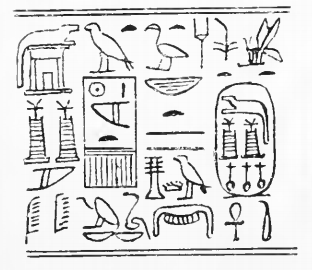
The British Museum houses a cylinder seal made of glazed steatite bearing Sobekneferu’s name and royal titles. This seal, likely used for administrative or official purposes, provides a clear and well-preserved example of her titulary.
The British Museum also possesses a scarab seal inscribed with Sobekneferu’s name. Scarab seals were often used for personal or decorative purposes, suggesting that Sobekneferu’s image and name might have been circulated among officials or individuals within her court or administration.
Other Evidence
The Northern Mazghuna pyramid is often attributed to Sobekneferu, although no definitive evidence confirms this association. Some scholars believe that this pyramid may have been started much later than the Twelfth Dynasty. If the pyramid does belong to Sobekneferu, its unfinished state would reflect the political and economic instability during her reign, preventing her from completing such a massive project.
There is speculation that Sobekneferu may have been buried within the Black Pyramid of Amenemhat III, possibly in one of the two unidentified burial chambers. If true, this would suggest that she might not have had sufficient time to construct her own pyramid or that she chose to be interred near her father.
A papyrus found at Harageh mentions a location called Sekhem Sobekneferu, which could potentially refer to her pyramid. If this reference is connected to her burial place, it would be a significant discovery in locating her tomb.
A 13th Dynasty funerary stela from Abydos, now in Marseille, mentions a storeroom administrator named Heby who served Sobekneferu. This stela indicates that a funerary cult dedicated to Sobekneferu existed even after her death, suggesting that she was remembered and honored by at least some individuals in the subsequent dynasty.
Sobekneferu is mentioned on several king lists, including the Karnak list, the Saqqara Tablet, and the Turin King List. However, she is notably absent from the Abydos King List, created by Seti I. Her inclusion in some lists and exclusion from others highlights the selective nature of historical memory and how later pharaohs chose to acknowledge or erase their predecessors, especially female rulers. Significance of the Attestations
Despite the relatively limited number of attestations compared to other pharaohs, the existing evidence reveals a determined female ruler navigating a challenging period in Egyptian history. The sources paint a picture of Sobekneferu as a pharaoh who strived to assert her authority while also upholding traditional pharaonic roles and religious practices. Her connection to the god Sobek, evident in her name and temple building projects, provides a unique aspect to her reign and offers insights into the religious landscape of the late Middle Kingdom. The fact that she was able to rule at all, even for a short time, in a society that favored male succession, speaks to her strength and the complexities of ancient Egyptian society. Sobekneferu’s reign was a brief but vivid flash, a closing chapter in a storied dynasty, leaving behind questions, strength, and the echoes of a woman who dared to rule as a pharaoh in her own right.
Sobekneferu’s Family
Father: Amenemhat III Amenemhat III was a powerful and respected ruler whose legacy Sobekneferu embraced wholeheartedly. By emphasizing her connection to her father in inscriptions found at the Hawara pyramid complex, Sobekneferu sought to bolster her legitimacy as pharaoh and align herself with a figure of established authority and success.
Mother: Unknown The identity of Sobekneferu’s mother remains one of the mysteries of her lineage. Amenemhat III had at least two known wives, Aat and another unnamed queen, but it is also possible that her mother was among the many women in the royal harem whose names were not officially recorded. This obscurity adds another layer of intrigue to Sobekneferu’s family background and the uncertainties surrounding her claim to power.
Sister: Neferuptah (“Beauty of Ptah”) Neferuptah was Sobekneferu’s older sister, and she held a unique place in the family. Neferuptah was married to their father, Amenemhat III, and later buried in her own pyramid at Hawara. Sobekneferu honored her sister by establishing a cult at Hawara, demonstrating the importance of family and continuity within their royal legacy. Neferuptah’s story reflects the complex and often intertwined relationships within the Egyptian royal family.
Possible Brother or Husband: Amenemhat IV The exact relationship between Sobekneferu and Amenemhat IV remains a subject of debate. Some sources, such as Manetho, suggest they were siblings, while others, including historian Gae Callender, propose they were married. Despite these speculations, no title explicitly identifies Sobekneferu as “King’s Wife” or “King’s Sister.” There is also ambiguity surrounding Amenemhat IV’s parentage, with questions about whether his mother, Hetepti, held the title of “King’s Wife”—a factor that might have influenced his claim to the throne. The mystery of Amenemhat IV’s relationship to Sobekneferu reflects the broader complexities of the Egyptian royal court, where familial bonds were often both political and strategic.
The Intrigue of Royal Relationships Our understanding of Sobekneferu’s family—and royal relationships in general—is incomplete due to the limited documentation and selective historical records. The relationships within Sobekneferu’s family, particularly those involving marriage and succession, remain open to scholarly debate. These intricate family dynamics undoubtedly influenced her rise to power and shaped her short yet significant reign as the last ruler of the Twelfth Dynasty.
Download the lesson plan connected to this article below


Comments