


Some Cricket Archaeology
For Christmas my wife got me a set of vintage cricket stumps. While she discovered these in Brisbane, Australia (owned by a member of the Queensland Cricketers’ Club), they have a known provenience to near Surrey, England and date to the first decade and a half of the 20th century (if not a bit earlier). Apparently the stumps are made of hickory. They are regulation height (28 inches) and diameter (1 3/8). They flair out slightly toward the base.
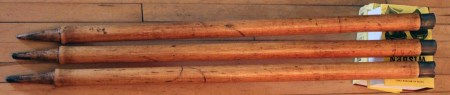
They each have a brass cap on the top of the stump protecting the slot where the bails sat and providing a surface for them to be driven into the ground. A small brass pin secured each cap, but on this set only one pin remains. The brass caps show signs of regular pounding and the distortion of the caps matches the distortion of the hard wood at the top of the stump suggesting that these caps and stumps had been together for significant use.

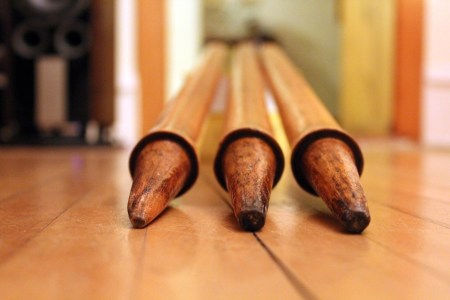
The bottom of the stumps are a bit unusual in my limited knowledge. There is no evidence that they had brass tips on them to protect the end of the stumps from moisture or other damage when they were driven into the ground. There is no evidence for pins on other clamps. In contrast to the relatively elegant flaring of the shafts, the tips look pretty crude and irregular There might even be a bit of evidence for retouching of the points.

Also curious was a series of semi-circular burn or clamp(?) marks on the shafts of the stumps. They are visible on the bottom stump in the first photograph and below. My working hypothesis are that these are marks made by a mallet or hammer used to remove the stump from the ground at the end of play, but perhaps someone has a better idea.

A brief surf of the interwebs has made it pretty clear that there is not a huge amount of information available about vintage cricket equipment so any additional information on these artifacts would be much appreciated.


Comments