


St. Ambrose and Milan
- Feb 21, 2011
- 1 min read
I’ve spent the past two days wandering the streets of Milan. We’ve done the best we can to retrace the steps of St. Ambrose and paid particular attention to his 4th century foundations. While little of these foundations survive in any sort of pristine state, the basic plan of four churches still exists.
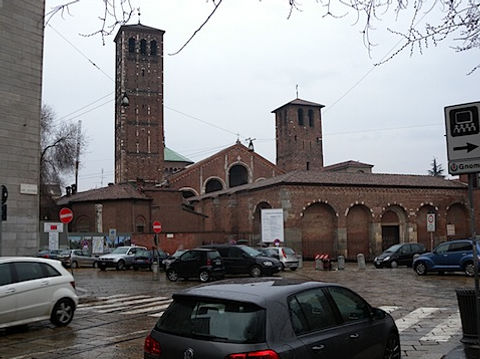
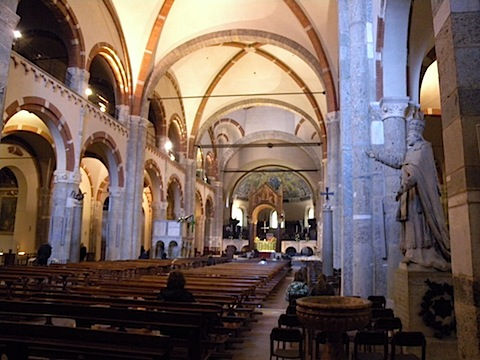
San Ambrogio:
San Lorenzo is the most architecturally complex (and unlikely to have been founded by Ambrose himself). It originally featured a square, double-shelled, tretrachonc rising to a wood roof. The apsidal exedrae were massive and the central square of the church communicated with the external shell through colonnades. Today the church rises to an octagonal dome, but enough of its original plan survives that it is easy to reconstruct. External to central core of the church are a gaggle of earlier, contemporary, and chapels. The eastern atrium opened onto a colonnaded street part which survives.


San Simpliciano was closed, but we were able to observe the complex history of the building. The massive transept finds echoes in churches across the Balkans throughout the 5th and 6th centuries:


San Nazaro, consecrated as St. Ambrose’s Holy Apostles, is similar to the 4th century church in Constantinople of the same name. It wasn’t open and it was too crowded by other buildings to photograph very successfully (and it was rainy and I was hungry).
I did, however, photograph a nicely preserved section of the Late Roman city wall:


Comments