


Surface Archaeology
- Jun 13, 2023
- 2 min read
One of the cooler things that I’ve encountered in the Polis notebooks is the occasional interest in material from the surface. This is particularly interesting because not only are the areas excavated by the Princeton team located amid the modern village, but the site of E.F2 in the Princeton grid was originally occupied by a village home.
The site was scraped by a bulldozer prior to excavation. Trench T06, which today represents the area to the east of the Early Christian South Basilica occupies an area where a spoil heap once stood. The surface was further complicated by debris deposited from earlier excavations nearby.
The complicated depositional history of this trench made it unsurprising that it might contain material associated with the recent past. What is more surprising is that the author of this notebook (none other than Joanna Smith, the current project director!) keep a careful record of modern finds excavated from the upper levels of this trench. Of course, noting modern material in a trench is always important for understanding the chronology of various depositional events. That said, recording modern objects carefully, even if nothing even becomes of these records, reflects a forward thinking trench supervisor.
The trench produced some common objects associated with domestic life: a pair of nylons, a straight razor,

a plastic, slide-on sandal,

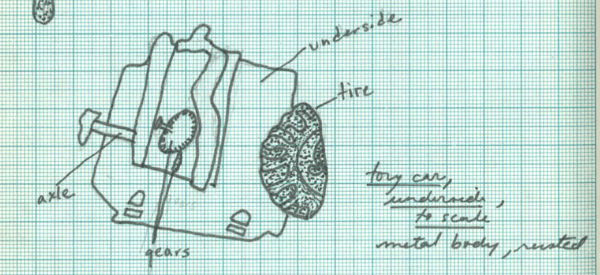
a toy car,
a “Drene” plastic bottle top (presumably for shampoo?),

and a the lid of a sardine can.

A more ambitious blog post would connect these objects with the changing materiality of the post-war world (plastics, manufactured metals, nylons and the like) and the globalization of consumer culture. Perhaps a more clever or expansive thinker could connect these mundane artifacts with the changing character of everyday life and draw parallels to the ancient artifacts found at the site. One might even playfully note how few modern artifacts appear in notebooks despite their manifest abundance in the contemporary plough-zone and observe that excavators collected and recorded relatively vast quantities of ancient material despite its relative scarcity.


Comments