


The Armenia (Armin and Hay) origin of Brahui (Ab-ra-min) and Bramin (Ab-ra-min)
- May 11, 2013
- 24 min read


Armin is a given name or surname. It is a Zoroastrian given name, meaning Guardian of Aryan Land, a Persian given name Son of Kavadh, the Legendary character in Shahnameh (King of the books), the character belong to mythical Kianian dynasty, the dynasty that Zoroastrian believes that was exist in ancient times, a Germanic given name, modern form of Arminius, known as Armin or Hermann (Arminius being a Latinization, similar to Brennus), an Ancient Greek given name, modern form of Ariobarzanes meaning “exalting the Aryans”.
The Brahui or Brohi are an ethnic group of about 2.5 million people with the majority found in Sindh and Baluchistan, Pakistan, but they are also found in smaller numbers in neighboring Afghanistan and Iran.
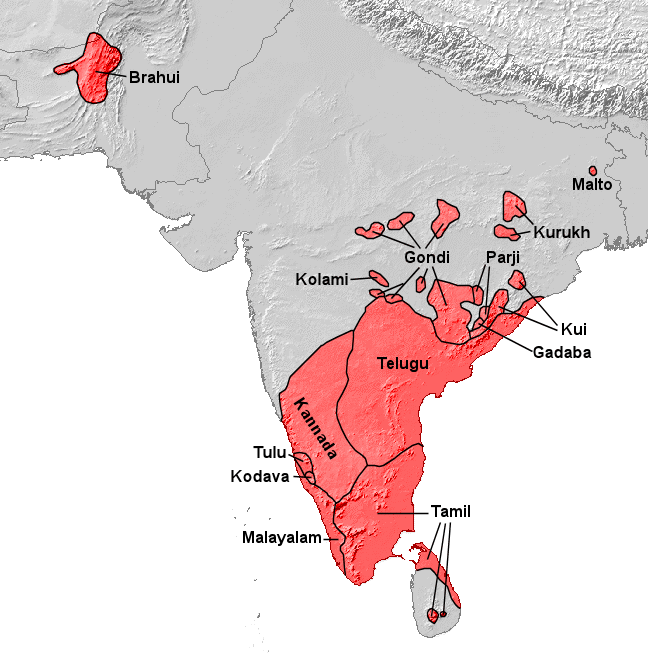
The ethnonym “Brahui” is a very old term and a purely Dravidian one. The fact that other Dravidian languages only exist further south in India has led to several speculations about the origins of the Brahui. There are three hypotheses regarding the Brahui that have been proposed by academics. One theory is that the Brahui are a relic population of Dravidians, surrounded by speakers of Indo-Iranian languages, remaining from a time when Dravidian was more widespread. Another theory is that they migrated to Baluchistan from inner India during the early Muslim period of the 13th or 14th centuries. A third theory says the Brahui migrated to Balochistan from South India after 1000 AD. The absence of any older Iranian (Avestan) influence in Brahui supports this hypothesis. The main Iranian contributor to Brahui vocabulary is a northwestern Iranic language, Baluchi, Sindhi and southeastern Iranic language, Pashto.
The History of the Brahui emerges from total darkness with the displacement of a shadowy Hindu dynasty in Kalat called Sewa by the Mirwari Brahuis. There is a Mughal interlude and then Brahui ascendancy again. It is said that a Hindu dynasty, the Sewa by name, ruled over this part of the country prior to the seventh century, Kalat is still known as Kalat-i-Sewa. Over the centuries, due to their location, the Brahui have mixed with Iranian peoples as well as the Sindhis, among other Indo-Aryan peoples. They culturally resemble their Baloch and Sindhi neighbors, although they still continue to speak their Brahui language.
The Brahui language is a language within the Dravidian subgroup of languages. While it does contain many similar words as the Iranic Baloch language, it also has many loan words from Indo-Aryan languages as well as the Dravidian words of its own. It is mainly spoken in the Kalat areas of Balochistan, Pakistan, although there are a considerable number of speakers in Southern Afghanistan and Iranian Balochistan. It includes three dialects including Sarawani (spoken in the north), Jhalawani (spoken in the southeast), and Chaghi (spoken in the northwest and west).
According to a survey it has about 2,000,000 speakers in Pakistan (1998), 200,000 speakers in Afghanistan and 20,000 speakers in Iran, which would amount to 2,220,000 in the world. Due to its isolation, Brahui’s vocabulary is only 15% Dravidian, while the remainder is dominated by Perso-Arabic, Balochi, and Indo-Aryan, while the grammar and overall morphology still resemble other Dravidian tongues. Brahui is generally written in the Perso-Arabic script and there is even a Latin alphabet that has been developed for use with Brahui.
Brahuis display a variety of Y-DNA haplogroups, the two most important of which being haplogroup R1a – with its mass diffusion among populations of Central/South Asia and associated with the early eastern migrations of Indo-Iranian nomads – and haplogroup J, which, though found among other subcontinental peoples, is nevertheless more typical of Near-Eastern populations. Other, relatively minor, low-frequency haplogroups among the Brahui are those of L, E1b1a, G, and N.
Three of the top four highest frequencies for the partial haplotype J2 fall in the Caucasus. Additional locales in the top ten include Turkey, Iran, Syria, Egypt and Italy. It also occurs in Central Anatolia, among Kurds, and in several samples of obscure populations with a likely Central Asiatic origin – such as the Brahui and Burusho of Northwest Pakistan, and the Csango of Romania, who are thought by many to be of Turkic or Magyar descent.
This match pattern supports the scenario of an origin in Central Asia, with a gradual diffusion into the Middle East and the Mediterranean, and then later into other parts of Europe. This haplotype could easily have come to Britain with Roman conquest or Hellenic exploration, either with Mediterranean merchants, Sarmatian troops or Roman settlers of a variety of ethnicities. There is also the additional possibility that it came to Britain far earlier, with Neolithic agricultural pioneers.
The idea that M172 may have been carried into India with proto-Elamo-Dravidian groups is supported by the frequencies of Haplogroup J in one of the only remaining Dravidian Speaking ethnic groups in the Iranian Plateau, the Brahui. 28% of the Brahui, an ethnic Dravidian speaking group from Western Pakistan were found to carry the mutation defining Haplogroup J.
It appears that Rla, which is found in about 12% of Turks, Kurds and Syrians, did migrate in two different directions – one migration apparently took this group into Europe, particularly Russia, Eastern Europe & Scandinavia, while a second migration route took them into parts of the Caucasus & Middle East. The domestication of the horse made these large scale migrations possible.
This pattern of haplogroup migrations and associated linguistic connections is supported by the findings of the Brahui people, who reside in central Baluchistan. They are one of the few populations outside India and Sri Lanka that continue to speak a Dravidian-derived language. The Brahui (dravidians) have a very high percentage (55%) of western Eurasian MtDNAs, closely matching populations in Iran and Anatolia.
It is believed the Brahui are the northern survivors of a once vast and ancient Dravidian-speaking region that was later displaced by the Indo-European migrations. While Dravidian languages are primarily confined to the South of India today, there is a striking exception: Brahui (which is spoken in parts of Baluchistan). It has been taken by some as the linguistic equivalent of a relict population, perhaps indicating that Dravidian languages were formerly much more widespread and were supplanted by the incoming Indo-Aryan languages. Certainly some Dravidian place-names are found in now Indo-Aryan regions of central India.
However it has now been demonstrated that the Brahui could only have migrated to Balochistan from central India after 1000 CE. The absence of any older Iranian (Avestan) loanwords in Brahui supports this hypothesis. The main Iranian contributor to Brahui vocabulary, Balochi, is a western Iranian language like Kurdish, and moved to the area from the west only around 1000 CE.
The spread to the East:
Haplogroup J2 is thought to have appeared somewhere in the Middle East towards the end of the last glaciation, between 15,000 and 22,000 years ago. Its present geographic distribution argue in favour of a Neolithic expansion from the Fertile Crescent. This expansion probably correlated with the diffusion of domesticated of cattle and goats (starting c. 8000-9000 BCE) from the Zagros mountains and northern Mesopotamia, rather than with the development of agriculture in the Levant (which seems to have been linked to haplogroup G and perhaps also E1b1b). A second expansion of J2 could have occured with the advent of metallurgy (also from Anatolia and Mesopotamia) and the rise of some of the oldest civilisations.
Quite a few ancient Mediterranean and Middle Eastern civilisations flourished in territories where J2 lineages were preponderant. This is the case of the Hattians, the Hurrians, the Etruscans, the Minoans, the Greeks, the Phoenicians (and their Carthaginian offshoot), the Israelites, and to a lower extent also the Romans, the Assyrians and the Persians. All the great seafaring civilisations from the middle Bronze Age to the Iron Age were dominated by J2 men.
There is a distinct association of ancient J2 civilisations with bull worship. The oldest evidence of a cult of the bull can be traced back to Neolithic central Anatolia, notably at the sites of Çatalhöyük and Alaca Höyük. Bull depictions are omnipresent in Minoan frescos and ceramics in Crete. Bull-masked terracotta figurines and bull-horned stone altars have been found in Cyprus (dating back as far as the Neolithic, the first presumed expansion of J2 from West Asia). The Hattians, Sumerians, Babylonians, Canaaites, and Carthaginians all had bull deities (in contrast with Indo-European or East Asian religions).
The presence of Haplogroup J2 in India, including the subclades M410 and M241 has been an often overlooked clue to the origins of M172. Sengupta et al, in 2005 worked to explain the presence of M172 in India. Their paper provides an immediate acknowledgement of the proposed spread of proto-Elamo-Dravidian speaking peoples into India originating from the Indus Valley and southwest Persia.
The idea that M172 may have been carried into India with proto-Elamo-Dravidian groups is supported by the frequencies of Haplogroup J in one of the only remaining Dravidian Speaking ethnic groups in the Iranian Plateau, the Brahui. 28% of the Brahui, an ethnic Dravidian speaking group from Western Pakistan were found to carry the mutation defining Haplogroup J. Overall Haplogroup J2 in India represented 9.1% of this very populous nation.
In Pakistan, M172 accounted for 11.9% of the Y-Chromosomes typed. Sengupta’s paper broke down the frequencies of Haplogroup J2 into various caste and language groups. J2 was found to be significantly higher among Dravidian castes at 19% than among Indo-European castes at 11%.
J2a-M410 in particular may be a strong candidate for a proposed migration of proto-Dravidian peoples from the Iranian Plateau or the Indus Valley since J2a M410 is a very high component of the haplogroup J2 chromosomes found in Pakistan. Over 71% of the M172 found in Pakistan was M410+.
Another interesting characteristic in the distribution of M172 and more specifically, M410, in India was its higher frequencies in Upper Caste Dravidians. M410+ chromosomes were found in 13% of Upper Caste Dravidians. Sengupta goes on to suggest an Indian origin of Dravidian speakers but from a Y chromosome perspective, the paper seems to acknowledge M172 arriving in India from Middle Eastern and Indus Valley Civilizations.
Despite an apparent exogenous frequency spread pattern of J2a toward North and Central India from the west, it is premature to attribute the spread to a simplistic demic expansion of early agriculturists from the Middle East….it may also reflect subsequent Bronze Age Harappans of uncertain provenance.
Subclades of M172 such as M67 and M92 were not found in either Indian or Pakistani samples which also might hint at a partial common origin. And while there may be multiple events and origins for M172 lineages in India, it does seem likely that the Indus Valley and Elamo-Dravidian speaking groups may be the origin of some of the M172 found in India today.
The sacred bull of Hinduism, Nandi, present in all temples dedicated to Shiva or Parvati, does not have an Indo-European origin, but can be traced back to Indus Valley civilisation. Minoan Crete, Hittite Anatolia, the Levant, Bactria and the Indus Valley also shared a tradition of bull leaping, the ritual of dodging the charge of a bull. It survives today in the traditional bullfighting of Andalusia in Spain and Provence in France, two regions with a high percentage of J2 lineages.
The Indus Valley Civilization (IVC) was a Bronze Age civilization (3300–1300 BCE; mature period 2600–1900 BCE) that was located in the northwestern region of the Indian subcontinent, consisting of what is now mainly present-day Pakistan and northwest India. Flourishing around the Indus River basin, the civilization extended east into the Ghaggar-Hakra River valley and the upper reaches Ganges-Yamuna Doab; it extended west to the Makran coast of Balochistan, north to northeastern Afghanistan and south to Daimabad in Maharashtra. The civilization was spread over some 1,260,000 km², making it the largest known ancient civilization.
The Indus Valley is one of the world’s earliest urban civilizations, along with its contemporaries, Mesopotamia and Ancient Egypt. At its peak, the Indus Civilization may have had a population of well over five million. Inhabitants of the ancient Indus river valley developed new techniques in handicraft (carnelian products, seal carving) and metallurgy (copper, bronze, lead, and tin). The civilization is noted for its cities built of brick, roadside drainage system, and multistoried houses.
The Indus Valley Civilization is also known as the Harappan Civilization, as the first of its cities to be unearthed was located at Harappa, excavated in the 1920s in what was at the time the Punjab province of British India (now in Pakistan). Excavation of Harappan sites has been ongoing since 1920, with important breakthroughs occurring as recently as 1999. There were earlier and later cultures, often called Early Harappan and Late Harappan, in the same area of the Harappan Civilization. The Harappan civilisation is sometimes called the Mature Harappan culture to distinguish it from these cultures. Up to 1999, over 1,056 cities and settlements have been found, out of which 96 have been excavated, mainly in the general region of the Indus and Ghaggar-Hakra river and its tributaries. Among the settlements were the major urban centres of Harappa, Lothal, Mohenjo-daro (UNESCO World Heritage Site), Dholavira, Kalibanga, and Rakhigarhi.
The Harappan language is not directly attested and its affiliation is uncertain since the Indus script is still undeciphered. A relationship with the Dravidian or Elamo-Dravidian language family is favored by a section of scholars.
The IVC has been tentatively identified with the toponym Meluhha known from Sumerian records. It has been compared in particular with the civilizations of Elam (also in the context of the Elamo-Dravidian hypothesis) and with Minoan Crete (because of isolated cultural parallels such as the ubiquitous goddess worship and depictions of bull-leaping). The mature (Harappan) phase of the IVC is contemporary to the Early to Middle Bronze Age in the Ancient Near East, in particular the Old Elamite period, Early Dynastic to Ur III Mesopotamia, Prepalatial Minoan Crete and Old Kingdom to First Intermediate Period Egypt.
After the discovery of the IVC in the 1920s, it was immediately associated with the indigenous Dasyu inimical to the Rigvedic tribes in numerous hymns of the Rigveda. Mortimer Wheeler interpreted the presence of many unburied corpses found in the top levels of Mohenjo-Daro as the victims of a warlike conquest, and famously stated that “Indra stands accused” of the destruction of the IVC. The association of the IVC with the city-dwelling Dasyus remains alluring because the assumed timeframe of the first Indo-Aryan migration into India corresponds neatly with the period of decline of the IVC seen in the archaeological record. The discovery of the advanced, urban IVC however changed the 19th century view of early Indo-Aryan migration as an “invasion” of an advanced culture at the expense of a “primitive” aboriginal population to a gradual acculturation of nomadic “barbarians” on an advanced urban civilization, comparable to the Germanic migrations after the Fall of Rome, or the Kassite invasion of Babylonia. This move away from simplistic “invasionist” scenarios parallels similar developments in thinking about language transfer and population movement in general, such as in the case of the migration of the proto-Greek speakers into Greece, or the Indo-Europeanization of Western Europe.
The Bactria–Margiana Archaeological Complex (or BMAC, also known as the Oxus civilization) is the modern archaeological designation for a Bronze Age civilisation of Central Asia, dated to ca. 2300–1700 BCE, located in present day northern Afghanistan, eastern Turkmenistan, southern Uzbekistan and western Tajikistan, centered on the upper Amu Darya (Oxus River). Its sites were discovered and named by the Soviet archaeologist Viktor Sarianidi (1976). Bactria was the Greek name for the area of Bactra (modern Balkh), in what is now northern Afghanistan, and Margiana was the Greek name for the Persian satrapy of Margu, the capital of which was Merv, in modern-day southeastern Turkmenistan.
Sarianidi’s excavations from the late 1970s onward revealed numerous monumental structures in many sites, fortified by impressive walls and gates. Reports on the BMAC were mostly confined to Soviet journals, until the last years of the Soviet Union, so the findings were largely unknown to the West until Sarianidi’s work began to be translated in the 1990s.
There is archaeological evidence of previous settlement in the well-watered northern foothills of the Kopet Dag from the Neolithic period. This region is dotted with the multi-period tells characteristic of the ancient Near East, similar to those south west of the Kopet Dag in the Gorgan Plain in Iran.
At Jeitun (or Djeitun) mudbrick houses were first occupied c. 6000 cal. BCE. These farming people were herding domesticated goats and sheep and growing wheat and barley, all with origins in South-West Asia. Jeitun has given its name to the whole Neolithic of the northern foothills of the Kopet Dag. At the late Neolithic site of Chagylly Depe, farmers increasingly grew crops associated with irrigation in an arid environment, such as hexaploid bread wheat, which became predominant in the Chalcolithic.
During the Copper Age there was a growth of population in this region. Vadim Mikhaĭlovich Masson, who led the South Turkmenistan Complex Archaeological Expedition from 1946, sees signs of a movement from Central Iran at this time, bringing metallurgy and other innovations, but feels that the newcomers soon blended with the Jeitun farmers. By contrast a re-excavation of Monjukli Depe in 2010 found a distinct break in settlement history between the late Neolithic and early Chalcolithic eras there.
Major Chalcolithic settlements sprang up at Kara-Depe and Namazga-Depe. In addition there were smaller settlements at Anau, Dashlyji and Yassy-depe. Settlements similar to the early level at Anau also appeared further east – in the ancient Delta of the River Tedzen, the site of the Geoksiur Oasis. About 3500 BCE the cultural unity of the culture split into two pottery styles: colourful in the west (Anau, Kara-Depe and Namazga-Depe) and more austere in the east at Altyn-Depe and the Geoksiur Oasis settlements. This may reflect the formation of two tribal groups. Around 3000 BCE it seems that people from Geoksiur migrated into the Murghab Delta, where small, scattered settlements appeared, and reached further east into the Zerafshan Valley in Transoxiana. In both areas pottery typical of Geoksiur was in use. In Transoxiana they settled at Sarazm near Pendjikent. To the south the foundation layers of Shahr-i Shōkhta on the bank of the Helmand River in south-eastern Iran contained pottery of the Altyn-Depe and Geoksiur type. Thus the farmers of Iran, Turkmenistan and Afghanistan were connected by a scattering of farming settlements.
In the Early Bronze Age the culture of the Kopet Dag oases and Altyn-Depe developed a proto-urban society. This corresponds to level IV at Namazga-Depe. Altyn-Depe was a major centre even then. Pottery was wheel-turned. Grapes were grown. The height of this urban development was reached in the Middle Bronze Age c. 2300 BCE, corresponding to level V at Namazga-Depe. It is this Bronze Age culture which has been given the BMAC name.
The inhabitants of the BMAC were sedentary people who practised irrigation farming of wheat and barley. With their impressive material culture including monumental architecture, bronze tools, ceramics, and jewellery of semiprecious stones, the complex exhibits many of the hallmarks of civilization. The complex can be compared to proto-urban settlements in the Helmand basin at Mundigak in western Afghanistan and Shahr-i Shōkhta in eastern Iran, or at Harappa and Mohenjo-daro in the Indus Valley.
Sarianidi regards Gonur as the “capital” of the complex in Margiana throughout the Bronze Age. The palace of North Gonur measures 150 metres by 140 metres, the temple at Togolok 140 metres by 100 metres, the fort at Kelleli 3 125 metres by 125 metres, and the house of a local ruler at Adji Kui 25 metres by 25 metres. Each of these formidable structures has been extensively excavated. While they all have impressive fortification walls, gates, and buttresses, it is not always clear why one structure is identified as a temple and another as a palace. Mallory points out that the BMAC fortified settlements such as Gonur and Togolok resemble the qala, the type of fort known in this region in the historical period. They may be circular or rectangular and have up to three encircling walls. Within the forts are residential quarters, workshops and temples.
Models of two-wheeled carts from c. 3000 BCE found at Altyn-Depe are the earliest complete evidence of wheeled transport in Central Asia, though model wheels have come from contexts possibly somewhat earlier. Judging by the type of harness, carts were initially pulled by oxen, or a bull. However camels were domesticated within the BMAC. A model of a cart drawn by a camel of c. 2200 BCE was found at Altyn-Depe.
The discovery of a single tiny stone seal (known as the “Anau seal”) with geometric markings from the BMAC site at Anau in Turkmenistan in 2000 led some to claim that the Bactria-Margiana complex had also developed writing, and thus may indeed be considered a literate civilization. It bears five markings strikingly similar to Chinese “small seal” characters, but such characters date from the Qin reforms of roughly 100 AD, while the Anau seal is dated by context to 2,300 BCE. It is therefore an unexplained anomaly. The only match to the Anau seal is a small jet seal of almost identical shape from Niyä (near modern Minfeng) along the southern Silk Road in Xinjiang, assumed to be from the Western Han dynasty.
BMAC materials have been found in the Indus civilisation, on the Iranian plateau, and in the Persian Gulf. Finds within BMAC sites provide further evidence of trade and cultural contacts. They include an Elamite-type cylinder seal and an Harappan seal stamped with an elephant and Indus script found at Gonur-depe. The relationship between Altyn-Depe and the Indus Valley seems to have been particularly strong. Among the finds there were two Harappan seals and ivory objects. The Harappan settlement of Shortugai in Northern Afghanistan on the banks of the Amu Darya probably served as a trading station.
There is evidence of sustained contact between the BMAC and the Eurasian steppes to the north, intensifying c. 2000 BCE. In the delta of the River Amu Darya where it reaches the Aral Sea, its waters were channeled for irrigation agriculture by people whose remains resemble those of the nomads of the Andronovo Culture. This is interpreted as nomads settling down to agriculture, after contact with the BMAC. The culture they created is known as Tazabag’yad. About 1800 BCE the walled BMAC centres decreased sharply in size. Each oasis developed its own types of pottery and other objects. Also pottery of the Andronovo-Tazabag’yab culture to the north appeared widely in the Bactrian and Margian countryside. Many BMAC strongholds continued to be occupied and Andronovo-Tazabagyab coarse incised pottery occurs within them (along with the previous BMAC pottery) as well as in pastoral camps outside the mudbrick walls. In the highlands above the Bactrian oases in Tajikistan, kurgan cemeteries of the Vaksh and Bishkent type appeared with pottery that mixed elements of the late BMAC and Andronovo-Tazabagyab traditions.
As argued by Michael Witzel and Alexander Lubotsky, there is a proposed substratum in Proto-Indo-Iranian which can be plausibly identified with the original language of the BMAC. Moreover, Lubotsky points out a larger number of words apparently borrowed from the same language, which are only attested in Indo-Aryan and therefore evidence of a substratum in Vedic Sanskrit. Some BMAC words have now also been found in Tocharian. Michael Witzel points out that the borrowed vocabulary includes words from agriculture, village and town life, flora and fauna, ritual and religion, so providing evidence for the acculturation of Indo-Iranian speakers into the world of urban civilization.
Archaeological cultures associated with Indo-Iranian migrations (after EIEC). The Andronovo, BMAC and Yaz cultures have often been associated with Indo-Iranian migrations. The GGC, Cemetery H, Copper Hoard and PGW cultures are candidates for cultures associated with Indo-Aryan migrations.
The Bactria-Margiana complex has attracted attention as a candidate for those looking for the material counterparts to the Indo-Iranians, a major linguistic branch that split off from the Proto-Indo-Europeans. Sarianidi himself advocates identifying the complex as Indo-Iranian, describing it as the result of a migration from southeastern Iran. Bactrian Margiana material has been found at Susa, Shahdad, and Tepe Yahya in Iran, but Lamberg-Karlovsky does not see this as evidence that the complex originated in southeastern Iran. “The limited materials of this complex are intrusive in each of the sites on the Iranian Plateau as they are in sites of the Arabian peninsula.”
Western archaeologists are more inclined to see the culture as begun by farmers in the Near Eastern Neolithic tradition, but infiltrated by Indo-Iranian speakers from the Andronovo culture in its late phase, creating a hybrid. In this perspective, Proto-Indo-Aryan developed within the composite culture before moving south into the Indian subcontinent. As James P. Mallory phrased it
It has become increasingly clear that if one wishes to argue for Indo-Iranian migrations from the steppe lands south into the historical seats of the Iranians and Indo-Aryans that these steppe cultures were transformed as they passed through a membrane of Central Asian urbanism. The fact that typical steppe wares are found on BMAC sites and that intrusive BMAC material is subsequently found further to the south in Iran, Afghanistan, Nepal, India and Pakistan, may suggest then the subsequent movement of Indo-Iranian-speakers after they had adopted the culture of the BMAC.
However, eminent archaeologists like B. B. Lal have seriously questioned the BMAC and Indo-Iranian connection, and thoroughly disputed the proclaimed relations.
While others maintain there is insufficient evidence for any ethnic or linguistic identification of the BMAC solely based on material remains, in the absence of written records.
Vedic Sanskrit has a number of linguistic features which are alien to most other Indo-European languages. Prominent examples include: phonologically, the introduction of retroflexes, which alternate with dentals; morphologically, the formation of gerunds; and syntactically, the use of a quotative marker (“iti”). Such features, as well as the presence of non-Indo-European vocabulary, are attributed to a local substratum of languages encountered by Indo-Aryan peoples in Central Asia and within the Indian subcontinent.
A substantial body of loanwords has been identified in the earliest Indian texts. Non-Indo-Aryan elements (such as -s- following -u- in Rigvedic busa) are clearly in evidence. While some loanwords are from Dravidian, and other forms are traceable to Munda[2] or Proto-Burushaski, the bulk have no sensible basis in any of these families, suggesting a source in one or more lost languages. The discovery that some loan words from one of these lost sources had also been preserved in the earliest Iranian texts, and also in Tocharian convinced Michael Witzel and Alexander Lubotsky that the source lay in Central Asia and could be associated with the Bactria–Margiana Archaeological Complex (BMAC). Another lost language is that of the Indus Valley Civilization, which Witzel initially labelled Para-Munda, but later the Kubhā-Vipāś substrate.
Retroflex phonemes are now found throughout the Burushaski, Nuristani, Dravidian and Munda families. They are reconstructed for proto-Burushaski, proto-Dravidian and (to a minimal extent) for proto-Munda, and are thus clearly an areal feature of the Indian subcontinent. They are not reconstructible for either Proto-Indo-European or Proto-Indo-Iranian, and they are also not found in Mitanni-Indo-Aryan loan words.
The acquisition of the phonological trait by early Indo-Aryan is thus unsurprising, but it does not immediately permit identification of the donor language. Since the adoption of a retroflex series does not affect poetic meter, it is impossible to say if it predates the early portions of the Rigveda or was a part of Indo-Aryan when the Rigvedic verses were being composed; however, it is certain that at the time of the redaction of the Rigveda (ca. 500 BC), the retroflex series had become part of Sanskrit phonology. There is a clear predominance of retroflexion in the Northwest (Nuristani, Dardic, Khotanese Saka, Burushaski), involving affricates, sibilants and even vowels (in Kalasha), compared to other parts of the subcontinent. It has been suggested that this points to the regional, northwestern origin of the phenomenon in Rigvedic Sanskrit.
Bertil Tikkanen is open to the idea that various syntactical developments in Indo-Aryan could have been the result of adstratum rather than the result of substrate influences. However Tikkanen states that “in view of the strictly areal implications of retroflexion and the occurrence of retroflexes in many early loanwords, it is hardly likely that Indo-Aryan retroflexion arose in a region that did not have a substratum with retroflexes.”
In 1955 Burrow listed some 500 words in Sanskrit that he considered to be loans from non-Indo-European languages. He noted that in the earliest form of the language such words are comparatively few, but they progressively become more numerous. Though mentioning the likelihood that one source was lost Indian languages extinguished by the advance of Indo-Aryan, he concentrated on finding loans from Dravidian. Kuiper identified 383 specifically Ṛgvedic words as non-Indo-Aryan — roughly 4% of its vocabulary. Oberlies prefers to consider 344-358 “secure” non-Indo European words in the Rigveda. Even if all local non-Indo-Aryan names of persons and places are subtracted from Kuiper’s list, that still leaves some 211-250 “foreign” words, around 2% of the total vocabulary of the Rigveda.
These loanwords cover local flora and fauna, agriculture and artisanship, terms of toilette, clothing and household. Dancing and music are particularly prominent, and there are some items of religion and beliefs. They only reflect village life, and not the intricate civilization of the Indus cities, befitting a post-Harappan time frame. In particular Indo-Aryan words for plants stem in large part from other language families, especially from the now lost substrate languages.
Mayrhofer identified a “prefixing” language as the source of many non-Indo-European words in the Rigveda, based on recurring prefixes like ka- or ki-, that have been compared by Michael Witzel to the Munda prefix k- for designation of persons, and the plural prefix ki seen in Khasi, though he notes that in Vedic, k- also applies to items merely connected with humans and animals.
Witzel remarks that these words span all of local village life. He considers that they were drawn from the lost language of the northern Indus Civilization and its Neolithic predecessors. As they abound in Austroasiatic-like prefixes, he initially chose to call it Para-Munda, but later the Kubhā-Vipāś substrate.
The Indo-Europeanist and Indologist Thieme has questioned Dravidian etymologies proposed for Vedic words, most of which he gives Indo-Aryan or Sanskrit etymologies, and condemned what he characterizes as a misplaced “zeal for hunting up Dravidian loans in Sanskrit”. Das even contended that there is “not a single case” in which a communis opinio has been found confirming the foreign origin of a Rigvedic word”. Kuiper answered that charge. Burrow in turn has criticized the “resort to tortuous reconstructions in order to find, by hook or by crook, Indo-European explanations for Sanskrit words”. Kuiper reasons that given the abundance of Indo-European comparative material — and the scarcity of Dravidian or Munda — the inability to clearly confirm whether the etymology of a Vedic word is Indo-European implies that it is not.
Colin Masica could not find etymologies from Indo-European or Dravidian or Munda or as loans from Persian for 31 percent of agricultural and flora terms of Hindi. He proposed an origin in unknown Language “X”. Southworth also notes that the flora terms did not come from either Dravidian or Munda. Southworth found only five terms which are shared with Munda, leading to his suggestion that “the presence of other ethnic groups, speaking other languages, must be assumed for the period in question”.
Terms borrowed from an otherwise unknown language include those relating to cereal-growing and bread-making (bread, ploughshare, seed, sheaf, yeast), water-works (canal, well), architecture (brick, house, pillar, wooden peg), tools or weapons (axe, club), textiles and garments (cloak, cloth, coarse garment, hem, needle) and plants (hemp, cannabis, mustard, Soma plant). Lubotsky pointed out that the phonological and morphological similarity of 55 loanwords in Proto-Indo-Iranian and in Sanskrit indicates that a substratum of Indo-Iranian and a substratum of Indo-Aryan represent the same language, or perhaps two dialects of the same language. He concludes that the language of the original population of the towns of Central Asia, where Indo-Iranians must have arrived in the second millennium BCE, and the language spoken in Punjab (see Harappan below) were intimately related. However an alternative interpretation is that 55 loanwords entered common Proto-Indo-Iranian during its development in the Sintashta culture in distant contact with the Bactria–Margiana Archaeological Complex, and then many more words with the same origin enriched Old Indic as it developed among pastoralists who integrated with and perhaps ruled over the declining BMAC.
Witzel initially used the term “Para-Munda” to denote a hypothetical language related but not ancestral to modern Munda languages, which he identified as “Harappan”, the language of the Indus Valley Civilization. To avoid confusion with Munda, he later opted for the term “Kubhā-Vipāś substrate”. He argues that the Rigveda shows signs of this hypothetical Harappan influence in the earliest level and Dravidian only in later levels, suggesting that speakers of Harappan were the original inhabitants of Punjab and that the Indo-Aryans encountered speakers of Dravidian not before middle Rigvedic times. Krishnamurti deems the evidence too meagre for this proposal. Regarding Witzel’s methodology in claiming Para-Munda origins, Krishnamurti states: “The main flaw in Witzel’s argument is his inability to show a large number of complete, unanalyzed words from Munda borrowed into the first phase of the Ṛgveda. This statement, however, confuses Proto-Munda and Para-Munda and neglects the several hundred “complete, unanalyzed words” from a prefixing language, adduced by Kuiper and Witzel.
A concern raised in the identification of the substrate is that there is a large time gap between the comparative materials, which can be seen as a serious methodological drawback. One issue is the early geographical distribution of the South Asian languages. It should not be assumed that the present-day northern location of Brahui, Kurukh, and Malto reflects the position of their ancestor languages at the time of Indo-Aryan development. Another problem is that modern literary languages may present a misleading picture of their prehistoric ancestors. The first completely intelligible, datable, and sufficiently long and complete epigraphs that might be of some use in linguistic comparison are the Tamil inscriptions of the Pallava dynasty of about 550 C.E. and the early Tamil Brahmi inscriptions starting in the second century BC. Similarly there is much less material available for comparative Munda and the interval in their case is at least three millennia. However reconstructions of Proto-Dravidian and Proto-Munda now help in distinguishing the traits of these languages from those of Indo-European in the evaluation of substrate and loan words.
A concern raised in the identification of the substrate is that there is a large time gap between the comparative materials, which can be seen as a serious methodological drawback. One issue is the early geographical distribution of the South Asian languages. It should not be assumed that the present-day northern location of Brahui, Kurukh, and Malto reflects the position of their ancestor languages at the time of Indo-Aryan development. Another problem is that modern literary languages may present a misleading picture of their prehistoric ancestors. The first completely intelligible, datable, and sufficiently long and complete epigraphs that might be of some use in linguistic comparison are the Tamil inscriptions of the Pallava dynasty of about 550 C.E. and the early Tamil Brahmi inscriptions starting in the second century BCE. Similarly there is much less material available for comparative Munda and the interval in their case is at least three millennia.
However reconstructions of Proto-Dravidian and Proto-Munda now help in distinguishing the traits of these languages from those of Indo-European in the evaluation of substrate and loan words.
There are an estimated thirty to forty Dravidian loanwords in Vedic. Those for which Dravidian etymologies are certain include kulāya “nest”, kulpha “ankle”, daṇḍa “stick”, kūla “slope”, bila “hollow”, khala “threshing floor”. However Witzel finds Dravidian loans only from the middle Rigvedic period, suggesting that linguistic contact between Indo-Aryan and Dravidian speakers only occurred as the Indo-Aryans expanded well into and beyond the Punjab.
While Dravidian languages are primarily confined to the South of India today, there is a striking exception: Brahui (which is spoken in parts of Baluchistan). It has been taken by some as the linguistic equivalent of a relict population, perhaps indicating that Dravidian languages were formerly much more widespread and were supplanted by the incoming Indo-Aryan languages. Certainly some Dravidian place-names are found in now Indo-Aryan regions of central India. However it has now been demonstrated that the Brahui could only have migrated to Balochistan from central India after 1000 CE. The absence of any older Iranian (Avestan) loanwords in Brahui supports this hypothesis. The main Iranian contributor to Brahui vocabulary, Balochi, is a western Iranian language like Kurdish, and moved to the area from the west only around 1000 CE.
As noted above, retroflex phonemes in early Indo-Aryan cannot identify the donor language as specifically Dravidian. Krishnamurti argues the Dravidian case other features: “Besides, the Ṛg Veda has used the gerund, not found in Avestan, with the same grammatical function as in Dravidian, as a non-finite verb for ‘incomplete’ action. Ṛg Vedic language also attests the use of iti as a quotative clause complementizer.” However, such features are also found in the indigenous Burushaski language of the Pamirs and cannot be attributed only to Dravidian influence on the early Rigveda.
Post-Vedic words such as nāraṅgaḥ “orange” (first attested in the Sushruta Samhita, ca. 4th century AD) are often taken to be straightforward loans from Dravidian into Sanskrit. Since they belong to a later period, they are unsuited to establish the origin of the loans in Rigvedic Sanskrit.
Kuiper identified one of the donor languages to Indo-Aryan as Proto-Munda. Munda linguist Gregory D. Anderson states: “It is surprising that nothing in the way of quotations from a Munda language turned up in (the hundreds and hundreds of) Sanskrit and middle-Indic texts. There is also a surprising lack of borrowings of names of plants/animal/bird, etc. into Sanskrit (Zide and Zide 1976). Much of what has been proposed for Munda words in older Indic (e.g. Kuiper 1948) has been rejected by careful analysis. Some possible Munda names have been proposed, for example, Savara (Sora) or Khara, but ethnonymy is notoriously messy for the identification of language groups, and a single ethnonym may be adopted and used for linguistically rather different or entirely unrelated groups”.
Comments