


The Beginning of the Worship of the Woman and the Bull
- Oct 18, 2013
- 5 min read
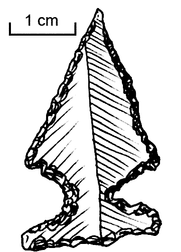
The Khiamian (also referred to as El Khiam or El-Khiam) is a poorly understood and sometimes disputed sub-phase of the Near-Eastern Neolithic, straddling the transition from the Natufian (13,000 to 9,800 BC. ) to the Pre-Pottery Neolithic A (PPNA 8500 BCE – 7600 BC.). Some sources date it from about 10,000 to 9,500 BC., but it currently dates between 10,200 and 8800 BC according to the ASPRO chronology.
The PPNA in the southern Levant begins at around 10,300-10,200BP (10,000-9900 cal BC) but at Mureybet in the northern Levant it appears earlier at c.10,600-10,500bp (c.10,500 cal BC): “Hence there is no evidence for synchroneity for the onset of the Neolithic between the northern and southern Levant”.
According to Tchernov, this correlates with increased collection and cultivation of wild barley and emmer wheat and vegetal sources including legumes, seeds an fruits and specialized hunting of diverse vertebrates.
The Khiamian owes its name to the site of El Khiam, situated on banks of the Dead Sea, where researchers have recovered the oldest chert arrows heads, with lateral notchs, the so-called “El Khiam points”. They have served to identify sites of this period, which are found in Israel, as well as in Jordan (Azraq), Sinai (Abu Madi), and to the north as far as the Middle Euphrates (Mureybet).
Aside from the appearance of El Khiam arrow heads, the Khiamian is placed in the continuity of the Natufian, without any major technical innovations. However, for the first time houses were built on the ground level itself, and not half below ground as was previously done. Otherwise, the bearers of the El Khiam culture were still hunter-gatherers, and agriculture at that time was then still rather primitive, based on what has been reported on sites of this period.
Newer discoveries show that in the Middle East and Anatolia some experiments with agriculture were being made by 10,900 BC., and that there may already have been experimenting with wild grain processing by around 19,000 BC at Ohalo II.
The Khiamien also sees a change occur in the symbolic aspects of culture, as evidenced by the appearance of small female statuettes, as well as by the burying of aurochs skulls. According to Jacques Cauvin, it is the beginning of the worship of the Woman and the Bull, as evidenced in the following periods of the Near-Eastern Neolithic.
The antecedents of the PPNB clay figurines may be sought in the early Levantine stone statuary. Female sculpture in the Levant also coincided with the beginning of agriculture in the Khiamian culture, ca. 8500-8000 BC.
When individual figures started being carved most were sexually ambiguous or even dual-gendered representations. Examples at Salibiya, Nahal Oren and Gilgal, on the one hand, depict the body of a woman with a head barely disengaged from the shoulders, facial features reduced to the brows and a long nose, and with the trunk ending in two stumpy thighs.
On the other hand, the figures can also be viewed as male genitalia: the nose and brows become the foreskin, the body is the phallus and the thighs represent the testicles. The bisexual style was not confined to the PPNA culture but was still alive as late as in the 6th Millennium BC. at Shaar Golan, where pebble figurines still fused the male sex with the female body.
In fact, bisexuality, far from being restricted to the Mediterranean coast, was celebrated in a statuette as late as ca. 4500 BC. and as far as Tepe Yahya in southern Iran.
The PPNA stone figurines from El Khiam, and Mureybet II depict women that are singular in having no breasts, navel or genitalia. The buttocks are often emphasized, producing a characteristic arching posture. The stylization becomes even more extreme in the following millennia, as shown by figures of Mureybet III in the 8th Millennium, Tell Ramad II as well as Ras Shamra V in the 7th Millennium. The figures are then reduced to a torso with stumpy legs, omitting head, arms, breasts, navel and usually sex. A single specimen from Mureybet features a vulva. These statuettes also preserve the triangular profile noted in the PPNA prototypes.
Intercourse and bisexual representations were not restricted to the ancient province of Palestine, but were attested as far north as Turkey and as far east as Iran, respectively. The same is true for the flat-chested female stone statuettes. For example, level VI A at Catal Hüyük, ca. 6000 BC., produced a figurine that is far more naturalistic but still retains the same characteristic triangular profile and has no breasts, navel or vulva. It is noteworthy, therefore, that at Catal Hüyük, as well as at Hacilar, pregnancy is translated in the informal clay figurines, not in the more complex stone statuettes.
The fact that the Levant shares themes and style with other regions demonstrates that the Mediterranean coast was not isolated. The stone images belonged to a Pan-Near Eastern Neolithic phenomenon.

The first anthropomorphic representations consisted mostly of pebbles carved in the form of a phallus that appeared in Natufian assemblages ca. 10, 000 BC. The same culture is also traditionally credited for a small calcite statuette depicting a couple in coitus, with the two bodies tightly clutched together.
It is noteworthy that the theme of the embraced couple was not unique to the Natufians or to the Levant. The motif of the copulating couple reoccurs, for example, in Anatolian sculptures of the seventh millennium BC. at Catal Hüyük and as a seal of Protohistoric Susa.
The Ain Sakhri lovers, a carved stone object held at the British Museum, is the oldest known depiction of a couple having sex. It was found in the Ain Sakhri cave in the Judean desert. The sculpture is considered to be 11,000 years old and to be the oldest known representation of two people engaged in sexual intercourse. The figure looks differently depending on the viewer’s perspective. It may resemble a couple, a penis, breasts, or a vagina depending on this perspective; also, two testicles when viewed upside-down, from the bottom.

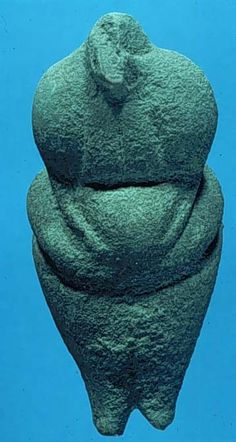
The first figure in glorifying pregnancy was A stone statuette from ‘Ain Ghazal, Jordan. The stone figure originated from the PPNC period, dated from 6000 to 5500 BC. It shows a nude figure whose gender is not immediately apparent. The genitals are not indicated and the breasts are flat. However, the absence of musculature, the abdominal fat rolls, the voluminous upper arms and thighs are clues that the subject is female. Mostly, the attention given to the womb, its enormous size, its central place in the composition, the way it projects in profile, and the gesture cradling it, makes it unequivocal that the figure is pregnant.
Who is the female exalting her pregnant state ? Who is the child? What did the figure mean to the Neolithic villagers? These are questions that the artifact alone or the shreds of evidence left at the site cannot answer. In this paper I seek to address these questions by analyzing the context, technology and style of the statuette. I place the piece in the iconography by comparing it with ‘Ain Ghazal clay figurines and with early Levantine stone sculptures. Then I glean information in the mythology, considering the role of pregnancy in ancient Near Eastern creation myths. Based on the collected data, I will propose that the statuette is part of a long tradition of women procreators of cosmos and vegetation.


Comments