


The Caucasians
Caucasian people:
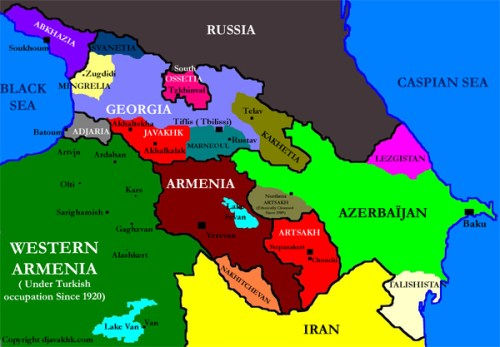
Armenia lies in the highlands surrounding the Biblical mountains of Ararat, upon which Noah’s Ark is said to have come to rest after the flood. (Bible, Gen. 8:4).
The Armenian Highland shows traces of settlement from the Neolithic era. Archaeological surveys in 2010 and 2011 at the Areni-1 cave complex in the Areni village of southern Armenia along the Arpa River have resulted in the discovery of the world’s earliest known leather shoe (5500 years old), skirt, and wine-producing facility.
In 2010, it was announced that the earliest known shoe was found in the cave. In January 2011, the earliest known winery in the world was announced to have been found. Also in 2011, the discovery of a straw skirt dating to 3900 BC was reported. prehistoric culture in the area, carbon-dated to roughly 6000 – 4000 BC.
The Paleolithic ended some 10,000-12,000 years ago to be succeeded by the Mesolithic culture. It was when the geographic medium and landscapes of the Caucasus were finally shaped as we have them today. The archaeological complex known as the Shulaveri-Shomu culture of the central Transcaucasus region is one of the earliest known.
Signs of Neolithic culture, and the transition from foraging and hunting to agriculture and stockraising, are found in Georgia from at least 5000 BC. The early Neolithic sites are chiefly found in western Georgia. These are Khutsubani, Anaseuli, Kistriki, Kobuleti, Tetramitsa, Apiancha, Makhvilauri, Kotias Klde, Paluri and others.
In the 5th millennium BC, the Kura (Mtkvari) basin also became stably populated, and settlements such as those at Tsopi, Aruchlo, and Sadakhlo along the Kura in eastern Georgia are distinguished by a long lasting cultural tradition, distinctive architecture, and considerable skill in stoneworking.
Most of these sites relate to the flourishing late Neolithic/Eneolithic Shulaveri-Shomu culture. Radiocarbon dating at Shulaveri sites indicates that the earliest settlements there date from the late sixth − early fifth millennium BC.
In the highlands of eastern Anatolia and South Caucasus, the right combination of domesticable animals and sowable grains and legumes made possible the earliest agriculture. In this sense, the region can justly be considered one of the “cradles of civilization”.
The entire region is surmised to have been, in the period beginning in the last quarter of the 4th millennium BC, inhabited by people who were possibly ethnically related and of Hurrian stock. The ethnic and cultural unity of these 2,000 years is characterized by some scholars as Chalcolithic or Eneolithic.
The ancestors of the Nakh peoples are thought to have populated the Central Caucasus around 10000 BCE- 8000 BCE. This colonization is thought by many (including E. Veidenbaum, who cites similarities with later structures to propose continuity) to represent the whole Eastern Caucasian language family, though this is not universally agreed upon.
The proto-language that is thought to be the ancestor of all Eastern Caucasian (“Alarodian”) languages, in fact, has words for concepts such as the wheel (which is first found in the Central Caucasus around 4000 BCE-3000 BCE), so it is thought that the region had intimate links to the Fertile Crescent (many scholars supporting the thesis that the Eastern Caucasians originally came from the Northern Fertile Crescent, and backing this up with linguistic affinities of the Urartian and Hurrian language to the Northeast Caucasus).
Johanna Nichols has suggested that the ancestors of Eastern Caucasians had been involved in the birth of civilization in the Fertile Crescent. Definitely, at the time the proto-language split, the people had all these concepts very early on.
The Nakh languages are a small family of languages spoken chiefly by the Nakh peoples, in Russia (Chechnya and Ingushetia), in Georgia, and in the Chechen diaspora (mainly in Europe, Middle East and Central Asia).
The Nakh languages were historically classified as an independent North-Central Caucasian family, but are now recognized as a branch of the Northeast Caucasian family. They are believed to have split off some 5000–6000 years ago.
From 3400 BC to 2000 BC, the region saw the development of the Kura-Araxes or Early Transcaucasian culture centered on the basins of Kura and Araxes. During this era, economic stability based on cattle and sheep raising and noticeable cultural development was achieved.
The local chieftains appear to have been men of wealth and power. Their burial mounds have yielded finely wrought vessels in gold and silver; a few are engraved with ritual scenes suggesting the Middle Eastern cult influence.
This vast and flourishing culture was in contact with the more advanced civilization of Akkadian Mesopotamia, but went into gradual decline and stagnated c. 2300 BC, being eventually broken up into a number of regional cultures. One of the earliest of these successor cultures is the Bedeni culture in eastern Georgia.
At the end of the 3rd millennium BC, there is evidence of considerable economic development and increased commerce among the tribes. In western Georgia, a unique culture known as Colchian developed between 1800 and 700 BC, and in eastern Georgia the kurgan (tumulus) culture of Trialeti reached its zenith around 1500 BC.
There is evidence of an early civilization in Armenia in the Bronze Age and earler. Several bronze-era states flourished in the area of Greater Armenia, including the Hittite Empire (at the height of its power), Mitanni (South-Western historical Armenia), and Hayasa-Azzi (1500–1200 BC).
The Nairi people (12th to 9th centuries BC) and the Kingdom of Urartu (1000–600 BC) successively established their sovereignty over the Armenian Highland. Each of the aforementioned nations and tribes participated in the ethnogenesis of the Armenian people.
The Adyghe or Adygs (Adyghe: Adǝgă, Arabic: Jarkas/Sharkas, Persian: Charkas), also often known as Circassians or Cherkess, are a North Caucasian ethnic group who were displaced in the course of the Russian conquest of the Caucasus in the 19th century, especially after the Russian–Circassian War of 1862.
Adyghe people mainly speak Circassian (called Adyghe and it has 12 dialects out of which 4 are mostly used. The Abzakh & Shapsogh dialects in the west, the Bjadogh in the South west (the Black Sea shore), and the Kabardin (Kabartai) in the Center. Predominant religions include Sunni Islam and Russian Orthodox Christianity. There remain about 700,000 speakers of Circassian in Adygea (Adygeans), Karachay–Cherkessia (just Circassians) and Kabardino-Balkaria (Kabards), as well as a number in the Russian Federation outside these republics.
The Unrepresented Nations and Peoples Organization estimates that there are as many as 3.7 million “ethnic Circassians” in the diaspora outside the Circassian republics (meaning that only one in seven “ethnic Circassians” is a speaker of the Circassian language), of whom about 2 million live in the Republic of Turkey, 700,000 in the Russian Federation, about 150,000 in the Middle East, and about 50,000 in western countries (Europe and USA).
The Adyghe people call and distinguish themselves from other peoples of the Caucasus by the name Attéghéi or Adyghe.
The usual etymology presented for the name is Circassian atté “height” to signify a mountaineer or a highlander, and ghéi “sea”, signifying “a people dwelling and inhabiting a mountainous country, a region near the sea coast, or between two seas”.
A common exonym for the Adyghe is Circassians, a term which occasionally applied to a broader group of peoples in the North Caucasus.
The Adyghe people originate in the North Caucasus region, an area they are believed to have occupied as early as the Stone Age period, with traces of them dating back as far as 8000 BC.
In about 4000 BC the Maykop culture existed in the North Caucasus region, which influenced all subsequent cultures in the North Caucasus region as well as other parts of the region which is now southern Russia. Archaeological findings, mainly of dolmens in North-West Caucasus region, indicate the existence of a megalithic culture in the region.
The Adyghe kingdom was established in 400 BC. After 460 AD news of “Utige” begins to feature in connection to a state established around Phanagoria which grew into Old Great Bulgaria. After the collapse of this state under pressure from the Khazars, it seems the Adyghe people were never politically united, a fact which reduced their influence in the area and their ability to withstand periodic invasions from groups like the Mongols, Avars, Pechenegs, Huns, and Khazars.
Genetically, the Adyghe population has shared ancestry mainly with European population. Also there is little influence of Central and South Asian populations.

Armenia


North Caucasian languages:
North Caucasian languages is a blanket term for two language phyla spoken chiefly in the north Caucasus and Turkey: the Northwest Caucasian family (Pontic, Abkhaz–Adyghe, Circassian, West Caucasian) and the Northeast Caucasian family (Caspian, Nakh–Dagestanian, East Caucasian); the latter includes the former North-central Caucasian (Nakh) family. There are approximately 34 to 38 distinct living or extinct North Caucasian languages.
Many linguists join the Northwest and Northeast Caucasian languages into a North Caucasian family, sometimes called simply Caucasic as opposed to Kartvelian (South Caucasian), which is thought to be unrelated, albeit heavily influenced by their northern neighbours, and to avoid confusion with the concept of “Caucasian race”.
This hypothesis has perhaps been best illustrated by Sergei A. Starostin and Sergei Nikolayev, who present a set of phonological correspondences and shared morphological structure. However, there is no consensus that the relationship has been demonstrated, and many consider the correspondences to be spurious.
Some linguists, notably Sergei Starostin and Sergei Nikolayev, believe that the two groups sprang from a common ancestor about five thousand years ago. However, this proposal is difficult to evaluate, and remains controversial.
Among the linguists who support the North Caucasian hypothesis, the main split between Northeast Caucasian and Northwest Caucasian is considered uncontroversial. Problems arise when it gets to the internal structure of Northeast Caucasian itself. So far no general agreement has been reached in this respect.
The main perceived similarities between the two phyla lie in their phonological systems. However, their grammars are quite different.
Both phyla are characterised by high levels of phonetic complexity, including the widespread usage of secondary articulation. Ubykh (Northwest) has 84 consonants, and Archi (Northeast) is thought to have 76.
A list of possible cognates has been proposed. However, most of them may be loanwords or simply coincidences, since most of the morphemes in both phyla are quite short (often just a single consonant).
The Northeast Caucasian languages are characterised by great morphological complexity in the noun. For example, in Tsez, a series of locative cases intersect with a series of suffixes designating motion with regard to the location, producing an array of 126 locative suffixes (often – depending on the analysis – described as noun cases).
By contrast, the Northwest Caucasian noun systems are relatively poor in morphology, usually distinguishing just two or three cases. However, they make up with a very complex verbal structure: the subject, the direct object, the indirect object, benefactive objects and most local functions are expressed in the verb.
The Northeast Caucasian languages constitute a language family spoken in the Russian republics of Dagestan, Chechnya, Ingushetia, northern Azerbaijan, and in northeastern Georgia, as well as in diaspora populations in Russia, Turkey, and the Middle East. They are also called Nakho-Dagestanian / Nakh-Dagestanian or just Dagestanian (Daghestanian), or sometimes Caspian, as opposed to Pontic for the Northwest Caucasian languages.
Several names have been in use for this family. The most common term, Northeast Caucasian, contrasts the three established families of the Caucasus language area: Northeast Caucasian, Northwest Caucasian, and South Caucasian (Kartvelian). This may be shortened to East Caucasian, especially by those linguists who accept the North Caucasian languages as a language family.
The older term Nakho-Dagestanian reflected an erstwhile primary division of the family into Nakh and Dagestanian branches, a view which is no longer widely accepted. The rare term Caspian (that is, bordering the Caspian Sea) is only used in opposition to Pontic (that is, bordering the Black Sea) for the Northwest Caucasian languages.
The Northwest Caucasian languages, also called Abkhazo-Adyghean, or sometimes Pontic as opposed to Caspian for the Northeast Caucasian languages, are a group of languages spoken in the Caucasus region, chiefly in Russia (Adygea, Kabardino-Balkaria, Karachay–Cherkessia), the disputed territory of Abkhazia, and Turkey, with smaller communities scattered throughout the Middle East.
Some scholars have seen affinities between the Northwest Caucasian (Circassian) family and the extinct Hattic language. Hattic was spoken in Anatolia (Turkey), in the area around ancient Hattusa (modern Boğazköy), until about 1800 BC, when it was replaced by the Indo-European Hittite language.
The name Hetto-Iberian (or Proto-Iberian) was proposed by Georgian historian Simon Janashia for a superfamily comprising the South Caucasian languages, other Caucasian language groups, Hattic and other languages of ancient Anatolia. (The Iberian in the name refers to Caucasian Iberia, a kingdom centered in Eastern Georgia which lasted from the 4th century BC to the 5th century AD; it is not related to the Iberian Peninsula.)
Many Northwest Caucasian (Adygean) family names have prefixes like “Hath” or “Hatti”, and one of the well known Adyghe tribes has the name “Hattiqwai”(from “Hatti” + “male or son”); meaning “HattiSon”).
It has been conjectured that the North-West Caucasian languages may be genetically related to the Indo-European family, at a time depth of perhaps 12,000 years before the present. This hypothesised proto-language is called Proto-Pontic, but is not widely accepted.
There does at least appear to have been extensive contact between the two proto-languages, and the resemblances may be due to this influence.
A few linguists have proposed even broader relationships, of which the Dene–Caucasian hypothesis is perhaps the most popular. Dene-Caucasian links the North Caucasian (including Northwest Caucasian), Basque, Burushaski, Yeniseian, Sino-Tibetan, and Na–Dene families. However, this is an even more tentative hypothesis than Nostratic, which attempts to relate Indo-European, Uralic, Kartvelian, Altaic, etc., and which is widely considered to be undemonstrated.
Some linguists, notably I. M. Diakonoff and S. Starostin, also see similarities between the Northeast Caucasian family and the extinct languages Hurrian and Urartian. Hurrian was spoken in various parts of the Fertile Crescent in the 3rd and 2nd millennia BC. Urartian was the language of Urartu, a powerful state centered in the area of Lake Van in Turkey, that existed between 1000 BC or earlier and 585 BC.
The two extinct languages have been grouped into the Hurro-Urartian family. Diakonoff proposed the name Alarodian for the union of Hurro-Urartian and Northeast Caucasian.
The Alarodian languages are a proposed language family that encompasses the Northeast Caucasian (Nakh–Dagestanian) languages and the extinct Hurro-Urartian languages.
The Alarodian family was first proposed by Fritz Hommel (1854–1936). The term comes from the name that Herodotus used to refer to the kingdom of Urartu.
The connection between the Northeast and North-central families was based on claimed similarities in phonetics and grammar, such as sentence structure and an ergative case system. However, neither of these characteristics is limited to languages of this area, and neither constitutes the extensive evidence required to demonstrate a genetic relationship.
The Hurro-Urartian languages were included on the basis of grammatical and lexical similarities. However the genetic relationships between these languages is not clear.
Further research on this group of languages was later published by K. Ostir (1921, 1922), A. Svanidze (1937), Giorgi Melikishvili (1965), I.M. Diakonoff and S.A. Starostin (1986).
The Proto-Northeast Caucasian language had many terms for agriculture, and Johanna Nichols has suggested that its speakers may have been involved in the development of agriculture in the Fertile Crescent. They had words for concepts such as yoke, as well as fruit trees such as apple and pear that suggest agriculture was already well developed when the proto-language broke up.

Northeast Caucasian languages

Northwest Caucasian languages


Comments