


The Indo-Aryans of Maharashtra (Marathi)

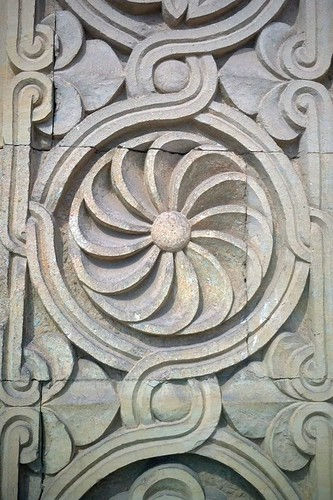
Shengavit

The Kura–Araxes culture or the early trans-Caucasian culture was a civilization that existed from 3400 BC until about 2000 BC, which has traditionally been regarded as the date of its end, but it may have disappeared as early as 2600 or 2700 BC.
The earliest evidence for this culture is found on the Ararat plain; thence it spread to Georgia by 3000 BC (but never reaching Colchis), and during the next millennium it proceeded westward to the Erzurum plain, southwest to Cilicia, and to the southeast into an area below the Urmia basin and Lake Van, and finally down to the borders of present day Syria. Altogether, the early Trans-Caucasian culture, at its greatest spread, enveloped a vast area approximately 1,000 km by 500 km.
The name of the culture is derived from the Kura and Araxes river valleys. Its territory corresponds to parts of modern Armenia, Azerbaijan, Chechnya, Dagestan, Georgia, Ingushetia and North Ossetia.
The culture is closely linked to the approximately contemporaneous Maykop culture of Transcaucasia. As Amjad Jaimoukha puts it: The Kura-Araxes culture was contiguous, and had mutual influences, with the Maikop culture in the Northwest Caucasus. According to E.I.Krupnov (1969:77), there were elements of the Maikop culture in the early memorials of Chechnya and Ingushetia in the Meken and Bamut kurgans and in Lugovoe in Serzhen-Yurt.
Similarities between some features and objects of the Maikop and Kura-Araxes cultures, such as large square graves, the bold-relief curvilinear ornamentation of pottery, ochre-coloured ceramics, earthen hearth props with horn projections, flint arrowheads, stone axes and copper pitchforks are indicative of a cultural unity that pervaded the Caucasus in the Neolithic Age.
Archaeological evidence of inhabitants of the Kura–Araxes culture had shown that ancient settlements were found along the Hrazdan river, a major river of Armenia starting at the northwest extremity of Lake Sevan and flows south through the Province of Kotayk and Armenia’s capital, Yerevan, as shown by drawings at a mountainous area in a cave nearby.
Structures within settlements have not revealed much differentiation, nor was there much difference in size or character between settlements, facts that suggest they probably had a poorly developed social hierarchy for at least a significant stretch of their history. Some, but not all, settlements were surrounded by stone walls.
They built mud-brick houses, originally round, but later developing into subrectangular designs with structures of just one or two rooms, multiple rooms centered around an open space, or rectilinear designs.
At some point the culture’s settlements and burial grounds expanded out of lowland river valleys and into highland areas. Although some scholars have suggested that this expansion demonstrates a switch from agriculture to pastoralism, and that it serves as possible proof of a large-scale arrival of Indo-Europeans, facts such as that settlement in the lowlands remained more or less continuous suggest merely that the people of this culture were diversifying their economy to encompass both crop and livestock agriculture.
The economy was based on farming and livestock-raising (especially of cattle and sheep). They grew grain and various orchard crops, and are known to have used implements to make flour. They raised cattle, sheep, goats, dogs, and in its later phases, horses (introduced around 3000 BCE, probably by Indo-European speaking tribes from the North). They are also remarkable for the production of wheeled vehicles (wagons and carts), which were sometimes included in burial kurgans.
In its earliest phase, metal was scant, but it would later display “a precocious metallurgical development which strongly influenced surrounding regions”. They worked copper, arsenic, silver, gold, tin, and bronze. Their metal goods were widely distributed, recorded in the Volga, Dnieper and Don-Donets systems in the north, into Syria and Palestine in the south, and west into Anatolia.
Their pottery was distinctive; in fact, the spread of their pottery along trade routes into surrounding cultures was much more impressive than any of their achievements domestically. It was painted black and red, using geometric designs for ornamentation. Examples have been found as far south as Syria and Israel, and as far north as Dagestan and Chechnya. The spread of this pottery, along with archaeological evidence of invasions, suggests that the Kura-Araxes people may have spread outward from their original homes, and most certainly, had extensive trade contacts.
There is evidence of trade with Mesopotamia, as well as Asia Minor. It is, however, considered above all to be indigenous to the Caucasus, and its major variants characterized (according to Caucasus historian Amjad Jaimoukha) later major cultures in the region. It may have given rise to the later Khirbet Kerak ware culture found in Syria and Canaan after the fall of the Akkadian Empire.
Archaeologists have attested a striking parallel in the spread to Syria of a distinct pottery type associated with what they call the Kura-Araxes culture. Jaimoukha believes that its southern expanse is attributable primarily to Mitanni and the Hurrians, but it might as well be Armenian, if there is any differences between these two languages at all.
In the early 6th century BC, the Urartian Kingdom, corresponding to the biblical Kingdom of Ararat or Kingdom of Van (Urartian: Biai, Biainili) was replaced by the Armenian Orontid dynasty. In the trilingual Behistun inscription, carved in 521/0 BC by the order of Darius the Great of Persia, the country referred to as Urartu in Assyrian is called Arminiya in Old Persian and Harminuia in Elamite.
It has been suggested by early 20th century Armenologists that Old Persian Armina and the Greek Armenoi are continuations of an Assyrian toponym Armânum or Armanî.[3] There are certain Bronze Age records identified with the toponym in both Mesopotamian and Egyptian sources. The earliest is from an inscription which mentions Armânum together with Ibla (Ebla) as territories conquered by Naram-Sin of Akkad in ca. 2250 BC identified with an Aleppo, earlier known as Armi.
Inhumation practices are mixed. Flat graves are found, but so are substantial kurgan burials, the latter of which may be surrounded by cromlechs. This points to a heterogeneous ethno-linguistic population.
Late in the history of this culture, its people built kurgans of greatly varying sizes, containing greatly varying amounts and types of metalwork, with larger, wealthier kurgans surrounded by smaller kurgans containing less wealth.
This trend suggests the eventual emergence of a marked social hierarchy. Their practice of storing relatively great wealth in burial kurgans was probably a cultural influence from the more ancient civilizations of the Fertile Crescent to the south.
Hurrian and Urartian elements are quite probable, as are Northeast Caucasian ones. Some authors subsume Hurrians and Urartians under Northeast Caucasian as well as part of the Alarodian theory. The presence of Kartvelian languages was also highly probable. Influences of Semitic languages and Indo-European languages are also highly possible, though the presence of the languages on the lands of the Kura–Araxes culture is more controversial.
In the Armenian hypothesis of Indo-European origins, this culture (and perhaps that of the Maykop culture) is identified with the speakers of the Anatolian languages, but it may rather maybe be identified with the speakers of the armenian language.


Mitanni (Mi-ta-an-ni, also Mittani Mi-it-ta-ni) was referred to as the Maryannu, Nahrin or Mitanni by the Egyptians, the Hurri (Ḫu-ur-ri) by the Hittites, and the Hanigalbat (Hanigalbat, Khanigalbat cuneiform Ḫa-ni-gal-bat) by the Assyrians seem to have referred to the same kingdom and were used interchangeably, according to Michael C. Astour.
Hittite annals mention a people called Hurri (Ḫu-ur-ri), located in northeastern Syria. A Hittite fragment, probably from the time of Mursili I, mentions a “King of the Hurri”, or “Hurrians”. The Assyro-Akkadian version of the text renders “Hurri” as Hanigalbat. Tushratta, who styles himself “king of Mitanni” in his Akkadian Amarna letters, refers to his kingdom as Hanigalbat. Egyptian sources call Mitanni “nhrn”, which is usually pronounced as Naharin/Naharina from the Assyro-Akkadian word for “river”, cf. Aram-Naharaim.
The ethnicity of the people of Mitanni (ca. 1500–1300 BC.) is difficult to ascertain. A treatise on the training of chariot horses by Kikkuli contains a number of Indo-Aryan glosses. Kammenhuber (1968) suggested that this vocabulary was derived from the still undivided Indo-Iranian language, but Mayrhofer (1974) has shown that specifically Indo-Aryan features are present.
Some theonyms, proper names and other terminology of the Mitanni are considered to form (part of) an Indo-Aryan superstrate, suggesting that an Indo-Aryan elite imposed itself over the Hurrian population in the course of the Indo-Aryan expansion. Pharaoh Thutmose III of Egypt in the 33rd year of his reign (1446 BC) mention the people of Ermenen, and says in their land “heaven rests upon its four pillars”.
The names of the Mitanni aristocracy frequently are of Indo-Aryan origin. In a treaty between the Hittites and the Mitanni (between Suppiluliuma and Shattiwaza, ca. 1380 BC), the deities Mitra, Varuna, Indra, and Nasatya (Ashvins) are invoked. Kikkuli’s horse training text (circa 1400 BC) includes technical terms such as aika (Vedic Sanskrit eka, one), tera (tri, three), panza (pañca, five), satta (sapta, seven), na (nava, nine), vartana (vartana, round).
The numeral aika “one” is of particular importance because it places the superstrate in the vicinity of Indo-Aryan proper (Vedic Sanskrit eka, with regular contraction of /ai/ to [eː]) as opposed to Indo-Iranian or early Iranian (which has *aiva; compare Vedic eva “only”) in general.
Another text has babru(-nnu) (babhru, brown), parita(-nnu) (palita, grey), and pinkara(-nnu) (pingala, red). Their chief festival was the celebration of the solstice (vishuva) which was common in most cultures in the ancient world.
Sanskritic interpretations of Mitanni names render Artashumara (artaššumara) as Arta-smara “who thinks of Arta/Ṛta” (Mayrhofer II 780), Biridashva (biridašṷa, biriiašṷa) as Prītāśva “whose horse is dear” (Mayrhofer II 182), Priyamazda (priiamazda) as Priyamedha “whose wisdom is dear” (Mayrhofer II 189, II378), Citrarata as citraratha “whose chariot is shining” (Mayrhofer I 553), Indaruda/Endaruta as Indrota “helped by Indra” (Mayrhofer I 134), Shativaza (šattiṷaza) as Sātivāja “winning the race price” (Mayrhofer II 540, 696), Šubandhu as Subandhu ‘having good relatives” (a name in Palestine, Mayrhofer II 209, 735), Tushratta (tṷišeratta, tušratta, etc.) as *tṷaišaratha, Vedic Tveṣaratha “whose chariot is vehement” (Mayrhofer I 686, I 736).
The common people’s language, the Hurrian language, is neither Indo-European nor Semitic. Hurrian is related to Urartian, the language of Urartu, both belonging to the Hurro-Urartian language family. It had been held that nothing more can be deduced from current evidence. A Hurrian passage in the Amarna letters – usually composed in Akkadian, the lingua franca of the day – indicates that the royal family of Mitanni was by then speaking Hurrian as well.
Founded by an Indo-Aryan ruling class governing a predominately Hurrian population, Mitanni, in northern Syria and south-east Anatolia, came to be a regional power after the Hittite destruction of Amorite Babylon and a series of ineffectual Assyrian kings created a power vacuum in Mesopotamia.
At the beginning of its history, Mitanni’s major rival was Egypt under the Thutmosids. However, with the ascent of the Hittite empire, Mitanni and Egypt made an alliance to protect their mutual interests from the threat of Hittite domination.
At the height of its power, during the 14th century BC, Mitanni had outposts centered around its capital, Washukanni, whose location has been determined by archaeologists to be on the headwaters of the Khabur River. Their sphere of influence is shown in Hurrian place names, personal names and the spread through Syria and the Levant of a distinct pottery type. Eventually, Mitanni succumbed to Hittite and later Assyrian attacks, and was reduced to the status of a province of the Middle Assyrian Empire.
Within a few centuries of the fall of Washshukanni to Assyria, Mitanni became fully Assyrianized and linguistically Aramaized, and use of the Hurrian language began to be discouraged throughout the Neo-Assyrian Empire. However, Urartean, a dialect closely related to Hurrian seems to have survived in the new state of Urartu, in the mountainous areas to the north. In the 10th to 9th century BC inscriptions of Adad-nirari II and Shalmaneser III, Hanigalbat is still used as a geographical term.
The Mitanni warriors were called marya (Hurrian: maria-nnu), the term for (young) warrior in Sanskrit as well; note mišta-nnu (= miẓḍha,~ Sanskrit mīḍha) “payment (for catching a fugitive)” (Mayrhofer II 358).
Maryannu is an ancient word for the caste of chariot-mounted hereditary warrior nobility which dominated many of the societies of the Middle East during the Bronze Age. The term is attested in the Amarna letters written by Haapi.
Robert Drews writes that the name ‘maryannu’ although plural takes the singular ‘marya’, which in Sanskrit means young warrior, and attaches a Hurrian suffix. He suggests that at the beginning of the Late Bronze Age most would have spoken either Hurrian or Aryan but by the end of the 14th century most of the Levant maryannu had Semitic names.
Marhaši (Mar-ḫa-ši, Marhashi, Marhasi, Parhasi, Barhasi; in earlier sources Waraḫše) was a 3rd millennium BC polity situated east of Elam, on the Iranian plateau. It is known from Mesopotamian sources, and its precise location has not been identified.
An inscription attributed to Lugal-Anne-Mundu of Adab (albeit in much later copies) mentions it among the seven provinces of his empire, between the names of Elam and Gutium. This inscription also recorded that he confronted their governor (ensi), Migir-Enlil of Marhashi, who had led a coalition of 13 rebel chiefs against him.
The Awan kings of Elam were in conflict with a Sumerian ruler’s attempt to seize the market at Warakshe, a kingdom apparently near Elam on the Iranian plateau, rich in luxury products of all types, especially precious stones.
During the Akkadian Empire, Warakshe was conquered by Sargon the Great, and king Abalgamash of Warakshe and his general Sidgau, along with Luh-ishan of Awan, rebelled unsuccessfully against Rimush, while Hishep-ratep of Awan in alliance with Warakshe was defeated by Naram-Sin.
King Shulgi of the Ur-III dynasty gave his daughter Nialimmidashu in marriage to king Libanukshabash of Marhashi in his 18th year, in an attempt to forge an alliance, but this proved short-lived, for Shulgi’s successor Amar-Sin records having to campaign against their new king, Arwilukpi.
Hammurabi of Babylonia’s 30th year name was “Year Hammurabi the king, the mighty, the beloved of Marduk, drove away with the supreme power of the great gods the army of Elam who had gathered from the border of Marhashi, Subartu, Gutium, Tupliash (Eshnunna) and Malgium who had come up in multitudes, and having defeated them in one campaign, he (Hammurabi) secured the foundations of Sumer and Akkad.”


Maharashtra (Marathi) is a state in the western region of India. It is the second most populous state after Uttar Pradesh and third largest state by area in India. Maharashtra is the wealthiest state in India, contributing 15% of the country’s industrial output and 13.3% of its GDP (2006–2007 figures). Maharashtra is the world’s second most populous first-level administrative country sub-division. Were it a nation in its own right, Maharashtra would be the world’s twelfth most populous country ahead of Philippines.
Maharashtra is bordered by the Arabian Sea to the west, Gujarat and the Union territory of Dadra and Nagar Haveli to the northwest, Madhya Pradesh to the north and northeast, Chhattisgarh to the east, Karnataka to the south, Andhra Pradesh to the southeast and Goa to the southwest. The state covers an area of 307,731 km2 (118,816 sq mi) or 9.84% of the total geographical area of India. Mumbai, the capital city of the state, is India’s largest city and the financial capital of the nation. Nagpur is the second (Winter) capital of the state.
The Maratha (archaically transliterated as Marhatta or Mahratta) are an Indian warrior caste, found predominantly in the state of Maharashtra. The term Marāthā has two related usages: within the Marathi-speaking region it describes the dominant Maratha caste which is credited for establishing Hindu rule by ending the Mughal rule; historically, the term describes the Maratha Empire founded by Shivaji in the seventeenth century and continued by his successors.
Robert Vane Russell, an untrained ethnologist of the British Raj period, basing his research largely on Vedic literature, that Marathas belong to one of the 96 different clans, known as the 96 Kuli Marathas or Chhānnava Kule. The organisation of this clan system is disputed in the popular culture and by historians. An authoritative listing was attempted in 1889, but the general body of lists are often at great variance with each other.
The Marathas primarily reside in the Indian states of Maharashtra, Madhya Pradesh, Gujarat, Karnataka, and Goa. Those in Goa and neighbouring Karwar are known specifically as Konkan Marathas as an affiliation to their regional and linguistic alignment.
The generally accepted theory among the scholars is that the words Maratha and Maharashtra ultimately derive from a compound of Maha (Sanskrit for “great”) and rashtrika. The word rashtrika is a Sanskritized form of Ratta, the name of a tribe or a dynasty of petty chiefs ruling in the Deccan region. Another theory is that the term is derived from Maha (“great”) and rathi or ratha (charioteer). An alternative theory states that the term derives from the words Maha (“Great”) and Rashtra (“nation/dominion”).
Marathi, an Indo-Aryan language, is the state’s official language. The modern Marathi language developed from the Prakrit known as Maharashtri. The words Maratha and Marathi may be a derivative of the Prakrit Marhatta found in Jain Maharashtri literature.
Maharastri or Maharastri Prakrit, is a language of ancient and medieval India which is the ancestor of Marathi, Konkani, Sinhala and the Divehi as well. It is one of the many languages (often called dialects) of a complex called Prakrit, and the chief Dramatic Prakrit. Maharashtri was spoken for 1000 years (500 BC to 500 AD). It was used in numerous works of literature, and its literary use was made famous by the Sanskrit playwright Kālidāsa.
Maharashtri Prakrit was commonly spoken until AD 875 and was the official language of the Sātavāhana empire. Works like Karpurmanjari and Saptashati (150 BC) were written in it. Maharashtri Prakrit was the most widely used Prakrit language in western and southern India.
Maharashtri Apabhraṃśa remained in use for several hundred years until at least AD 500. Apabhraṃśa was used widely in Jain literature and formed an important link in the evolution of Marathi. This form of Apabhraṃśa was re-Sanskritised and eventually became Marathi.
The varna, the term for the four broad ranks into which traditional Hindu society is divided, of the Maratha is a contested issue, with arguments for their being of the Kshatriya (warrior) varna which is widely accepted, and others for their being of peasant origins.
This issue was the subject of antagonism between the Brahmins and Marathas, dating back to the time of Shivaji, but by the late 19th century moderate Brahmins were keen to ally with the influential Marathas of Bombay in the interests of Indian independence from Britain.
These Brahmins supported the Maratha claim to Kshatriya status, and the legend of Shivaji, but their success in this political alliance was sporadic, and fell apart entirely following independence in 1947.
Various Maratha families lay claim to the Kshatriya varna, and the various clans make dis-similar claims. Bhonsles claim their origin from Suryavanshi Sisodias, Jadhavs from Yaduvanshi Yadavas, Bhoites from Chandravanshi Bhatis, Chavans from Agnivanshi Chauhans, Salunkhes from Agnivansha Solankis etc.
The Marathas are Hindu warriors from the western Deccan (present day Maharashtra) that rose to prominence by establishing ‘Hindawi Swarajya’. The Marathas became prominent in the 17th century under the leadership of the Great Chhatrapati Shivaji Raje Bhonsale who revolted against the Bijapur Sultanate and the Mughal Empire, and carved out an an independent kingdom with Raigad as his capital.
After a lifetime of guerrilla warfare with the Adil Shahi dynasty of Bijapur and Mughal Emperor Aurangzeb, Shivaji formally established an independent Hindu Maratha kingdom when he crowned himself Chhatrapati in 1674 with Raigad as its capital. Shivaji died in 1680, leaving behind a large kingdom. Soon after Shivaji’s death, the Mughals invaded, fighting an unsuccessful War of 27 years from 1681 to 1707.
Known for their mobility, the Marathas consolidated their territory during the Deccan Wars (1680-1707), also called the Mughal–Maratha Wars or the War of 27 years, against the Mughals and, at their peak, controlled much of northern and central India.
Shahu, a grandson of Shivaji, was released by the Mughals after the death of Aurangzeb. Following a brief struggle with his aunt Tarabai, Shahu became ruler. During this period, he appointed Balaji Vishwanath Bhat and later his descendants as the Peshwas or the prime ministers of the Maratha Empire.
After the death of the Mughal Emperor Aurangzeb, the empire expanded greatly under the rule of the Peshwas. The empire at its peak stretched from Tamil Nadu in the south, to Peshawar (modern-day Pakistan) on the Afghanistan border in the north, and Bengal and Andaman Islands in east.
A large portion of the Maratha empire was coastline, which had been secured by a potent navy under commanders such as Kānhōjī Āngré. He was very successful at keeping foreign naval ships, particularly of the Portuguese and British, at bay. Securing the coastal areas and building land-based fortifications were crucial aspects of the Maratha’s defensive strategy and regional military history.
In 1761, the Maratha army lost the Third Battle of Panipat to Abdali’s Afghan Durrani Empire, which halted their imperial expansion. Ten years after Panipat, young Madhavrao Peshwa reinstated the Maratha authority over North India.
In a bid to effectively manage the large empire, he gave semi-autonomy to the strongest of the knights, which created a confederacy of Maratha states. They became known as Gaekwads of Baroda, the Holkars of Indore and Malwa, the Scindias of Gwalior and Ujjain, Bhonsales of Nagpur.
In 1775, the British East India Company intervened in a succession struggle in Pune, which became the First Anglo-Maratha War. Marathas remained the preeminent power in India until their defeat in the Second and Third Anglo-Maratha wars (1805–1818), which left the British East India Company in control of most of India.
The British recognised Maratha as a martial race, a term created by Army officials of British India after the Indian Rebellion of 1857, against the rebel caste and pro British caste into one of two categories, ‘martial’ and ‘non-martial’, beginning early in the 20th century.
The ostensible reason was that a ‘martial race’ was typically pro British thus well-built for fighting, while the ‘non-martial races’ were those whom the British believed to be unfit for battle because of their patriotic natures.
Actually British-trained Indian soldiers were among those who rebelled in 1857 and thereafter recruitment policy favoured castes which had remained loyal to the British and diminished or abandoned recruitment from the catchment area of the Bengal army. The concept already had a precedent in Indian culture as one of the four orders (varnas) in the Vedic social system of Hinduism is known as the Kshatriya, literally “warriors.”
Earlier listings of martial races had often excluded them, with Lord Roberts, commander-in-chief of the Indian Army 1885-1893 stating the need to substitute “more warlike and hardy races for the Hindusthani sepoys of Bengal, the Tamils and Telugus of Madras and the so-called Marathas of Bombay.”
Sikata Banerje notes a dissonance in British military opinions of the Maratha, wherein the British portrayed them as both “formidable opponents” and yet not “properly qualified” for fighting, criticising the Maratha guerrilla techniques as an improper way of war.
Banerje cites a 1859 statement as emblematic of this disparity: “”[T]here is something noble in the carriage of an ordinary Rajput, and something vulgar in that of the most distinguished Mahratta. The Rajput is the most worthy antagonist, the Mahratta the most formidable enemy.”
The Maratha Light Infantry regiment of the Indian Army is one of the “oldest and most renowned” regiments of the Indian Army. Its First Battalion, also known as the Jangi Paltan (“Warrior Platoon”), traces its origins back to 1768 as part of the Bombay Sepoys. The battle cry of Maratha Light Infantry is Bol Shri Chattrapati Shivaji Maharaj ki Jai! (“Cry Victory to Emperor Shivaji!”) in tribute to the Maratha sovereign.
The history of the states and dynasties comprising the Maratha Empire constitutes a major portion of the history of late medieval India. Among its impacts, the Maratha empire:
The Marathas were the primary force responsible for weakening and eventually ending the moghal domination of India.
were among those who participated in the revival of the power of Hindus in north India after many centuries of Muslim rule. At this time they were seen as major supporters of the Hindu cause.
led to the dilution of the caste system as a large number of lower castes, Brahmins and other castes fought along with them.
encouraged the usage of Sanskrit and development of the Marathi language and was seminal to the consolidation of a distinct Maharashtrian identity.
The empire also resulted in the voluntary relocation of substantial numbers of Maratha and other Marathi-speaking people outside Maharashtra, and across a big part of India. Thus, there are today several small but significant communities descended from these emigrants living in the north, south and west of India.
These communities tend often to speak the languages of those areas, although many do also speak Marathi in addition. Notable Maratha families outside Maharashtra include Scindia of Gwalior, Gaekwad of Baroda, Ghorpade of Mudhol, and Bhonsle of Thanjavur.
Marathas have dominated the state politics of Maharashtra since its inception in 1960. Since then, Maharashtra has witnessed heavy presence of Maratha ministers or officials (which comprises 25% of the state) in the Maharashtra state government, local municipal commissions, and panchayats. 10 out of 16 chief ministers of Maharashtra hailed from the Maratha community as of year 2012.
The most recent gene flow paternal gene flow from West Asia corresponds largely to haplogroup J2a-M410. Unfortunately the authors used the “evolutionary mutation rate” which I and others have criticized, hence their age estimates are inflated. J2a and R1a1 have similar Y-STR variances in the two studied populations (0.36 and 0.34), and their ages are roughly a third of those reported (with wide uncertainty), or about ~4ky.
This is roughly consistent with the postulated arrival of the Indo-Aryans in India, and should probably be added to the enumeration of cases where the genealogical mutation rate correlates well with prehistory. It also seems consistent with my speculation about a West Asian origin of the Indo-Aryans.
Haplogroup R1a1 is more diverse in India-Pakistan than in west Eurasia, but there is variation in diversity in different South Asian groups. It’s possible that a subgroup of it also migrated from the west, but that possibility must remain speculative in the absence of even more Y-SNP structure within it.
South of Mari, and 110 kilometres north of Baghdad, a mound was discovered in the 1960s at Tell es Sawwan that has become a type site for the Samarra culture of the mid-6th through early 5th millennia. Like the Halaf culture to the west, it shows the extent of early settlement in Mesopotamia.

The main site Tell es Sawwan – Samarra
– lies about 50 miles upstream from modern Baghdad where the Euphrates and Tigris begin to flow more closely together.

Samarran pottery – Its distinctive pottery helps to define the Samarra culture

Samarran figurine – as do the clay figurines ‘mother goddess’ figures.

This map shows the geographical position of the Jarmo and Samarra cultures
north of Baghdad to the Ubaid and Uruk to the south.

Armenian
Mitanni (Mitra)


Indian (Indra)


Comments