


The Larnaka Museum
- May 25, 2022
- 2 min read
Yesterday, we interrupted our regularly scheduled programing to head east and pick up some colleagues at the Larnaka Airport. As part of the trip, we stopped by the newly reopened Larnaka Museum.
We have worked at the Larnaka Museum for many years and I had become quite fond of its galleries full of artifact cases from the region’s many sites arranged in according with the dominant chronologies. The regional scope of the museum is its biggest selling point in that it brings together sites from the southeastern corner of the island. On the one hand, this simply follows the organization of the archaeological administration on the island in which Larnaka is the local hub. On the other hand, as archaeologists interested in regional and microregional trends this regional approach is nice a way to get a sense for particular trends across the southeastern corner of the island.
The refreshed museum continued with this basic arrangement, but offered new interpretive signs and included objects and material from more recent excavations. For example, the exhibit featured some of the Iron Age (6th c.) sculpture found built into walls surrounding the small church at Pyla village.

The museum also featured a remarkable Hellenistic painted sarcophagus from the West Necropolis of the city of Kition alongside a number of other sarcophagi from that site.

These artifacts stood alongside the usual assemblages of Bronze Age and Iron Age material from the region including from the Late Bronze Age site of Pyla-Kokkinokremos which is in the area where we have worked for many years at Pyla-Vigla and Pyla-Koutsopetria. The vessels from this site show off its connections to the Mycenaean world.
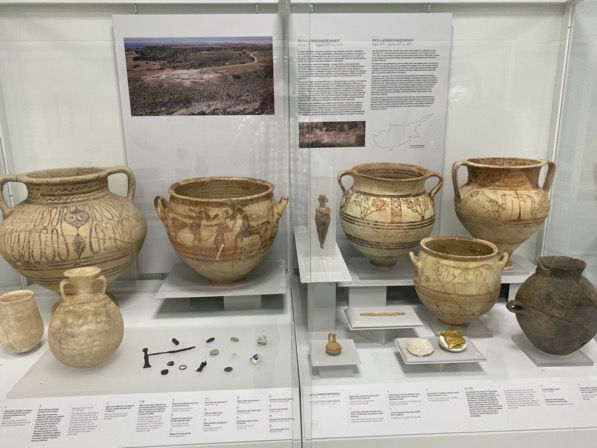
More disappointing, however, was the small display of Hellenistic to Roman material in a single case that belied the continued significance of ancient Kition in the Hellenistic, Roman, and Medieval periods.

The interest in Bronze Age and Iron Age artifacts reflects a contemporary preference for period of Cypriot independence rather than its history as a sometimes contested province in the Hellenistic period or as a wealthy and productive territory in the Roman world. Recent discoveries of Roman mosaics, for example, that rival better know mosaic pavements from Kourion and Paphos serve as a reminder that even while Kition’s status as an independent political power declined, the city remained part of the cosmopolitan Greco-Roman world. It would be nice to see this represented more fully in the museum in the future and to introduce visitors to Larnaka (a thoroughly cosmopolitan city) to its equally cosmopolitan past.


Comments