


The Semna Stela of Sesostris III – A Contemporary Translation

Title: Living as Horus, divine in form; the two goddesses*, divine at birth; King of Upper and Lower Egypt, (Khakaure)|, given life;
The living golden Horus; beloved son of the sun god Ra, ruler of the lands: (Sesostris)|, blessed with life, stability, and dominion forever.
Year 16, third month of winter**: The king set his southern boundary at Heh***.
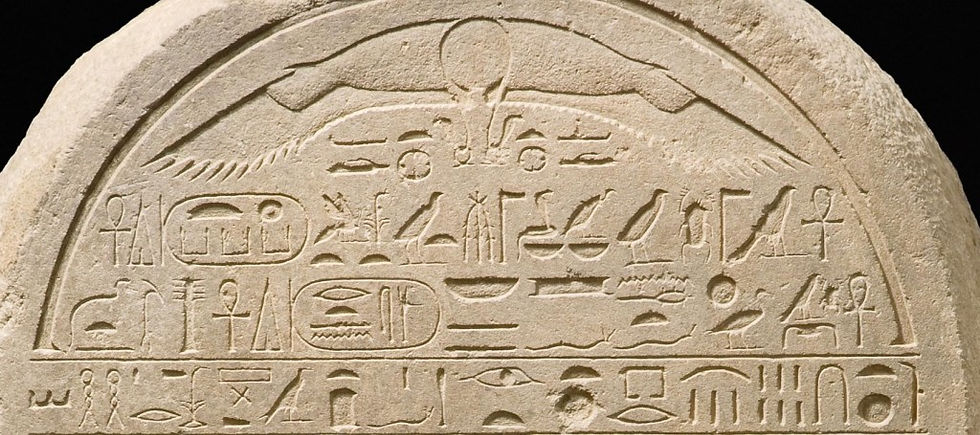
Text: I’ve extended the southern border beyond what my ancestors did. I’ve added to my inheritance. I’m a king who doesn’t just talk; I act. What I decide gets done. I’m quick to conquer, and my plans never stall****.
I’m fair to my allies, consistent in kindness, but ruthless to any enemy who challenges me. If someone attacks me, I counter-attack. I know when to stop, and how to respond appropriately.

Retreating when attacked only emboldens the enemy. Attacking shows courage, while retreating is cowardly. If someone is pushed back from their own land, they’re a coward!
In my experience, if you confront the Nubian with strong words, he’ll back off. Attack them, and they’ll flee; but if you retreat, they’ll attack you. They’re not worth your respect; they’re cowards at heart*****.
I’m telling you this from firsthand experience, it’s not a lie. I’ve captured their women and taken their people. I went to their wells, killed their livestock, destroyed their crops, and set them ablaze. I swear on my father’s life, I’m speaking the truth! This is no empty boast.
As for my own son, if he keeps this border intact, then he is truly my son. A real son defends his father’s legacy and protects his territory. But if he neglects or fails to defend it, he’s not my son; he wasn’t born of me.
For the record, I’ve had a statue of myself built at this new border, as a reminder for you to maintain and defend it.
Context:
After a military campaign in the eighth year (see Stele No1) of his reign, King Sesostris III had to discipline the Nubians again in the twelfth year. We only have a sparse record of this second campaign, noted in an inscription on the rocks at Assuan. Aside from the date and the king’s name, it simply states, “His majesty journeyed to overthrow Kush.”
By the sixteenth year, there were more issues in Ihsh that required the king’s attention. This event is documented twice: once on the second Semneh stela and again on a duplicate found on the island of Uronarti, located just below Semneh. This duplicate reveals an important historical detail: it was during this campaign that the Uronarti fortress was constructed. The inscription reads, “Stela made in the year 16, third month of the second season, when the fortress ‘Repulse-of-the-Troglodytes’ was built.”
The Semna fortress already had a temple built for a feast, also named “Repulse-of-the-Troglodytes,” likely in honour of this victory. This feast was celebrated a month later, on the twenty-first of Pharmuthi. The celebration of this feast continued in the empire, and its observance, along with other feasts in this temple, were later reinstated by Thutmose III.
Stele No1
Southern border, established in the 8th year of the reign of the King of Upper and Lower Egypt, Khekure, who is granted eternal life. This border is set up to prevent any Nubian from crossing it, whether by water or land, by boat, or with livestock; except for those who come for trade in Ikene or are on an official mission. They will be treated well, but no Nubian boats are allowed to pass through Heh, going downstream, indefinitely.
Footnotes:
* The Two Ladies, the two goddesses of Upper and Lower Egypt
** Third month of the Season of Growing
*** Modern Semna on the west side of the river, about fifty-nine kilometers above Wadi Halfa. Here and at Kumma, on the eastern side, Sesostris III erected two fortresses for enforcing the blockade previously decreed (Semna Stele 1). The fortress at Heh served as the southern boundary of the region surrounding the second cataract (a series of rapids or waterfalls along a river).
**** In whose heart a matter doesn’t slumber,
***** They are wretches with broken spirits.
Why do we translate (or revise translations) in to contemporary English?
Translating texts into contemporary English—or updating older translations—is an important process for several reasons:
Accessibility
One of the most straightforward reasons for updating language is to make it more accessible to modern readers. Language evolves over time; words that were once commonly understood become archaic, and grammatical structures may also shift. By translating texts into the language and style commonly used today, we ensure that more people can understand and engage with it.
Relevance
Modern translations can make historical or classical works more relevant to present-day readers. When texts are easier to understand, people are more likely to see the parallels between those works and their own lives, thereby gaining new insights or perspectives.
Academic and Educational Value
In academic settings, it’s crucial that students can understand the materials they are studying. Updated translations make it easier for students to engage with the texts, encouraging deeper analysis and discussion. This is particularly important in subjects like history, literature, and philosophy, where the texts themselves are often the primary subject of study.
Cultural Understanding
Older forms of a language often carry cultural assumptions and contexts that may not be immediately clear to contemporary readers. Modern translations can either adapt these to current understanding or provide notes and context that make the original intent clearer.
Interpretation
Each generation reads texts in the light of its own concerns and preoccupations. New translations can reflect updated understandings of gender, race, and social class, among other things, offering a more nuanced or inclusive view of the work.
Preservation
Ironically, by changing the words of a text, we can sometimes be truer to the original meaning than by preserving the original language. As the meanings of words change, a text can start to say something very different from what the author intended. By updating the language, we can preserve the original meaning, even as the words themselves change.
Universal Human Experience
By updating language, we can make it easier for people to recognize the universality of human experience across time and cultures. Readers may be surprised to find how much they have in common with people from different times and places, which is easier to recognize when language is not a barrier.
However, it’s worth noting that there are also valid arguments against translating or updating texts. Some people believe that the nuances of the original language can never be fully captured in a translation. Others feel that texts serve as historical documents that reflect the values and language of their time, and should be preserved as such.
Nevertheless, on balance, the benefits of making texts more accessible and relevant to contemporary audiences often outweigh the drawbacks.


Comments