


Three Things Thursday: Heat, Cities, and Sherds
Today is a day of transition. First, my colleague Scott Moore and I have ventured to the east of Cyprus to the lovely city of Larnaka to look at some pottery excavated from a public works project. This means putting Polis behind us, at least for a little while, and starting something new. This seems like as good an excuse as anything for a three things Thursday.
Thing the First
It is HOT here. Today we’ll get into the upper 90s (the upper 30s for those of you who prefer celsius) and tomorrow we’re likely to hit triple digits (not, of course, in celsius). Last night at around 7 pm it was still in the mid-90s.
I generally don’t mind heat, but it was getting to me last night.
We’ll be working at some local archaeological storerooms which will be very, very hot today. I’m thinking that we’ll be able to work until around noon before we’ll have to be done for the day, but we’ll see…
Thing the Second
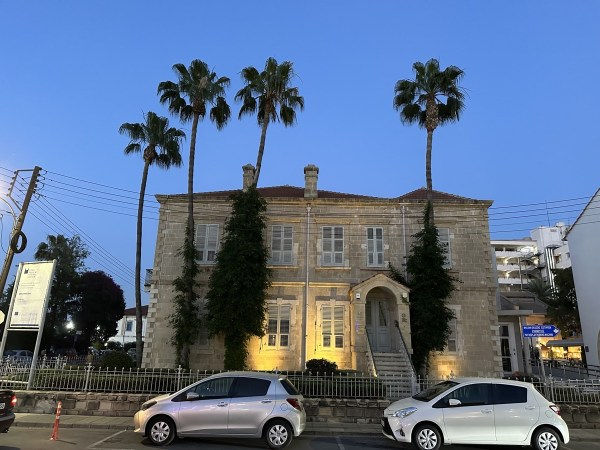
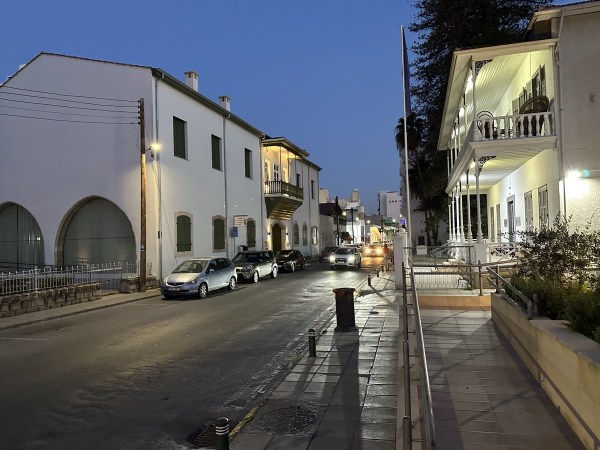
Larnaka really is a wonderful city. On the one hand, it is poured concrete, traffic, and noise. On the other hand, Ottoman architecture abounds, there are numerous pocket parks, coffee culture thrives, and there’s growing diversity. If there was ever a city that needed a little pocket guide in English, it was Larnaka.

Thing the Third
For the next three days we deal with SHERDS. While archaeologists regularly fetishize context and stratigraphy (and this is a good thing), there are a lot of sherds in the world that have little in the way of context (beyond a city, landscape, or region) and are easily relegated to back of the storeroom (and the disciplines’ collective mind).
We have about 10 days this summer dedicated to looking at sherds from a salvage excavation that cut a winding path through the city of Larnaka. These sherds are a kind of coarse survey assemblage that should give us some insights into the history and economy of the ancient city of Kition. While Kition is a fairly well-known place, scholars are just beginning to unpack its Hellenistic, Roman, and Late Roman history. The sherds we’re studying will give us some modest, but significant insights into what was going on here.
This is relevant to us, of course, because about 10 km west of here, we studied a site called Pyla-Koutsopetria which produced another assemblage of sherds. These offer us a useful point of comparison — and another kind of context — to make sense of what we’ll study this morning.


Comments