


Trailers, Florida, and Spring Break
- Mar 11, 2013
- 2 min read
Since this is the first day of our Spring Break, it seems appropriate to talk about Florida. Last week, Kostis Kourelis nudged the North Dakota Man Camp Project Team to check out the slim volume titled Walker Evans: Florida produced after the Getty exhibited some of Walker Evan‘s photographs from Florida.
This 1941 photograph appeared on the cover.
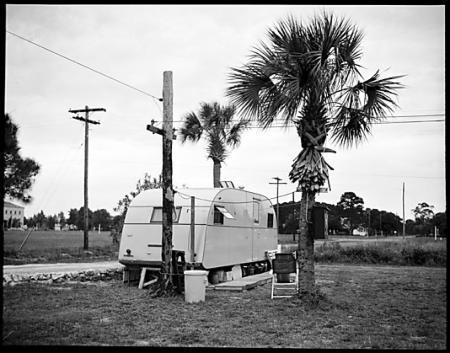
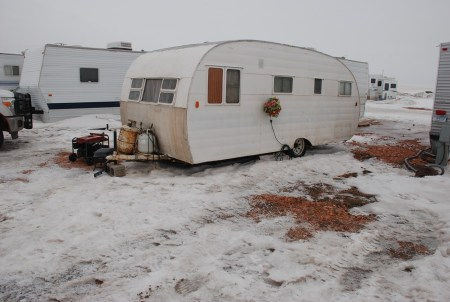
The trailer is a lovely 1940s “toaster type” (as Evans called it) travel trailer. There are still a few example of these in the man camps of North Dakota (the trailer below apparently dates to the mid-1950s).
More interesting, however, is that the trailer in Evans photographs features a lovely walkway made of shipping pallets. As several observers have noted, shipping pallets are crucial to the global economy as much because of their initial intended use as for their dynamic afterlife. While I had known that pallets had existed from the first part of the 20th century (in fact, their boom began in the late 1930s and coincided with the introduction of the gas-powered forklift), I had assumed that the almost ubiquitous character of these pallets was a product of late 20th century and the rapid expansion of the so-called “World Economy”.

Apparently, as soon as pallets became widely available, they began to see use as architectural elements. The pallet walkway is a ubiquitous feature in the Type 2 man camp in the Bakken area. We associated the presence of pallets in the man camps with the rapid intensifying integration of Western North Dakota with the global economy. The movement of equipment, specialized supplies, food, and other goods necessary to support the increase in activity and man power in the Bakken must have made many more pallets available for secondary use. The presence of pallets at a 1941 trailer park in Florida may reflect the increase in rail traffic to this area as it became a desirable seasonal resort.


They aren’t just common at man camps or trailer and R.V. parks, of course. They also find their way into suburban basements.

Comments