


Unveiling the Shadows: An Examination of Slavery in Ancient Egypt
Abstract:
This comprehensive study dissects the complex nature of slavery in Ancient Egypt, challenging conventional narratives while providing a nuanced understanding of the different forms of servitude that existed throughout this civilization’s history. Using multiple sources, the research sheds light on the distinctive terminology associated with servitude, the evolution of slavery across different historical periods, and the various causes for entering enslaved status. By scrutinizing state and private practices of slave ownership, the study presents a textured picture of Ancient Egyptian society, highlighting its adaptive character and offering insights into its socio-economic pressures, conflicts, and hierarchies.
Ancient Egypt’s civilization, known for its architectural marvels and sophisticated social structures, also harbored a complex system of servitude that is often misunderstood or oversimplified. This study ventures into this intricate web, exploring the realities of slavery in Ancient Egypt from various angles. It begins by debunking popular myths about slavery, then moves to dissect the nuanced terminology the Egyptians used to denote different classes of servitude. As the study delves into the evolution of slavery across the civilization’s history, it uncovers the causes leading to enslaved status, along with the practices of slave ownership.
I. Introduction to Slavery in Ancient Egypt
Slavery, an integral facet of human history, exhibits its earliest roots in several ancient civilizations, including Egypt. The concept of slavery in Ancient Egypt, as it was widely known, is embedded in a rich socio-cultural tapestry that intricately wove the threads of economic, legal, and social dynamics. Slavery in Ancient Egypt existed at least since the Old Kingdom period, suggesting a deeply ingrained and ancient practice of servitude and labor coercion (Karev, 2023).
However, painting an image of Ancient Egypt through the lens of slavery, while evocative, is fraught with nuances and cultural complexities. This is particularly pertinent when we consider that perceptions of slavery are largely influenced by more recent, notably brutal historical manifestations such as the trans-Atlantic slave trade, which can lead to anachronistic interpretations when transposed onto Ancient Egyptian society (Loprieno, 2012).
Furthermore, our understanding of the institution of slavery in Ancient Egypt is made more complex by the various terminologies used to denote servitude across dynastic history. These distinctions and the various classes of servitude they demarcate highlight the multiplicity of socio-economic realities embedded within the practice of slavery, emphasizing the layered nature of Ancient Egyptian society (Loprieno, 2012).
Understanding the nuances of slavery in Ancient Egypt goes beyond shedding light on a facet of economic and social history. It offers an essential window into the Ancient Egyptians as a people, providing critical insights into the societal hierarchies, the economic modalities, and the prevailing cultural norms. In essence, exploring the multifaceted dimensions of slavery within this ancient civilization allows us to grasp the human intricacies that shaped one of humanity’s earliest and most enduring societies.
As we delve into the specifics of slavery in Ancient Egypt, it becomes necessary to address and reevaluate certain entrenched misconceptions, born largely out of anachronistic interpretations and popular cultural imagery. One such prevalent myth that has shaped our understanding of Ancient Egypt and its people is the notion of pyramid-building slaves. This widely held belief can impact how we perceive the Ancient Egyptian society, its economic structure, and its social stratification. In the following section, we will explore this myth and its implications, challenging preconceived notions with archeological and scholarly evidence, and further deepening our understanding of Ancient Egyptians as people.
II. The Myth of the Pyramids and Slavery
A pervasive image that persists in the cultural imagination is that of Ancient Egyptian slaves toiling under the relentless sun to construct the monumental pyramids. However, a reassessment of this narrative has emerged, spearheaded by modern archeological findings and historical analyses. There is now a consensus among Egyptologists that the iconic pyramids were not, in fact, built by slaves (Shaw, 2012). This is supported by the archeological discoveries made by Hawass in the 1990s in Cairo, which convincingly indicate that the pyramid builders were paid laborers rather than slaves (Shaw, 2012).
This critical reframing of one of the most enduring images of Ancient Egypt changes our perception of the Ancient Egyptian society and its people. The realization that these monumental architectural feats were not the products of slave labor, but rather of paid and presumably skilled laborers, is significant. This shift underscores the complexity and structure of the Ancient Egyptian economy, which was capable of organizing and compensating such a massive workforce.
Moreover, this realization challenges our understanding of the social stratification within Ancient Egypt. It compels us to envision a populace that, despite the existence of slavery, was not wholly defined by the dichotomy of slave and master. Instead, it invites us to consider a more complex social structure with multiple gradations of socio-economic statuses, including those of paid laborers.
Furthermore, these insights provoke a reconsideration of the cultural fabric of the Ancient Egyptians. This shift from a perception of oppressed slaves to a more nuanced understanding of paid laborers engaged in monumental construction work, such as the pyramids, underscores the Egyptians’ collective commitment to their cultural and religious ideals.
In essence, dismantling the myth of the pyramid-building slaves offers us a fresh lens through which to view and understand the Ancient Egyptians. It enables us to see them not merely as tyrants or oppressed slaves but as a complex society capable of remarkable organizational feats and profound cultural expression.
After debunking the enduring myth about pyramid-building slaves, it becomes apparent that the social structures of ancient Egypt were not black-and-white, but a complex tapestry of varied forms of servitude. This challenges us to look beyond simplified perspectives and truly examine the terms and conditions of servitude in the society of ancient Egypt. This deeper exploration helps in shattering preconceived notions and broadens our understanding of the socio-economic landscape of the time. By delving into the lexicon of the Egyptians, we can gain nuanced insights into how they defined roles and hierarchies within their society, reflecting a society far more complex and layered than what popular narratives suggest.
III. Understanding the Terms of Servitude in Ancient Egypt
Unraveling the complexities of Ancient Egyptian society necessitates a deeper understanding of the terminologies they used to categorize various forms of servitude. However, this task is fraught with challenges, as the Egyptians’ usage of terms evolved over the course of dynastic history, creating a kaleidoscope of interpretations (Loprieno, 2012). The terms Hm (“laborer”) and bAk (“servant”) are depicted in literary texts, but the differentiation between these roles and the status of “free” people is nuanced and often depends on the translators’ interpretation (Karev, 2023).
Texts from the early Middle Kingdom period onward, however, display a more distinct consciousness of the difference between free people (nDs) and those in servitude (Hm, bAk). In contrast, conscripts (Hsb), fugitives (tSj), and foreign prisoners of war (sqr-anx) appear to be in a different category, presumably more akin to what we would today recognize as slavery (Loprieno, 2012). Interestingly, the term “servant” (bAk) covered a wide range of conditions, from the rhetorical usage by high officials to indicate their loyalty to the king to actual servitude (Karev, 2023).
Decoding these terms and their meanings provides us with crucial insights into the social fabric of Ancient Egyptian society. These semantic distinctions help elucidate the different forms of servitude and coercion present in the Egyptian society, revealing its layered complexity. They allow us to understand Ancient Egyptians not as a homogeneous entity but rather as a society where socio-economic statuses were nuanced and multifaceted, ranging from free citizens to different types of servants and slaves.
Additionally, the evolution of these terms over time reflects the dynamic nature of Ancient Egyptian society. As the kingdom grew, changed, and interacted with foreign cultures, so too did its structures of servitude and labor evolve, demonstrating the Ancient Egyptians’ adaptability and resilience. By interpreting these terminologies in their historical contexts, we can trace the socio-economic changes that swept through Ancient Egypt, deepening our understanding of its people.
Having unpacked the intricate terminology and various categories of servitude within the Egyptian society, it becomes clear that the concept of slavery in Ancient Egypt was not monolithic. The blurring lines between different forms of servitude challenge the conventional binary of “slave” versus “free”, unveiling an intricate matrix of social dynamics that evolved over time. Now, let us delve further into these different forms of servitude and explore the economic and societal indicators that defined slavery in this ancient civilization. The multifaceted nature of these forms of servitude will provide us with a more holistic view of Egyptian society and offer fresh insights into their perceptions of freedom, ownership, and human rights.
IV. Forms and Indicators of Slavery in Ancient Egypt
Slavery in Ancient Egypt, as a societal and economic construct, was not strictly confined to explicit legal markers. Rather, it was characterised by various economic indicators and forms of coercion over the course of Egyptian history (Loprieno, 2012). These varied from the corvée labour systems of the Old Kingdom, where large population segments were engaged in forced labour, albeit with potential for religious service exemption and upward mobility, to the foreign prisoners of war who were clearly enslaved (Loprieno, 2012).
The nature of servitude and slavery transformed during the New Kingdom, marked by an upsurge in military operations. This period witnessed large-scale foreign slavery, alongside local-owned or rented servitude. Adoption of a slave, leading to a “free” status, was a common practice during this time, reflecting the intricate mechanisms of social mobility within servitude (Loprieno, 2012).
As we move into the first millennium BCE, references to slavery become increasingly sparse, being replaced by forms of voluntary servitude influenced by economic dearth or religious commitment (Loprieno, 2012). However, the Hellenistic Period saw the reintroduction of slavery, driven primarily by war capture, purchases in the slave market, and the enslavement of debtors (Loprieno, 2012).
These evolving forms of slavery and servitude provide crucial insights into the social and economic changes that Ancient Egypt underwent over the course of its history. They reveal a society that adapted its labour systems in response to economic needs, geopolitical situations, and societal shifts, challenging the static image we might hold of the ancient civilization.
Moreover, the complexity of these systems, from coerced labour to adoption processes leading to “free” status, shows a society where the lines between freedom and servitude were complex and often fluid. This nuanced understanding counters the binary notion of free citizens versus enslaved individuals, painting a richer picture of the lived experiences of the Ancient Egyptians and their innovative ways of negotiating social and economic challenges.
Interestingly, individuals in servitude were not completely devoid of rights within the legal system. They were in fact, considered equal under certain circumstances. In instances of law-breaking, they were subjected to the same penalties as free individuals. For example, if a female slave was found guilty of theft, she was required to repay twice the value of the stolen goods, an indictment that would have been similarly applied to a free individual in her position (Loprieno, 2012). This provides further nuance to our understanding of the lived experiences of enslaved individuals in Ancient Egyptian society. This approach to punishment underlines the structured legal system of Ancient Egypt and the attempt at maintaining social justice, despite the person’s status. This insight underscores the complexity of servitude in Ancient Egypt, reminding us that it was not a simple condition of complete subjugation, but a more nuanced status that came with its own obligations within the societal and legal framework of the time.
The nature of servitude in Ancient Egypt was multifaceted and, in certain circumstances, offered avenues to gain freedom. A striking example of this flexibility is found in the adoption process. As per Loprieno (2012), a slave could obtain freedom by being adopted by their owner. This often occurred when a sterile woman chose to adopt the children her husband had fathered with a female slave. This practice not only implies a path to freedom for the enslaved, but also suggests that without such interventions, the legal state of slavery was likely hereditary. This observation adds depth to our understanding of the dynamism of Egyptian society and the various mechanisms through which social mobility could be achieved.
As we’ve uncovered the multifaceted reality of slavery in Ancient Egypt through various forms and indicators, we begin to understand that the picture of slavery was far from static. It is, therefore, essential to consider how this landscape evolved over time, showcasing the adaptability and complexity of the Ancient Egyptian society. In the following section, we shall further expand on this dynamism, tracing the transitions in the nature and practice of slavery across different eras of Egyptian history. This progression reveals how external influences, shifts in power, and societal changes shaped the structures of labor and servitude, offering a rich perspective on the Ancient Egyptians’ resilience, adaptability, and societal development.
V. Evolution of Slavery Across Egyptian History
To better understand the diverse socio-economic structures of Ancient Egypt, it is important to trace the evolution of slavery throughout its history. The society underwent significant shifts over its three millennia, with changing dynasties, foreign rulers, societal fragmentation, and reunification profoundly affecting the nature of forced labor and slavery (Karev, 2023).
In the Old Kingdom, for example, forced labor primarily involved Nubian and Libyan men, who were prisoners of war known as sQrw-ankh, or “bound for life.” This practice, however, did not commonly extend to native Egyptians, suggesting a differentiation in their treatment (Karev, 2023).
During the New Kingdom, an era marked by significant Egyptian expansion into the Levant, the enslaved population was expanded to include more individuals captured during wartime. They were branded upon the right shoulder, as attested on a relief at Medinet Habu, signifying a transition towards an institutionalized system of slavery (Karev, 2023).
However, slavery in Egypt was not exclusively confined to physical bondage. Economic pressures and taxation played significant roles in coerced labor. For instance, Corvée, a form of taxation through labor, first emerged in the Old Kingdom. In the Middle Kingdom, forced labor was even used as a form of taxation, punishable by law for evasion (Karev, 2023).
A distinct shift occurred in the Hellenistic Period or Ptolemaic period, where slavery, as we understand it in a modern context, became more common. This included slavery based on war capture, purchases in the slave market, and enslavement of debtors (Karev, 2023).

The transformation of slavery and servitude across the epochs of Egyptian history paints a vibrant image of a society in constant flux, adapting to the changing political, social, and economic landscapes. These insights dispel the monolithic perception of Ancient Egypt, instead revealing a dynamic society that evolved in its practices and attitudes towards labor and servitude. As such, understanding the evolution of slavery helps us appreciate the Ancient Egyptians not as a static society, but as a civilization that continually adapted and changed in response to shifting circumstances.
Having navigated the transformative tides of slavery through Egyptian history, our understanding of this complex phenomenon deepens. Yet, the historical trajectory alone does not complete the picture. An equally important facet that requires exploration is the examination of the causes leading individuals into coerced labor or slavery. This shift in focus from societal trends to individual pathways can provide invaluable insights into the diverse pressures and circumstances that underpinned the practice of slavery. Thus, in the following section, we delve into the factors that contributed to the transition into enslaved status, a study that further deepens our understanding of Ancient Egyptian society’s complex dynamics.
VI. Causes for Entering Enslaved Status in Ancient Egypt
In exploring the dynamics of slavery in Ancient Egypt, it is crucial to understand the various routes by which individuals found themselves in positions of enslavement or coerced labor. As Karev (2023) has listed, the causes for entering a coerced labor relationship were diverse, spanning from abduction, debt bondage, taxation in the form of labor, to self-sale.
Abduction, particularly during wartime, was a predominant cause of enslavement, from the Old Kingdom to the New Kingdom (Karev, 2023). This method of capture illustrates how the geopolitical aspirations and military activities of the Ancient Egyptians impacted society at a deeply personal level.

Taxation in the form of labor, or corvée, was another significant cause. This system, first employed during the Old Kingdom, was a manifestation of the state’s power over the populace. During the Middle Kingdom, individuals who attempted to avoid this obligation were punished, further illustrating the coercive structures of power at play (Karev, 2023).
Furthermore, self-sale and the sale between individuals or institutions also factored into enslavement. Sales of slaves, attested from the New Kingdom onwards, signify the emergence of a more market-driven form of enslavement, influenced perhaps by wider economic developments of the period (Karev, 2023).
The complex array of causes for entering enslavement or coerced labor relationships provides us with a nuanced understanding of Ancient Egyptian society. It underscores the role of both state structures and individual actions in the shaping of societal hierarchies and power dynamics. Moreover, it reveals the range of challenges that individuals faced and the harsh realities that could push them into conditions of servitude, offering a more comprehensive view of the societal pressures and economic hardships faced by individuals in Ancient Egypt.
After unpacking the myriad ways individuals entered into enslaved status in Ancient Egypt, it is crucial to explore the specific structures of ownership that shaped their lived experiences. Understanding these structures offers an even richer understanding of the practice of slavery, showcasing its complexity and how it intersected with wider socio-economic arrangements. Therefore, our next point of inquiry is the nature of slave ownership, focusing on both the state and private ownership. This exploration will provide a more nuanced perspective of how Ancient Egyptian society was organized and the varying ways slavery was practiced and experienced.
VII. State and Private Ownership of Slaves
Ownership of slaves in Ancient Egypt extended across various segments of society, encompassing both state and private realms. Through various epochs of Egyptian history, the state mobilized enslaved people for various tasks, a form of ownership that likely had substantial impacts on the economy and state projects (Karev, 2023).
State ownership of slaves, however, was not the only paradigm in practice. Enslaved persons could be owned privately and could also be sold between individuals or institutions (Karev, 2023). In an intriguing shift in patterns of ownership, there are records from the Second Intermediate Period of enslaved persons petitioning to transfer their ownership from private to public (Karev, 2023). This suggests that the conditions under state ownership may have been perceived as more favorable than private ownership in certain instances.
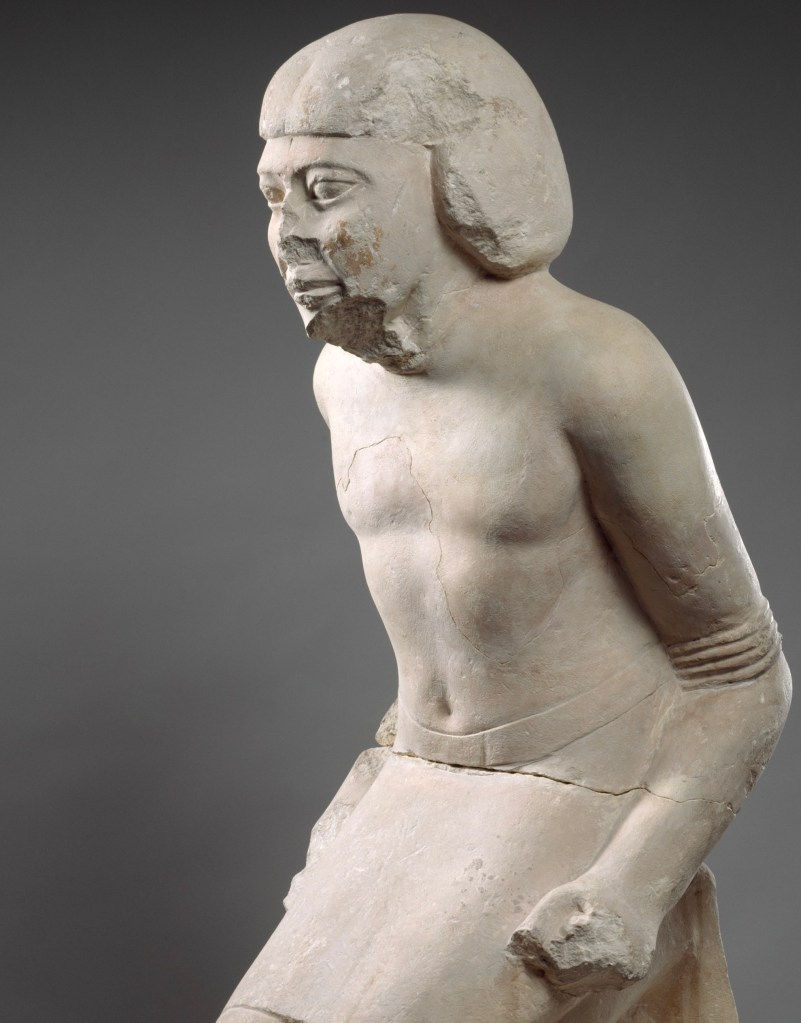
Furthermore, private slave ownership was not restricted to purely economic contexts. In a somewhat unexpected aspect of private ownership, slaves could be adopted, a practice that often led to their gaining “free” status (Loprieno, 2012). This practice reveals the fluidity of the socio-economic statuses in Ancient Egypt and points towards potential avenues of mobility within the socio-economic strata.
The examination of state and private ownership of slaves thus broadens our understanding of Ancient Egyptian society. It underscores the complexity of the socio-economic structures in place and the diverse roles that enslaved individuals played in both public and private spheres. It also suggests a society where the boundaries between freedom and enslavement could be more permeable than we might initially imagine.
VIII. Conclusion
In examining the multifaceted nature of slavery in Ancient Egypt, we unearth a complex social structure that defies a simple black-and-white interpretation. By highlighting its nuanced attributes, the study contributes to a more profound understanding of the Egyptian society as a whole.
The idea that the Ancient Egyptians enslaved large numbers of people to build their architectural wonders such as the Great Pyramids has been discredited, replacing a caricature of brutal forced labor with a more nuanced image of workers being engaged and remunerated for their labor (Hawass, 1990s). This shift underscores the capacity of the Egyptians to organize large-scale projects without resorting to large-scale slavery, suggesting a society that was advanced in terms of labor organization and remuneration (Karev, 2023).
The terms used by the Ancient Egyptians to describe various forms of servitude reflect a complex social hierarchy, with the status of being a “servant” or a “slave” contingent on several factors, including economic conditions, birth, and warfare (Loprieno, 2012; Karev, 2023). This intricate classification system underscores the Egyptians’ keen awareness of social stratification and their ability to structure society around these divisions.
Furthermore, the evolution of slavery across Egyptian history, from the Old Kingdom to the Ptolemaic period, offers an intimate glimpse into the transformations within the society itself, suggesting an adaptive culture that responded to changing internal and external circumstances (Loprieno, 2012; Karev, 2023). This understanding helps to dispel monolithic views of Ancient Egypt and highlights the society’s capacity for change and adaptation.
Lastly, the causes of entry into enslaved status – warfare, debt bondage, and sale – and the diverse practices of slave ownership (both state and private) present a society with an intricate web of relationships built on power, economic necessity, and social stratification (Karev, 2023). These insights serve to humanize the Ancient Egyptians, demonstrating that they, like us, grappled with socio-economic pressures, conflicts, and hierarchies.
In sum, studying slavery in Ancient Egypt does more than illuminate the experiences of a marginalized group; it opens a window into the heart of the Ancient Egyptian civilization, highlighting its complexities, its contradictions, and its capacity for change. In doing so, it not only enriches our understanding of slavery but also our view of the Ancient Egyptians as a people.
References
– Loprieno, A. (2012). Slavery and servitude. In E. Frood & W. Wendrich (Eds.), UCLA Encyclopedia of Egyptology. http://digital2.library.ucla.edu/viewItem.do?ark=21198/zz002djg3j
– Shaw, G. J. (2012). Slavery, Pharaonic Egypt. The Encyclopedia of Ancient History.
– Karev, E. (2023). Ancient Egyptian slavery. In The Palgrave Handbook of Global Slavery throughout History.


Comments