


Vår sivilisasjon – Solfolket
- Feb 11, 2013
- 39 min read

Kort og godt kan det sies at det dreier seg om et folk som kaller seg ar-i-ere og som spredde kulturen til alle kanter fra deres utgangspunkt i Portas-ar (På tyrkisk Gobekli tepe) for 10.000 år siden.
Bådet AR og deres symbol, swastikaen (de fire pilarer – balansen mellom de 4 ulike elementene), ble spredd, og de ulike sivilisasjonene i Asia, Europa og Afrika kan sees på som lokale variasjoner av et underliggende tema.
AR (som både betyr høyde, lys og skapelse), AN og mesh står alle for det samme, men på ulike språk. Samme kan sies ombåde ankhen og korset.
Sivilisasjonen har utviklet seg språket ble forvirret, ettersom det blandet seg med andre språk, inkludert indo-europeisk og semittisk. Uansett kom disse til å spre den samme sivilisasjonen og det samme underliggende tema.
Urartierne, og senere hurrierne, var de opprinnelige bærerne av kulturen. Nakh (fra det bibelske navnet «Noa – Noah)» er i dag ariernes språk sammen med de andre nordvest- og nordøst-kaukasiske språkene, samt semittisk (fra det bibelske navnet «Shem») og indoeuropeisk (fra det bibelske navnet «Javhe»), som kan sees på som en avart av kaukasisk.
Mens det semittiske språket er et afroasiatisk språk, men som utviklet seg i møtet med det kaukasiske i det som i dag er Syria, utviklet indoeuropeisk seg rett nord for Kaukasus fra nordvest kaukasisk, også kjent som protopontisk, i møte med det kartvelske georgiske språket og finno ugrisk.
Mens protosemittene var jegere og sankere var indoeuropeerne en steppebefolkning. Kaukaserne utviklet jordbruk og byer, mens semittene gikk over til pastoralisme. Proto-semittene fikk, etter å ha inkludert den neolittiske redskapspakken og sivilisasjonen til kaukaserne, makten i Sørvest Asia, mens indoeuropeerne kom til å erobre store deler av Eurasia.
Proto-semittisk kom fra Egypt via Sinai. De første semittiske språkene var nordøst-semittiske språk som eblaittisk og akkadisk. Trolig utviklet dette seg via etCircum-Arabian Nomadic Pastoral Complex sett av kulturer i perioden etter klimakrisen 6.200 f.vt.
Dette komplekset strakk seg fra Rødehavet og nordøst og inn i dagens Syria og Irak. Munhata kulturen (8300-6000 f.vt.) og den senere Yarmuk kulturen (6400–6000 f.vt.) er to eksempler på denne kulturen.
Den hadde sin bakgrunn i en blanding mellom harifiske jeger-sankere i Negev-ørkenen, som hadde nære forbindelser med de mesolittiske kulturene i Fayyum og den øst-egyptiske ørken, samt Pre-Pottery Neolithic B kulturen i det sørlige Levanten, som hadde tette bånd til Portasar og kulturene i nord.
Kobberalderen eller æneolitikum, som er en periode mellom steinalderen og bronsealderen, førte til utviklingen av en sekunær produksjonsrevolusjon og dannelsen av Ghassul kulturen (3800–3350 f.vt.) i det som i dag er Jordan.
Ghassul kulturen pionerte den mediterreanske blandingsøkonomien, som inkluderte hagebruk, korndyrking, kommersiell produksjon av oliven og vin, samt nomadisk pastoralisme. En blanding som varierte med klimaendringene. Denne befolkningen blir ansett for å være de første semittiske talerne.
Ebla sørvest for Aleppo i Syria var en viktig by. Stedet er kjent for Eblait tavletne, et arkiv på omlag 20,000 kuneiform tavler datert fra rundt 2250 f.vt. De er skrevet på eblaittisk, men benytter seg av sumerisk skrift. Eblaittisk, som nært beslektet med pre-sargoisk akkadisk, er det tidligste semittiske språket.
Aleppo i det nordlige Syria, som synes å ha vært en langt viktigere bronsealder bystat enn Damaskus, var hovedstaden for et kongedømme nært relatert til Ebla, kjent som Armi, eller Arame/Aramu, for folket i Ebla og som Arman eller Armani for akkadierne. Armi har blitt beskrevet som Eblas alterego. Men Naram-Sin av Akkad (eller hans bestefar Sargon) ødela både Ebla og Armani omkring 2300 f.vt. Uansett blir stedet eller folket Aram brukt av befolkningen i Mari (1900 f.vt.) og Ugarit (1300 f.vt.).
Den hurriske byen Urkesh ved forberget til Taurus fjellene i nordøst Syria var en alliert av det akkadiske imperiet via hva som blir antatt å ha vært en dynastisk ekteskapstradisjon. Tar’am-Agade, datteren til den akkadiske kongen Naram-Sin giftet seg med kongen av Urkesh.
Yamhad (1800-1600 f.vt.), også kjent som Aram-ka-ad, var et viktig amorittisk kongedømme sentrert i Ḥalab, eller Ḥalba, som vil si i dagens Aleppo. Befolkningen var stort sett hurriere og den hurriske kulturen influerte området. Men også dette kongedømmet ble ødelagt. Denne gangen av hetittene, som også var influert av hurrierne, på 1600-tallet f.vt.
Senere oppsto kongeriket Mitanni (Mi-ta-an-ni ) (1500 – 1300f.vt.), også kjent som Hanigalbat (Ḫa-ni-gal-bat) på assyrisk, Maryannu, Nahrin eller Mitanni på egyptisk og Hurri på hettitisk. Alle tre navnene var utskiftbare. Det var et hurrisk-talende stat i nord Syria og sørøst Anatolia med en indo-arisk herskerklasse. En del teonymer, egennavn og annen terminologi blir ansett for å være et indo-arisk superstratum, noe som tyder på at en indo-arisk elite satte seg selv som herskerklasse overfor hurrierne som en del av den indo-ariske ekspansjonen.
De hurriske stammene og bystatene ble samlet og Mitanni ble en regional maktfaktor etter at hetittene hadde erobret Yamkhad, ødelagt amorittenes Babylon og kassittene hadde tatt over byen, en serie med ueffektive assyriske konger hadde skapt et maktvakum i Mesopotamia. Uansett ble også denne staten ødelagt. Dene gangen av Assyria og hettitene på 1200-tallet f.vt.
Egyptiske kilder kalte Mitanni “nhrn”, noe som blir uttalt Naharin/Naharina og som kommer fra det assyro-akkadiske ordet for “elv”, jamført med Aram-Naharaim. Aram-Naharaim blir identifisert med Nahrima nevnt som en geografisk beskrivelse på Mitanni.
Ifølge Genesis er Aram sønn av Shem, og far til Uz, Hul, Gether og Mash. Aram blir anerkjent som profet i mandaeisme og Islam. Han blir ansett som stamfaren til det arameiske folket i det nordlige Mesopotamia og Syria. I Jubileenes bok blir Arams del av området beskrevet som liggende mellom Tigris og Eufrat [Naharaim] til grensene av fjellene til Asshur og landet Arara, som anslås for å være dagens Armenia, Ararat, men nord for khaldeerne.
Navnet Armenia stammer fra Armenak eller Aram, som var etterkommer av den armenske patriarken Hayk, som er stamfar for alle armenere. Det opprinnelige armenske navnet for landet var Hayk, senere Hayastan. Grunnleggeren av den armenske staten Urartu, hvor befolkningen snakket urspråket til hurrierne, var Aramé, som samlet alle prinsedømmene i det armenske høylandet og ga seg selv tittelen “Konge av konger”, som var den tradisjonelle tittelen på Urartus konger.
Nomadene, som etter å ha ankommet Mitanni ble kjent som arameere, var kjent som ahlamu omkring 1250 f.vt. Det var et nordvest semittisk semi-nomadisk og pastoralistisk folk som oppsto i Syria (Aram). Store grupper migrerte til Mesopotamia hvor de blandet seg med den assyriske og babylonske befolkningen.
Arameerne hadde aldri noen egen samlet nasjon, men var delt inn i mindre uavhengige kongedømmer over deler av Sørvest Asia, og da især i Syria, men de inngikk i et antall syro-hettit stater som inngikk i det ny-assyriske imperiet på 800-tallet f.vt. Dette til tross for at det arameiske språket kom til å bli lingua franca i hele Sørvest Asia og utviklet seg som skriftspråk til syrisk og mandeisk. Denne prosessen hvor assyro-babylonerne ble arameisk talende har blitt kjent som aramafisering.
Nomadiske pastoralister har alltid vært et trekk i Sørvest Asia, men antallet har variert i forhold til klimaforhold, samt makten til de ulike statene. Sen bronsealder var en tid med tørke og svekkede sater, samt en tid hvor pastoralistene måtte tilbringe stadig mer tid sammen med deres flokker. Byene krympet frem til nomadisk pastoralisme dominerte regionen. Disse høyst mobile, konkurransedyktige stammefolk med sine plutselige raid var en trussel for blant annet langdistanse handel.
Det er et åpent spørsmål hvordan et folk som var kjent som går under navnet Ahlamû, som betyr vandrere, en term som er likestilt med den egyptiske termen Shasu, som også betyr vandrere og som overtok fra de illegale hapiru (hebreerne) som hovedkilden for ustabilitet i det egyptiske levanten fra Tutankhamun og fremover.
Første gangen det blir referert til “Ahlamû-Aramaeans” (Ahlame Armaia) er i en innskrift av Tiglath-Pileser I (1115-1077 f.vt.), men kort etter forsvinner termen ahlamû for å bli skiftet ut med arameere (Aramu, Arimi). Ahlamû-arameerne må ha ansett arameerne som viktige og dominerende. Det kan også være at navnet arameere ar en mer korrekt form for det tidligere etnonymet Martu, eller amoritter, som vil si vestlige.
Hvor og når de semittiske khaldeerne migrerte fra til området rundt Babylon og området rundt den persiske golf er usikkert, men det virker som om de opptrer der på samme tid som arameerne og sutuene opptrådte i Babylonia, omkring 1000 f.vt. Under en periode hvor Babylon var svekket og ikke kunne forhindre at nye folk kom og tok seg til rette og bosatte seg. Men selv om khaldeerne tilhørte samme semittiske gruppe som arameerne differensierte de seg fra den arameiske gruppen.
Ifølge Gamle Testamentet kom Abraham fra khaldeernes Ur. Hvis byen var den sumeriske byen så ville det vært i khaldeernes opprinnelige område sør for Eufrat selv om det må ha skjedd før khaldeerne ankom området. Urfa i sørøst Tyrkia er en annen kandidat for fødestedet til Abraham. Byen ligger i nærheyten av Harran. Befolkningen i Urartu ble også kaldt khaldeere på grunn av deres gud Khaldi.
Uansett så var khaldeerne raske med å assimilere den dominerende semittisk akkadisk babylonske kulturen, slik amorittene før dem hadde vært, og da khaldeerne hadde erobret hele det sørlige Mesopotamia ble navnet khaldeere synonymt med Babylon, og da især for grekere og hebreere. Etter Babylons fall i 539 f.vt. ble termen kun brukt til beskrive en sosio-økonomisk klasse.
Sumererne, som er kreditert med det første skrevne språk og mange andre oppfinnelser, kom fra Portasar og kom raskt til å lage store byer og oppfinnelser. Mye kan man derfor forstå ved å studere deres kultur.
I dag er det først og fremst armenerne som bærer denne kulturarven videre, men som sagt så kan andre kulturer, inkludert den norske, best sees på som lokale varianter og bærere av det samme underliggende tema.


Portas-ar


Hayk – Legendary archer and forefather of the Armenian people after he slew the Titan Bel.
He was identified with the Sun-god Orion.
Ka-ra hunge

Ku-ra Ar-ak-ses
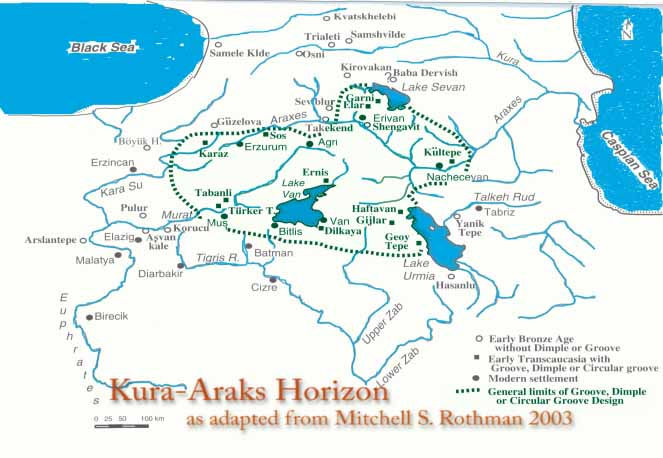
Ur-ar-tu

Av-ar – An-di-c
Aloridian
Na-khi-Dag-est-an-i

Armenians call themselves Hay (pl. Hayk’) and their country Hayastan. We know that the Armenians have called themselves also Aramean Azg (Nation of Aram), T’orkomean Azg (Nation of Togarmah), Haykazean Azg (Nation of Hayk) and Askanazean Azg (Nation of Askanaza); the latter is an anachronism, since in the Bible Askanaz represents the Scythians. The term ‘Armenian’, when it was created in the 3rd millennium BC, originally denoted the Hay people.
The Hurrians were ubiquitous throughout the ancient Near East. As a people, they were more widely spread than any other group before the Arameans. They flourished from the middle of the third millennium till the end of the second. They were probably the main population component of the Kura-Araxes culture which spread from Eastern Anatolia during the Late Uruk period (ca. 3000 BC) into the more civilized areas of the Fertile Crescent. They were certainly the core population group of the Mitanni Kingdom of northern Mesopotamia. Hurrian texts have been found at Boghazköy (ancient Hattusas, center of the Hittite empire), Ugarit, Nuzi, Mari, and Tell el-Amarna in Egypt.
Hurrians

Mithras is the god from whom Christians developed their myth of Christ’s divinity. Without Mithras, Jesus/Ara would only be a Jewish reformer. In fact Jesus is the same as Ara, which can signify both Arameans and Armenians, just as Yere-van is Ari-van and Yeru-salem Ari-salem.
The armenian god Mihr is the god of light, heaven and sun. He was the son of Aramazd, the brother of Anahit and Nane. His center of worship was located in Bagaharich. The pagan temple of Garni was dedicated to him.
Mithra was attested as early as 1450 B.C.E., so he is at least 3500 years old. He is the god of Mithraism, a religion which started in the Hurrian state of Mitanni, which means Land of Mithra, and it was the first land to become Mithraist. From Mitanni, Mithraism spread across Armenia, Phrygia, Commagene, Cappadocia, Pontus, and Georgia (Iberia and Colchis).
Founded by an Indo-Aryan ruling class governing a predominately Hurrian population, Mitanni came to be a regional power. The kingdom was known as the Maryannu, Nahrin or Mitanni to the Egyptians, Hurri to the Hittites and Hanigalbat to the Assyrians. All three names were equivalent and interchangeable.
Some theonyms, proper names and other terminology of the Mitanni are considered to form (part of) an Indo-Aryan superstrate, suggesting that an Indo-Aryan elite imposed itself over the Hurrian population in the course of the Indo-Aryan expansion.
The names of the Mitanni aristocracy frequently are of Indo-Aryan origin, but it is specifically their deities which show Indo-Aryan roots (Mitra, Varuna, Indra, Nasatya). The common people’s language, the Hurrian language, is neither Indo-European nor Semitic. Hurrian is related to Urartian, the language of Urartu, both belonging to the Hurro-Urartian language family.
The Alarodian languages are a proposed language family that encompasses the Northeast Caucasian (Nakho–Dagestanian) languages, also known as Caspian, as opposed to Pontic for the Northwest Caucasian languages, and the extinct Hurro-Urartian languages.
The Northeast Caucasian languages constitute a language family spoken in the Russian republics of Dagestan, Chechnya, Ingushetia, northern Azerbaijan, and in northeastern Georgia, as well as in diaspora populations in Russia, Turkey, and the Middle East.
The Proto-Northeast Caucasian language had many terms for agriculture, and Johanna Nichols has suggested that its speakers may have been involved in the development of agriculture in the Fertile Crescent. They had words for concepts such as yoke, as well as fruit trees such as apple and pear that suggest agriculture was already well developed when the proto-language broke up.
Urartu, also known as Urashtu, corresponding to Kingdom of Ararat or Kingdom of Van was a prehistoric Iron Age Armenian kingdom centred around Lake Van in the Armenian Highlands. The people of Urartu called themselves Khaldini after their god Khaldi. The Nairi, an Iron Age people of the Van area, are sometimes considered related or identical.
Archaeologists have attested a striking parallel in the spread to Syria of a distinct pottery type associated with what they call the Kura-Araxes culture or the early trans-Caucasian culture. The earliest evidence for this culture is found on the Ararat plain; thence it spread to Georgia by 3000 BC (but never reaching Colchis), and during the next millennium it proceeded westward to the Erzurum plain, southwest to Cilicia, and to the southeast into an area below the Urmia basin and Lake Van, and finally down to the borders of present day Syria.
Altogether, the early Trans-Caucasian culture, at its greatest spread, enveloped a vast area approximately 1,000 km by 500 km. The name of the culture is derived from the Kura and Araxes river valleys. Its territory corresponds to parts of modern Armenia, Georgia, Azerbaijan, Chechnya, Dagestan, Ingushetia and North Ossetia. It may have given rise to the later Khirbet Kerak ware culture found in Syria and Canaan after the fall of the Akkadian Empire.
Hurrian and Urartian elements are quite probable, as are Northeast Caucasian ones. Some authors subsume Hurrians and Urartians under Northeast Caucasian as well as part of the Alarodian theory. The presence of Kartvelian languages was also highly probable. Influences of Semitic languages and Indo-European languages are also highly possible, though the presence of the languages on the lands of the Kura–Araxes culture is more controversial.
In the trilingual Behistun inscription, carved in 521/0 BC by the order of Darius the Great of Persia, the country referred to as Urartu in Assyrian is called Arminiya in Old Persian and Harminuia in Elamite.
There is a deity Mithra mentioned on monuments in Commagene. According to the archaeologist Maarten Vermaseren, 1st century BC evidence from Commagene demonstrates the “reverence paid to Mithras” but does not refer to “the mysteries”.
In the colossal statuary erected by King Antiochus I (69–34 BC) at Mount Nemrut, Mithras is shown beardless, wearing a Phrygian cap, and was originally seated on a throne alongside other deities and the king himself. On the back of the thrones there is an inscription in Greek, which includes the name Apollo Mithras Helios in the genitive case.
Antiochus I was the son and probably the only child of King Mithridates I Callinicus and Queen Laodice VII Thea of Commagene. Antiochus was half Armenian, a distant member of the Armenian Orontid Dynasty and half Greek.
Antiochus’ father Mithridates was the son of King of Commagene Sames II Theosebes Dikaios, while his mother is unknown. Dikaios was the second king of Commagene. Of Armenian descent, he was the son and successor of Ptolemaeus of Commagene.
The Orontid Dynasty (also known by their native name, Yervanduni) was a hereditary Armenian dynasty and the rulers of the successor state to the Iron Age kingdom of Ararat. The Orontids established their supremacy over Armenia around the time of the Scythian and Median invasion in the sixth century BC.
Together with the Vedic common noun mitra, the Avestan common noun miθra derives from proto-Indo-Iranian *mitra, from the root mi- “to bind”, with the “tool suffix” -tra- “causing to.” Thus, etymologically mitra/miθra means “that which causes binding”, preserved in the Avestan word for “covenant, contract, oath”.
The first extant record of Indo-Aryan Mitra, in the form mi-it-ra-, is in the inscribed peace treaty of c. 1400 BC between Hittites and the Hurrian kingdom of the Mitanni in the area southeast of Lake Van in Asia Minor. There Mitra appears together with four other Indo-Aryan divinities as witnesses and keepers of the pact.
Both Vedic Mitra and Avestan Mithra derive from an Indo-Iranian common noun *mitra-, generally reconstructed to have meant “covenant, treaty, agreement, promise.” This meaning is preserved in Avestan miθra “covenant.” In Sanskrit and modern Indo-Aryan languages, mitra means “friend,” one of the aspects of binding and alliance.
Vedic Mitra is a prominent deity of the Rigveda distinguished by a relationship to Varuna, the protector of rta. Together with Varuna, he counted among the Adityas, a group of solar deities, also in later Vedic texts. Vedic Mitra is the patron divinity of honesty, friendship, contracts and meetings.
In the Vedic religion, Ṛta (Sanskrit ऋतं ṛtaṃ “that which is properly joined; order, rule; truth”) is the principle of natural order which regulates and coordinates the operation of the universe and everything within it. In the hymns of the Vedas, Ṛta is described as that which is ultimately responsible for the proper functioning of the natural, moral and sacrificial orders.
Conceptually, it is closely allied to the injunctions and ordinances thought to uphold it, collectively referred to as Dharma, and the action of the individual in relation to those ordinances, referred to as Karma – two terms which eventually eclipsed Ṛta in importance as signifying natural, religious and moral order in later Hinduism.
Sanskrit scholar Maurice Bloomfield referred to Ṛta as “one of the most important religious conceptions of the Rig Veda”, going on to note that, “from the point of view of the history of religious ideas we may, in fact we must, begin the history of Hindu religion at least with the history of this conception”.
Ṛta is thought to be derived from the Proto-Indo-European stem *h2r-to- “properly joined, right, true”, the latter being formed from the root *h2ar- “to join properly” (also found in *h2ar-yo-; cf. Skt. ā́rya “noble”). This root survives in Sanskrit as ṛ- “to go, move, rise, tend upwards”, and the derivative noun ṛtam is defined as “fixed or settled order, rule, divine law or truth”.
As Mahony (1998) notes, however, the term can just as easily be translated literally as “that which has moved in a fitting manner”, abstractly as “universal law” or “cosmic order”, or simply as “truth”. The latter meaning dominates in the Avestan cognate to Ṛta, aša.
Mithra is the divinity of covenant and oath. In addition to being the divinity of contracts, Mithra is also a judicial figure, an all-seeing protector of Truth, and the guardian of cattle, the harvest and of The Waters.
Jesus Phrygian connection is shown in his icons, where he usually wears a Phrygian cap, an international symbol of freedom. When Phrygia, Cappadocia and Armenia were annexed by the Roman Empire, it became the main religion of the Roman Army and spread across the whole Empire as far as Hadrian’s wall.
Emperor Constantine merged Mithraism with Christianity to make Catholicism. Elements from Mithraism is still preserved in Catholicism, but not from early Christianity: pope, Vatican, divinity of Jesus, virgin birth of Jesus, priesthood, eucharist (bread and wine), Christmas (December 25), Sunday worship instead of Sabbath.
The Armeno-Phrygian roots of Mithraism plus the fact that Armenians are the only nationality which were at one time almost all Mithraist which still exists gives an Armeno-Phrygian identity to the religion (The Armenians, the Mushki of Cappadocia, and the Phrygians are believed to have entered Anatolia as one people from Thrace, then separated but stayed close). In Armenia, Mithraism at least partially merged with Zoroastrianism after the Persian conquest.
Abraham

A hundred years ago, many Bible critics claimed that stories of the patriarchs were nothing more than religious fiction. The “silence of history” concerning the patriarchs, upon which these critics based their claims, was shattered with the discovery of ancient tablets at Mari (in southeast Syria) and Nuzi (in modern-day Iraq).
These tablets, although not directly mentioning the patriarchs, still constituted such valuable testimony about their life-styles that the late Professor William F. Albright (the then-acknowledged “dean” of Palestinian archaeologists) concluded that “the narratives of Genesis dealing with Abram may now be integrated into the life and history of the time [the second millennium B.C.] in such surprisingly consistent ways that there can be little doubt about their substantial historicity” (Biblical Archaeologist, July 1973, p. 10). Professor Albright’s conclusion was based on the following evidence from the Mari and Nuzi tablets:
Names like Abraham and Jacob were in common use among the Amorites in northern Mesopotamia about 2000 B.C. and later.
Mari was the center of a vast network of trade routes ranging from Crete to Elam, from Cappadocia to Megiddo. Merchants constantly traveled these routes from one end to the other. Seen in this context, Abraham’s journey from Ur to Haran, then to Canaan and Egypt, is not as improbable as the critics once thought.
Abraham’s relationship with Hagar (Genesis 16) and Jacob’s with Bilhah (Genesis 30) can be better understood by a comparison with a marriage contract from Nuzi, in which the wife was required, if she proved to be barren, to provide a substitute for her husband.
Abraham’s reluctance to drive out Hagar and Ishmael (Genesis 16:6) is understandable in the light of Nuzi customs governing such relationships.
Another Nuzi tablet revealed the adoption by a childless couple of a servant born in their house. He became the heir if he cared for them in their old age (see Genesis 15:2-3).
Jacob’s relationship with Laban (Genesis 29) becomes more understandable when compared to other tablets from Nuzi.
Overall, the patriarchs’ way of life conforms so closely to the cultural world described by these tablets that there is no reason to doubt that they were real people.
American archaeologists uncovered the Nuzi tablets during a dig in Iraq between 1925 and 1933. Over 5,000 records were found at the site, most dated from some time before 1400 BC. The tablets are an extensive record of the culture and norms of the time. Written in cuneiform, the records cover important aspects of marriage law, rituals for the end of life, inheritance, and other items concerning daily life. Of particular interest in this case are the laws concerning inheritance and marriage.
According to the Nuzi tablets, the heir was a very important part of culture; what would happen if a man’s first wife produced no heir? There were two options. The heir could be adopted (either from inside the family or outside, and slaves were also acceptable) or the man could take his wife’s personal slave as a wife. (Having multiple wives has been an accepted part of Middle Eastern societies for thousands of years.) The slave-wife who produced an heir would remain only under the husband’s authority, just like the first wife. Her son would be considered the rightful heir to the husband’s estate. However, if the slave-wife caused problems in the family, she could be placed back under the authority of the first wife. Not surprisingly, if the first wife had a male child, that one would be considered the man’s heir. The slave-wife’s son could not be disinherited and would receive something from his father, even though he would not be considered the heir.
Nuzi (or Nuzu; Akkadian Gasur; modern Yorghan Tepe, Iraq) was an ancient Mesopotamian city southwest of Kirkuk in modern Al Ta’amim Governorate of Iraq, located near the Tigris river. The site consists of one medium sized multiperiod tell and two small single period mounds. The town was apparently founded during the Akkadian Empire in the late third millennium BC. In the middle second millennium Hurrians absorbed the town and renamed it Nuzi.
Beth Adini/Eden

Mittani
“This kingdom was known as the Maryannu (Ma-ry-an-nu), Nahrin (Nahr-in/ nhrn) or Mitanni (Mi-tan-ni/ Mit-an-ni/ Mat-ani) to the Egyptians, Hurri (Hur-ri) to the Hittites and Hanigalbat (Ani-gal-bat) to the Assyrians.”
“All three names were equivalent and interchangeable”

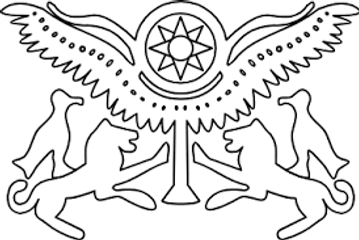
Mith-ra

Frygisk/armensk lue


It’s unclear where her name came from, but the figure of Marianne – the symbol of France – is an allegorical symbol for Liberty, Reason, the French Nation, and the civic virtues of the Republic. Marianne is young, strikingly beautiful, and wears (or holds) a Phrygian cap, which is associated with freedom from slavery in the Roman era. Images of a French lady of liberty precede the Revolution, but it was in 1792 that Marianne became the symbol of the republic. A commoner, Marianne was intended to be a representative of the people, rather than of the royal family, who had previously represented the French State. Marianne has a humble background, as indicated by her dress. She’s brave and hard working, and often falling out of her clothes while she’s being brave and hard working.
Maryannu is an ancient word for the caste of chariot-mounted hereditary warrior nobility which dominated many of the societies of the Middle East during the Bronze Age. The term is attested in the Amarna letters written by Haapi. Robert Drews writes that the name ‘maryannu’ although plural takes the singular ‘marya’, which in Sanskrit means young warrior, and attaches a Hurrian suffix. He suggests that at the beginning of the Late Bronze Age most would have spoken either Hurrian or Aryan but by the end of the 14th century most of the Levant maryannu had Semitic names. Maryannu was also an alternate Egyptian name for Mitanni, where the word undoubtedly originated.
Anne

Saint Anne (also known as Ann or Anna, from Hebrew Hannah meaning “favor” or “grace”) of David’s house and line, was the mother of the Virgin Mary and grandmother of Jesus Christ according to Christian and Islamic tradition.
Hannahannah (from Hittite hannas “grandmother”) is a Hurrian Mother Goddess related to the pre-Sumerian goddess Inanna. Hannahannah was also identified with the Hurrian goddess Hebat.
India


Ind-ra

Caucasian Swastika


Samarra bowl

The Swastika is a symbol that belongs too the entire human race they appear in many different forms and in almost all our ancestral cultures, exsisting for more than 15.000 years with different names.It was and always will be a symbol of protection and good luck. Unfortunately during the second world war the nazi’s were effective in there misuse of the symbol , from that moment on it belonged to intolerance, hatred and fear and has a bad image even in present day and in many countries it is a symbol forbidden too use, altough the nazi swastika is a black cross in 45 degrees pointing to the right on white with a red background, most of all the other swastikas are postive and there’s no reason to connect this to the genocide.
–
The earliest swastika known has been found from Mezine, Ukraine. It is carved on late paleolithic figurine of mammoth ivory, being dated as early as about 10,000 BC. It has been suggested this swastika is a stylized picture of a stork in flight.
In India, Bronze Age swastika symbols were found at Lothal and Harappa, Pakistan on Indus Valley seals. In England, neolithic or Bronze Age stone carvings of the symbol have been found on Ilkley Moor.
Swastikas have also been found on pottery in archaeological digs in Africa, in the area of Kush and on pottery at the Jebel Barkal temples, in Iron Age designs of the northern Caucasus (Koban culture), and in Neolithic China in the Majiabang, Dawenkou and Xiaoheyan cultures. Other Iron Age attestations of the swastika can be associated with Indo-European cultures such as the Indo-Iranians, Celts, Greeks and Germanic peoples and Slavs.
The swastika is also seen in Egypt during the Coptic period. Textile number T.231-1923 held at the V&A Museum in London includes small swastikas in its design. This piece was found at Qau-el-Kebir, near Asyut, and is dated between AD300-600.
The Tierwirbel (the German for “animal whorl” or “whirl of animals”) is a characteristic motive in Bronze Age Central Asia, the Eurasian Steppe, and later also in Iron Age Scythian and European (Baltic and Germanic) culture, showing rotational symmetric arrangement of an animal motive, often four birds’ heads. Even wider diffusion of this “Asiatic” theme has been proposed, to the Pacific and even North America (especially Moundville).
–
In ancient ages , Caucasian Avars used swastikas. İn Caucasian Avarian Language swastika pronunciate “sswerdiro”. Sswerdiro means : “Power of destroy – Power of create : Power Of God”.
The word “swastika” comes from the Sanskrit svastika – “su” meaning “good” or “auspicious,” “asti” meaning “to be,” and “ka” as a suffix. The swastika literally means “to be good”. Or another translation can be made: “swa” is “higher self”, “asti” meaning “being”, and “ka” as a suffix, so the translation can be interpreted as “being with higher self”.
In Armenia sawstika is called “vardan”, “arevakhach” and “ker khach” and is the ancient symbol of eternal light (i.e. God). Swastikas in Armenia were founded on petroglyphs. Among the oldest petroglyphs is the seventh letter of the Armenian alphabet – “E” (which means “is” or “to be”) – depicted as half-swastika.
Swastikas can also be seen on early Medieval churches and fortresses, including the principal tower in Armenia’s historical capital city of Ani. The same symbol can be found on Armenian carpets, cross-stones (khachkar) and in medieval manuscripts.
Ar-men-ia


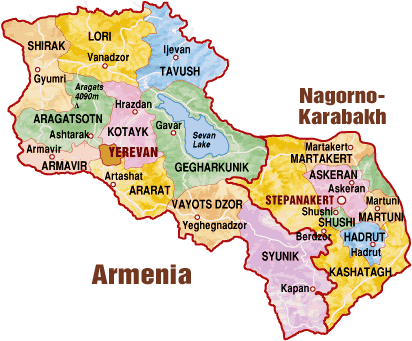
Jerevan – Ayravan
Jerusalem – Arisk fred
Jeriko – Ar-i-ka
Jews – Je-ew – Arew (Armenian) – Sun (English)
Ara

Ara the Beautiful
Ara/Ares
Ara the Beautiful (also Ara the Handsome or Ara the Fair) is a legendary Armenian hero. He is notable in Armenian literature for the popular legend in which he was so handsome that the Assyrian queen Semiramis waged war against Armenia just to get him. He is the god of spring, flora, agriculture, sowing and water. He is associated with Osiris, Vishnu and Dionysus, as the symbol of new life.
Original cult worship is a kind of unfathomable higher power or intelligence called Ara, called the physical embodiment of the sun (Arev) worshiped by the ancient Armenians, who called themselves “the children of the sun”. Since ancient times, the cult of sun worship occupied a special place in Armenian mythology. Also among the most ancient types of worship of Indo-European roots are the cults of eagles and lions, and the worship of heaven.
Ares (aris) was the Greek god of war. He is one of the Twelve Olympians, and the son of Zeus and Hera. In Greek literature, he often represents the physical or violent aspect of war, in contrast to the armored Athena, whose functions as a goddess of intelligence include military strategy and generalship.
Aries
Aries (meaning “ram”) is the first astrological sign in the Zodiac, spanning the first 30 degrees of celestial longitude (0°≤ λ <30º), which area the Sun transits, on average, between March 21 to April 21 each year.
According to the Tropical system of astrology, the Sun enters the sign of Aries when it reaches the northern vernal equinox, which occurs around March 21. Due to the fact that the Earth takes approximately 365.25 days to go around the Sun, the precise time of the equinox is not the same each year, and generally will occur about 6 hours later each year, with a jump of a day (backwards) on leap years. Since 1900 the vernal equinox date ranged from March 20 at 08h (2000) to March 21 at 19h (1903) (all times UTC).
In Sidereal astrology, the sun currently transits the constellation of Aries from 15 April to 15 May (approximately). Individuals born during these dates, depending on which system of astrology they subscribe to, may be called Ariolas or Ariens.
In astrology, a planet’s domicile is the zodiac sign over which it has rulership. The planet said to be ruler of Aries, or those associated with Ariens, is Mars.
TheOrontid Dynasty
The Orontid Dynasty (also known by their native name, Yervanduni was a hereditary Armenian dynasty and the rulers of the successor state to the Iron Age kingdom of Ararat. The Orontids established their supremacy over Armenia around the time of the Scythian and Median invasion in the sixth century BC.
One theory regarding the origin of Yerevan’s name is the city was named after the Armenian king, Yervand IV (the Last), the last leader of the Orontid Dynasty, and founder of the city of Yervandashat. However, it is likely that the city’s name is derived from the Urartian military fortress of Erebuni, which was founded on the territory of modern-day Yerevan in 782 BC by Argishti I. As elements of the Urartian language blended with that of the Armenian one, the name eventually evolved into Yerevan (Erebuni = Erevani = Erevan = Yerevan). Scholar Margarit Israelyan notes these changes when comparing inscriptions found on two cuneiform tablets at Erebuni.
Y-chromosomal Aaron
Y-chromosomal Aaron is the name given to the hypothesised most recent common ancestor of many of the patrilineal Jewish priestly caste known as Kohanim (singular “Kohen”, “Cohen”, or Kohane). In the Torah, this ancestor is identified as Aaron, the brother of Moses. The hypothetical most recent common ancestor was therefore jocularly dubbed “Y-chromosomal Aaron”, in analogy to Y-chromosomal Adam.
Hebat – Hebrew
Hebat, also transcribed Kheba or Khepat, was the mother goddess of the Hurrians, known as “the mother of all living”. She is also a Queen of the gods. She is the wife of Teshub and the mother of Sarruma and Alanzu, as well mother-in-law of the daughter of the dragon Illuyanka.
The name can be transliterated in different versions – Khebat with the feminine ending -t is primarily the Syrian and Ugaritic version. In the Hurrian language Hepa is the most likely pronunciation of the name of the goddess. The sound /h/ in cuneiform is in the modern literature sometimes transliterated as kh. In Aramaean times she appears to have become identified with the Goddess Hawwah.
Hebat was later assimilated the Hittite sun goddess Arinniti. A prayer of Queen Puduhepa makes this explicit: “To the Sun-goddess of Arinna, my lady, the mistress of the Hatti lands, the queen of Heaven and Earth. Sun-goddess of Arinna, thou art Queen of all countries! In the Hatti country thou bearest the name of the Sun-goddess of Arinna; but in the land which thou madest the cedar land thou bearest the name Hebat.”
Hebat was venerated all over the ancient Near East. Her name appears in many theophoric personal names. A king of Jerusalem mentioned in the Amarna letters was named Abdi-Heba (Abdi-Kheba, Abdi-Hepat, or Abdi-Hebat), possibly meaning “Servant of Hebat”.
Abdi-Heba was a local chieftain of Jerusalem during the Amarna period (mid-1330s BC). Both him and the general populace of pre-Israelite Jerusalem (called, several centuries later, Jebusites in the Bible) was of Hurrian descent
The mother goddess is likely to have had a later counterpart in the Phrygian goddess Cybele. Herodotus claimed that Phrygian colonists founded the Armenian nation. This is likely a reference to a third group of people called Mysians living in northern Mesopotamia who were apparently allied to the Armenians.
The Jebusites
According to the Hebrew Bible, the Jebusites were a Canaanite tribe who inhabited and built Jerusalem prior to its conquest by King David according to the Biblical account; the Books of Kings state that Jerusalem was known as Jebus prior to this event. According to some Biblical chronologies, the city was conquered by King David in 1003 BC, or according to other sources 869 BC.
The Tanakh portion of the Bible contains the only surviving ancient text known to use the term Jebusite to describe the pre-Israelite inhabitants of Jerusalem; according to the Table of Nations at Genesis 10, the Jebusites are identified as a Canaanite tribe, which is listed in third place among the Canaanite groups, between the Biblical Hittites and the Amorites.
Prior to modern archaeological studies, most Biblical scholars held the opinion that the Jebusites were identical to the Hittites, which continues to be the case, though less so. However, an increasingly popular view, first put forward by Edward Lipinski, professor of Oriental and Slavonic studies at the Catholic University of Leuven, is that the Jebusites were most likely an Amorite tribe; Lipinski identified them with the group referred to as Yabusi’um in a cuneiform letter found in the archive of Mari, Syria.
As Lipinski noted, however, it is entirely possible that more than one clan or tribe bore similar names, and thus that the Jebusites and Yabusi’um may have been separate people altogether. In the Amarna letters, mention is made of the contemporaneous king of Jerusalem was named Abdi-Heba, which is a theophoric name invoking a Hurrian goddess named Hebat; unless a different ethnic group occupied Jerusalem in this period, this implies that the Jebusites were Hurrians themselves, were heavily influenced by Hurrian culture, or were dominated by a Hurrian maryannu class.
Anahit – Anahata


Aramazd

Goddess Anahit in Armenian mythology is the goddess-mother, the goddess of love, fertility and healing, wisdom and water in Armenian mythology. In early periods Anahit was the goddess of war. By the 5th century BC she was the main deity in Armenia along with Aramazd.
She is a daughter (or wife) of Aramazd, who is considered the father of all gods and goddesses, and the creator of heaven and earth.
In Armenia, Anahit-worship was established in Erez, Armavir, Artashat and Ashtishat. A mountain in Sophene district was known as Anahit’s throne (Athor Anahta). The entire district of Erez, in the province of Akilisene (Ekeghiats), was called Anahtakan Gavar.
According to Plutarch, the temple of Erez was the wealthiest and the noblest in Armenia. During the expedition of Mark Antony in Armenia, the statue was broken to pieces by the Roman soldiers. The Armenians erected a new golden statue of Anahit in Erez, which was worshiped before the time of St. Gregory Illuminator.
The annual festivity of the month Navasard, held in honor of Anahit, was the occasion of great gatherings, attended with dance, music, recitals, competitions, etc. The sick went to the temples in pilgrimage, asking for recovery. The symbol of ancient Armenian medicine was the head of the bronze gilded statue of the goddess Anahit, which is currently in the British Museum.
According to Agathangelos, King Trdat extolls the: great Lady Anahit, the glory of our nation and vivifier . . .; mother of all chastity, and issue of the great and valiant Aramazd.
Aramazd is the principal deity in Armenia’s pre-Christian pantheon. He displaced Vanatur at the top of the pantheon after interaction with the Persians led to the Armenians’ identifying the Zoroastrians’ Ahura Mazda as their prime deity.
The first two letters in his name – AR – are the Indo-European root for sun, light, and life. He was the source of earth’s fertility, making it fruitful and bountiful.
The celebration in his honor was called Amanor, or New Year, which was celebrated on March 21 in the old Armenian calendar (also the Spring equinox).
Aramazd was a syncretic deity, a combination of the autochthonous Armenian legendary figure Ara and the Iranic Ahura Mazda. In the Hellinistic period Aramazd in Armenia was compared with Greek Zeus.
The principal temple of Aramazd was in Ani (Kamakh in modern Turkey), a cultural and administrative center of ancient Armenia. The temple had been ruined at the end of the 3rd c. AD, after the adoption of Christianity in Armenia as the state religion.
Vahagn is the third god of the Armenian Pantheon, Vahagn is the god of thunder and lightning, and a herculean hero noted for slaying dragons. He was also worshiped as a sun-god and a god of courage. Vahagn’s main sanctuary was located in the Ashtishat (a region in ancient Armenia). Vahagn was also a god of war to whom Armenian kings and warlords would pray before engaging in battle.
Mount Nemrut


Phonix

Anu-na-ki
(Vinger sto for spiritualitet/royalitet)


The Anunnaki (also transcribed as: Anunna, Anunnaku, Ananaki and other variations) are a group of deities in ancient Mesopotamian cultures (i.e. Sumerian, Akkadian, Assyrian, and Babylonian). The name is variously written “da-nuna”, “da-nuna-ke4-ne”, or “da-nun-na”, meaning something to the effect of “those of royal blood” or “princely offspring”.
In Sumerian mythology, Anu (also An; (from Sumerian *An ? = sky, heaven) was a sky-god, the god of heaven, lord of constellations, king of gods, spirits and demons, and dwelt in the highest heavenly regions. It was believed that he had the power to judge those who had committed crimes, and that he had created the stars as soldiers to destroy the wicked. His attribute was the royal tiara. His attendant and minister of state was the god Ilabrat.
He was one of the oldest gods in the Sumerian pantheon and part of a triad including Enlil (god of the air) and Enki (god of water). He was called Anu by the later Akkadians in Babylonian culture. By virtue of being the first figure in a triad consisting of Anu, Enlil, and Enki (also known as Ea), Anu came to be regarded as the father and at first, king of the gods. Anu is so prominently associated with the E-anna temple in the city of Uruk (biblical Erech) in southern Babylonia that there are good reasons for believing this place to have been the original seat of the Anu cult. If this is correct, then the goddess Inanna (or Ishtar) of Uruk may at one time have been his consort.
EN.KI
Enki (Sumerian: dEN.KI(G)) is a god in Sumerian mythology, later known as Ea in Akkadian and Babylonian mythology. He was originally patron god of the city of Eridu, but later the influence of his cult spread throughout Mesopotamia and to the Canaanites, Hittites and Hurrians. He was the deity of crafts (gašam); mischief; water, seawater, lakewater (a, aba, ab), intelligence (gestú, literally “ear”) and creation (Nudimmud: nu, likeness, dim mud, make bear). He was associated with the southern band of constellations called stars of Ea, but also with the constellation AŠ-IKU, the Field (Square of Pegasus). Beginning around the second millennium BCE, he was sometimes referred to in writing by the numeric ideogram for “40,” occasionally referred to as his “sacred number.” The planet Mercury, associated with Babylonian Nabu (the son of Marduk) was in Sumerian times, identified with Enki.
Enki and later Ea were apparently depicted, sometimes, like Adam, as a man covered with the skin of a fish, and this representation, as likewise the name of his temple E-apsu, “house of the watery deep”, points decidedly to his original character as a god of the waters. Around the excavation of the 18 shrines found on the spot, thousands of carp bones were found, consumed possibly in feasts to the God.
Jean Bottero (1952) and others suggested that Ia in this case is a West Semitic (Canaanite) way of saying Ea, Enki’s Akkadian name, associating the Canaanite theonym Yahu, and ultimately Hebrew YHWH. This hypothesis is dismissed by pious scholars as erroneous, based on a mistaken cuneiform reading, but academic debate continues.
In 1964, a team of Italian archaeologists under the direction of Paolo Matthiae of the University of Rome La Sapienza performed a series of excavations of material from the third-millennium BCE city of Ebla. Much of the written material found in these digs was later translated by Giovanni Pettinato. Among other conclusions, he found a tendency among the inhabitants of Ebla to replace the name of El, king of the gods of the Canaanite pantheon (found in names such as Mikael), with Ia.
Regarding Yahweh, the Catholic Encyclopedia says: “It seems likely that the name of Ea, or Ya, or Aa, the oldest god of the Babylonian Pantheon, is connected with the name Jahve, Jahu, or Ja, of the Old Testament.” The Babylonian “Ea” is equivalent to Enlil, who is both a God of storm and thunder and a Sun God.
Prior to being labeled Yahweh, the Israelite god was called “Baal.” signifying the sun in the Age of Taurus. When the sun passed into Aries, “the Lord’s” name was changed to the Egyptian Iao, which became YHWH, IEUE, Yahweh, Jahweh, Jehovah and Jah. This ancient name “IAO/Iao” represents the totality of “God,” as the “I” symbolizes unity, the “a” is the “alpha” or beginning, while the “o” is the “omega” or end.
In fact, the name Yahweh, Iao or any number of variants thereof can be found in several cultures:
“In Phoenicia the Sun was known as Adonis…identical with Iao, or, according to the Chinese faith, Yao (Jehovah), the Sun, who makes his appearance in the world ‘at midnight of the twenty-fourth day of the twelfth month.'”
YHWH/IEUE was additionally the Egyptian sun god Ra:
“Ra was the father in heaven, who has the title of ‘Huhi’ the eternal, from which the Hebrews derived the name ‘Ihuh.'”
Thus, the tetragrammaton or sacred name of God IAO/IEUE/YHWH is very old, pre-Israelite, and can be etymologically linked to numerous gods, even to “Jesus,” or “Yahushua,” whose name means “salvation” or “Iao/YHWH saves.”
Yahweh had yet another aspect to “his” persona, as at some early stage the “sacred tetragrammaton” of “God” was bi-gendered. As Walker states:
“Jewish mystical tradition viewed the original Jehovah as an androgyne, his/her name compounded as Jah (jod) and the pre-Hebraic name of Eve, Havah or Hawah, rendered he-vau-he- in Hebrew letters. The four letters together made the sacred tetragrammaton, YHWH, the secret name of God…. The Bible contains many plagiarized excerpts from earlier hymns and prayers to Ishtar and other Goddess figures, with the name of Yahweh substituted for that of the female deity.”
Thus, even Yahweh was at one time plural, but “he” eventually became an all-male, sky god. This singular Yahweh was a warrior god, representing the sun in Aries, which is ruled by the warlike Mars and symbolized by the Ram-the same symbolic ram “caught in a thicket” near Abraham and used by him as a replacement sacrifice for his son Isaac. This warrior god Yahweh was not only Jealous but Zealous, as his name is rendered in Young’s Literal Translation:
“…for ye do not bow yourselves to another god-for Jehovah, whose name [is] Zealous, is a zealous God.” (Exodus 34:14)
In fact, the same word in Hebrew is used for both jealous and zealous, although it is transliterated differently, “qanna” being jealous and “qana,” zealous. As El Elyon was but one of the Canaanite Elohim, the Most High God, so was “Yahweh,” as “El Qanna,” the Jealous/Zealous God, which is why in the Old Testament he keeps sticking his nose in and shouting at everyone. The title “Jealous/Zealous” is also appropriate for a god represented by a volcano, as was Yahweh by the smoky and fiery Mt. Sinai. Hence, Yahweh’s followers themselves were intolerant and hotheaded zealots.
EN.SI
ENSI (spelled PA.TE.SI in Sumerian cuneiform, hence occasionally transliterated as patesi; possibly derived from <en si-k>, “lord of the plowland”; borrowed into Akkadian as iššakkum) is a Sumerian title designating the ruler or prince of a city state. Originally it may have designated an independent ruler, but in later periods the title presupposed subordinance to a lugal (King/Emperor).
Adapa – Adam


Adapa, the first of the antediluvian seven sages, was a Mesopotamian mythical figure who unknowingly refused the gift of immortality. The story is first attested in the Kassite period (14th century BCE), in fragmentary tablets from Tell el-Amarna, and from Assur, of the late second millennium BCE. Mesoptamian myth tells of seven antedilluvian sages, who were sent by Ea, the wise god of Eridu, to bring the arts of civilisation to humankind. The first of these, Adapa, also known as Uan, the name given as Oannes by Berossus, introduced the practice of the correct rites of religious observance as priest of the E’Apsu temple, at Eridu. The sages are described in Mesoptamian literature as ‘pure parādu-fish, probably carp, whose bones are found associated with the earliest shrine, and still kept as a holy duty in the precincts of Near Eastern mosques and monastries. Adapa as a fisherman was iconographically portrayed as a fish-man composite. The word Abgallu, sage, (Ab = water, Gal = Great, Lu = Man, Sumerian) survived into Nabatean times, around the time of Christ, as apkallum, used to describe the profession of a certain kind of priest.
Adapa was a mortal man from a godly lineage, a son of Ea (Enki in Sumerian), the god of wisdom and of the ancient city of Eridu, who brought the arts of civilization to that city (from Dilmun, according to some versions). He broke the wings of Ninlil the South Wind, who had overturned his fishing boat, and was called to account before Anu. Ea, his patron god, warned him to apologize humbly for his actions, but not to partake of food or drink while he was in heaven, as it would be the food of death. Anu, impressed by Adapa’s sincerity, offered instead the food of immortality, but Adapa heeded Ea’s advice, refused, and thus missed the chance for immortality that would have been his.
Parallels can be drawn to the story of Genesis, where Adam and Eve are expelled from the Garden of Eden by Yahweh, after they ate from the Tree of the knowledge of good and evil, thus losing immortality. Stephanie Galley writes “From Erra and Ishum” we know that all the sages were banished … because they angered the gods, and went back to the Apsu, where Ea lived, and … the story … ended with Adapa’s banishment” p. 182.
Adapa is often identified as advisor to the mythical first (antediluvian) king of Eridu, Alulim. In addition to his advisory duties, he served as a priest and exorcist, and upon his death took his place among the Seven Sages or Apkallū. (Apkallu, “sage”, comes from Sumerian AB.GAL.LU (Ab=water, Gal=Great Lu=Man) a reference to Adapa, the first sage’s association with water.)
The Sumerian King List
The Sumerian King List is an ancient manuscript originally recorded in the Sumerian language, listing kings of Sumer (ancient southern Iraq) from Sumerian and neighboring dynasties, their supposed reign lengths, and the locations of “official” kingship. Kingship was believed to have been handed down by the gods, and could be transferred from one city to another, reflecting perceived hegemony in the region. Throughout its Bronze Age existence, the document evolved into a political tool. Its final and single attested version, dating to the Middle Bronze Age, aimed to legitimize Isin’s claims to hegemony when Isin was vying for dominance with Larsa and other neighboring city-states in southern Mesopotamia.
The first kingdom established after the Flood was Kish, and the name “Kish” appears often on clay tablets. The early post-Flood Sumerian king lists (not found in the Bible) say that “kingship descended from heaven to Kish” after the Flood.
Then a great flood came. Following the flood, this Babylonian document records that Sumerian kings ruled for much shorter periods of time. This just so happens to be the same pattern that is found in the Bible. The earlier sections of the Book of Genesis in the Old Testament parallels this part of the Sumerian King-List.
The Great Flood
The earliest record of the Sumerian creation myth and flood myth is found on a single fragmentary tablet excavated in Nippur, sometimes called the Eridu Genesis. It is written in the Sumerian language and datable by its script to 2150 BC,[1] during the first Babylonian dynasty, where the language of writing and administration was still Sumerian. Other Sumerian creation myths from around this date are called the Barton Cylinder, the Debate between sheep and grain and the Debate between Winter and Summer, also found at Nippur.
Where the tablet picks up, the gods An, Enlil, Enki and Ninhursanga create the black-headed people and create comfortable conditions for the animals to live and procreate. Then kingship descends from heaven and the first cities are founded: Eridu, Bad-tibira, Larsa, Sippar, and Shuruppak.
After a missing section in the tablet, we learn that the gods have decided not to save mankind from an impending flood. Zi-ud-sura, the king and gudug priest, learns of this. In the later Akkadian version, Ea, or Enki in Sumerian, the god of the waters, warns the hero (Atra-hasis in this case) and gives him instructions for the ark. This is missing in the Sumerian fragment, but a mention of Enki taking counsel with himself suggests that this is Enki’s role in the Sumerian version as well.
When the tablet resumes it is describing the flood. A terrible storm rocks the huge boat for seven days and seven nights, then Utu (the Sun god) appears and Zi-ud-sura creates an opening in the boat, prostrates himself, and sacrifices oxen and sheep.
After another break the text resumes: the flood is apparently over, the animals disembark and Zi-ud-sura prostrates himself before An (sky-god) and Enlil (chief of the gods), who give him eternal life and take him to dwell in Dilmun for “preserving the animals and the seed of mankind”. The remainder of the poem is lost.
Ziusudra (also Zi-ud-sura and Zin-Suddu; Hellenized Xisuthros: “found long life” or “life of long days”) of Shuruppak is listed in the WB-62 Sumerian king list recension as the last king of Sumer prior to the deluge. He is subsequently recorded as the hero of the Sumerian flood epic. He is also mentioned in other ancient literature, including The Death of Gilgamesh and The Poem of Early Rulers, and a late version of The Instructions of Shuruppak refers to Ziusudra. Akkadian Atrahasis (“extremely wise”) and Utnapishtim (“he found life”), as well as biblical Noah (“rest”) are similar heroes of flood legends of the ancient Near East.
In the WB-62 Sumerian king list recension, Ziusudra, or Zin-Suddu of Shuruppak is recorded as having reigned as both king and gudug priest for 10 sars, or periods of 3,600. In this version, Ziusudra inherited rulership from his father Šuruppak (written SU.KUR.LAM) who ruled for 10 sars. The line following Ziusudra in WB-62 reads: Then the flood swept over. The next line reads: After the flood swept over, kingship descended from heaven; the kingship was in Kish. The city of Kish flourished in the Early Dynastic period soon after an archaeologically attested river flood in Shuruppak (modern Tell Fara, Iraq) and various other Sumerian cities. This flood has been radiocarbon dated to ca. 2900 BCE. Polychrome pottery from the Jemdet Nasr period (ca. 3000–2900 BCE) was discovered immediately below the Shuruppak flood stratum, and the Jemdet Nasr period immediately preceded the Early Dynastic I period.
The tale of Ziusudra is known from a single fragmentary tablet written in Sumerian, datable by its script to the 17th century BC (Old Babylonian Empire), and published in 1914 by Arno Poebel. The first part deals with the creation of man and the animals and the founding of the first cities Eridu, Bad-tibira, Larsa, Sippar, and Shuruppak. After a missing section in the tablet, we learn that the gods have decided to send a flood to destroy mankind. The god Enki (lord of the underworld sea of fresh water and Sumerian equivalent of Babylonian god Ea) warns Ziusudra, the ruler of Shuruppak, to build a large boat; the passage describing the directions for the boat is also lost. When the tablet resumes, it is describing the flood. A terrible storm raged for seven days, “the huge boat had been tossed about on the great waters,” then Utu (Sun) appears and Ziusudra opens a window, prostrates himself, and sacrifices an ox and a sheep. After another break, the text resumes, the flood is apparently over, and Ziusudra is prostrating himself before An (Sky) and Enlil (Lordbreath), who give him “breath eternal” and take him to dwell in Dilmun. The remainder of the poem is lost.
The Epic of Ziusudra adds an element at lines 258–261 not found in other versions, that after the river flood[12] “king Ziusudra … they caused to dwell in the land of the country of Dilmun, the place where the sun rises”. Dilmun is usually identified as Bahrain, an island in the Persian Gulf on the east side of the Arabian peninsula. In this version of the story, Ziusudra’s boat floats down the Euphrates river into the Persian Gulf (rather than up onto a mountain, or up-stream to Kish). The Sumerian word KUR in line 140 of the Gilgamesh flood myth was interpreted to mean “mountain” in Akkadian, although in Sumerian, KUR did not mean “mountain” but rather “land”, especially a foreign country.
A Sumerian document known as The Instructions of Shuruppak dated by Kramer to about 2500 BC, refers in a later version to Ziusudra. Kramer concluded that “Ziusudra had become a venerable figure in literary tradition by the middle of the third millennium B.C.”
Xisuthros (Ξισουθρος) is a Hellenization of Sumerian Ziusudra, known from the writings of Eusebius of Caesarea, an attendee at the First Council of Nicaea and early historian of the Christian Church. Eusebius was quoting Alexander Polyhistor, a Pontic historian living in Rome. Alexander was himself translating the writings of Berossus, a priest of Marduk in Babylon, on whom Alexander relied heavily for information on Mesopotamia. Among the interesting features of this version of the flood myth, are the identification, through interpretatio graeca, of the Sumerian god Enki with the Greek god Cronus, the father of Zeus; and the assertion that the reed boat constructed by Xisuthros survived, at least until Berossus’ day, in the “Corcyrean Mountains” of Armenia.
Xisuthros was listed as a king, the son of one Ardates, and to have reigned 18 sari. The word for 3600 was sari (shar in Akkadian) and hence 18 sari was mistranslated as 64,800 years. This resulted from confusing the archaic U4 sign meaning year and the shar sign (3600) which both have a 4-sided diamond shape. Xisuthros reigned 18 years. The reigns of other kings were also mistranslated in the surviving king list of Berossus.
The significance of Ziusudra’s name appearing on the WB-62 king list is that it links the flood mentioned in the three surviving Babylonian deluge epics of Ziusudra (Eridu Genesis), Utnapishtim (Epic of Gilgamesh), and Atrahasis (Epic of Atrahasis) to river flood sediments in Shuruppak, Uruk, Kish et al. that have been radiocarbon dated to ca. 2900 BC. This has led some scholars to conclude that the flood hero was king of Shuruppak at the end of the Jemdet Nasr period (ca. 3000–2900) which ended with the river flood of 2900 BC.
Ziusudra being a king from Shuruppak is supported by the Gilgamesh XI tablet (see below) making reference to Utnapishtim (Akkadian translation of the Sumerian name Ziusudra) with the epithet “man of Shuruppak” at line 23.
Two flood myths with many similarities to the Sumerian story are the Utnapishtim episode in the Epic of Gilgamesh and the Genesis flood narrative found in the Bible. The ancient Greeks also had a very similar flood legend.
Jemdet Nasr is a tell or settlement mound in Babil Governorate (Iraq) that is best known as the eponymous type site for the Jemdet Nasr period (3100–2900 BC). The site was first excavated in 1926 by Stephen Langdon, who found proto-cuneiform clay tablets in a large mudbrick building thought to be the ancient administrative centre of the site.
The Jemdet Nasr period is an archaeological culture in southern Mesopotamia (modern-day Iraq) that is generally dated to 3100–2900 BCE. It is named after the type-site Jemdet Nasr, where the assemblage typical for this period was first recognized. Its geographical distribution is limited to south–central Iraq. The culture of the proto-historical Jemdet Nasr period is a local development out of the preceding Uruk period and continues into the Early Dynastic I period.
Apart from the distinctive pottery, the period is known as one of the formative stages in the development of the cuneiform script. The oldest clay tablets come from Uruk and date to the late fourth millennium BCE, slightly earlier than the Jemdet Nasr period. By the time of the Jemdet Nasr period, the script had already undergone a number of significant changes.
The script originally consisted of pictographs but by the time of the Jemdet Nasr period it was already adopting simpler and more abstract designs. It is also during this period that the script acquired its iconic wedge-shaped appearance. While the language in which these tablets were written cannot be identified with certainty, it is thought to have been Sumerian.
In-do-Euro-pe-ans / In-dia – Euro-pa


det første språket som gikk av fra det indoeuropeiske
Ger-man / Ar-men


Ir-min/Ir-min-sul/Ir-min-en-schaft


The Hurrian culture made a great impact on the religion of the Hittites. From the Hurrian cult centre at Kummanni in Kizzuwatna Hurrian religion spread to the Hittite people. Syncretism merged the Old Hittite and Hurrian religions. Hurrian religion spread to Syria, where Baal became the counterpart of Teshub. The later kingdom of Urartu also venerated gods of Hurrian origin. The Hurrian religion, in different forms, influenced the entire ancient Near East.
Hurrian cylinder seals often depict mythological creatures such as winged humans or animals, dragons and other monsters. The interpretation of these depictions of gods and demons is uncertain. They may have been both protective and evil spirits. Some is reminiscent of the Assyrian shedu.
Watcher (iyr, ir, ur – “to watch”). “Watchers”, “those who are awake”, Chaldean, “guard”, “watcher”, is a term used in connection with biblical angels.
Watcher occurs in both plural and singular forms in the Book of Daniel (2nd century BC), where reference is made to their holiness. The apocryphal Books of Enoch (1st and 2nd centuries BC) refer to both good and bad Watchers, with a primary focus on the rebellious ones.
Englenes språk – konsonanten er meningsbærende og har en vokal før eller etter – eller begge
Comments